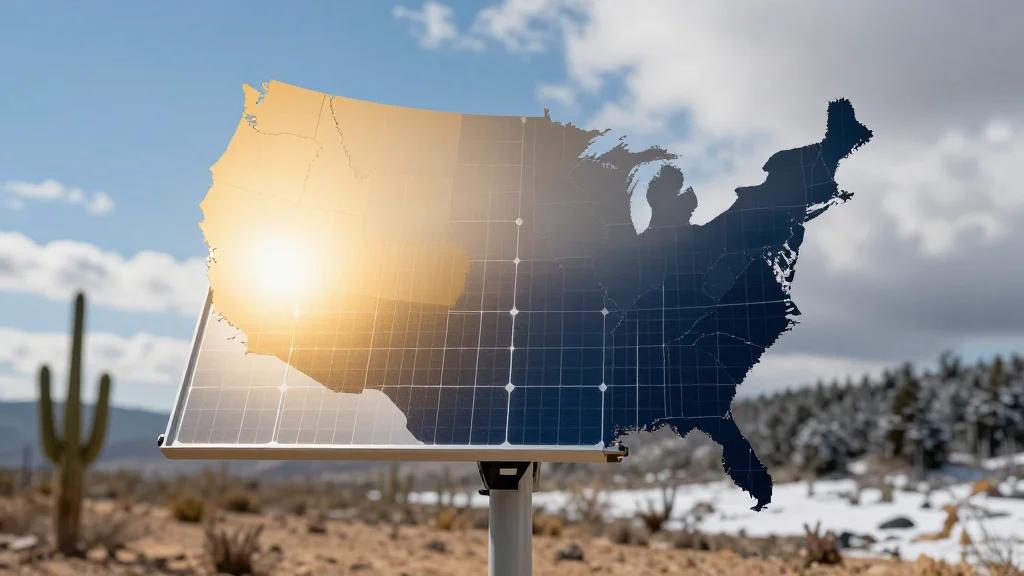
Heat Dome and High Pressure Boost Southern U.S. Solar as Polar Vortex Clouds the North
Why It Matters
The imbalance directly impacts solar generation forecasts, affecting grid reliability and market pricing in both surplus and deficit regions. Understanding climate‑driven variability helps investors and operators mitigate risk and optimize asset performance.
Key Takeaways
- •Southern US solar irradiance 20‑25% above March average
- •Polar vortex caused below‑normal irradiance in Canada and Northeast
- •Heat dome raised southwestern temps 10‑19 °C above norm
- •High‑pressure systems stabilized atmosphere, reducing cloud cover south
- •Solcast data supports over 300 GW solar assets worldwide
Pulse Analysis
The March 2026 solar outlook for North America underscores how atmospheric dynamics can reshape renewable energy output within weeks. Solcast’s high‑resolution satellite‑derived irradiance maps reveal that a persistent ridge of high pressure over the Pacific and Atlantic locked in clear skies across the southern half of the continent, while a deepening polar vortex churned moisture and snow over the north. Such a bifurcated pattern not only skews daily generation but also complicates month‑ahead market settlements, prompting traders to recalibrate risk models that traditionally assume more uniform seasonal trends.
In the Southwest, an intense heat dome pushed temperatures 10‑19 °C above seasonal norms, creating summer‑like stability that suppressed cloud formation. This atmospheric calm translated into 20‑25% higher global horizontal irradiance for key solar hubs in Texas and California, boosting expected output by several hundred megawatts. Climate attribution studies link the frequency of such extreme heat events to anthropogenic warming, suggesting that future solar portfolios may experience more pronounced north‑south disparities. Asset owners in the south can leverage this upside by scheduling maintenance during historically cloudier periods.
Conversely, the polar vortex delivered persistent cloud cover and snowstorms across the Great Lakes and the Northeast, driving irradiance well below long‑term averages and curtailing generation. Utilities in these regions must rely on ancillary resources or storage to offset shortfalls, highlighting the strategic value of diversified energy mixes. Solcast’s AI‑enhanced forecasting, with sub‑2% bias, equips operators with granular, near‑real‑time insights that improve dispatch decisions and market participation. As climate variability intensifies, such precision tools become essential for safeguarding grid stability and protecting investor returns.
Heat dome and high pressure boost southern U.S. solar as polar vortex clouds the north
Comments
Want to join the conversation?
Loading comments...