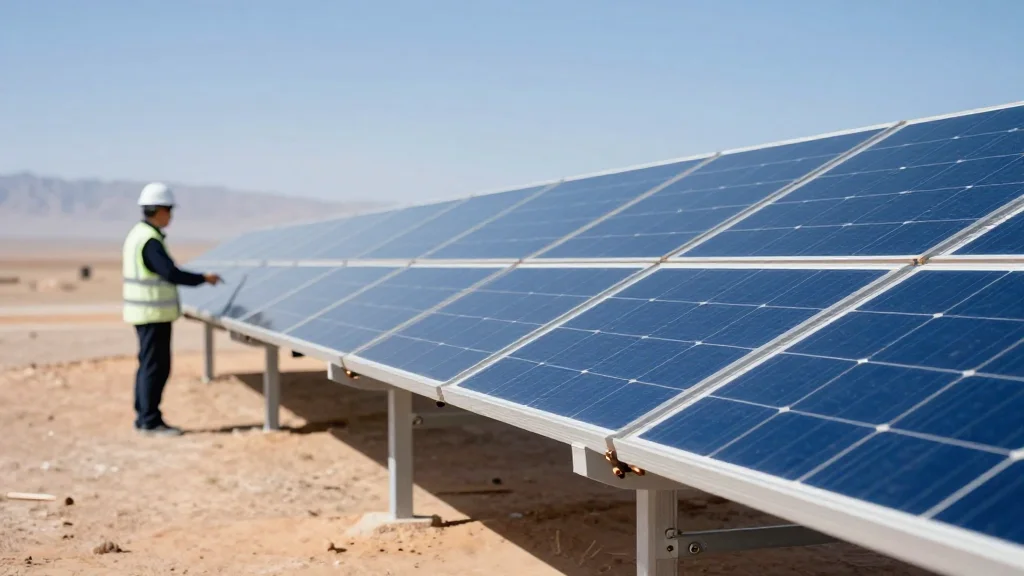
Heterojunction PV Modules with Low Silver Content Tested in World’s Sunniest Region
Companies Mentioned
Why It Matters
Replacing silver with abundant copper can cut module costs and mitigate supply‑chain risks, accelerating adoption of high‑efficiency PV in a market hungry for cheaper clean energy.
Key Takeaways
- •Up to 70% silver replaced by copper in HJT modules.
- •Tests conducted at PSDA, the planet’s sunniest solar site.
- •Copper substitution could lower PV module cost and material risk.
- •Project involves Chile, France, Italy, Spain, and Germany partners.
- •Early results exceed international benchmarks for low‑silver PV.
Pulse Analysis
The heterojunction (HJT) architecture has become the benchmark for high‑efficiency photovoltaic cells, but its commercial rollout is hampered by the reliance on silver paste for front‑contact grids. Silver accounts for up to 30% of a module’s bill of materials, making price volatility and geopolitical supply constraints a persistent challenge. By substituting copper—an abundant, low‑cost metal found in Chile’s mining sector—for a substantial portion of the silver, manufacturers can dramatically reduce material expenses while preserving the low‑resistance pathways essential for HJT performance.
Atamostec’s ALPACA project is the first to validate large‑scale copper substitution under the extreme irradiance of the Atacama Desert Solar Platform (PSDA), the world’s sunniest test field with more than 2,800 kWh/m² annually. Partnering with France’s CEA‑Ines, Italy’s 3Sun, and European industrial players such as Engie and Mondragon, the program has achieved up to 70 % silver replacement while maintaining efficiency and durability metrics comparable to conventional HJT modules. Real‑world data from the desert environment provides a credible baseline for investors and OEMs considering a shift away from silver.
If the copper‑rich HJT cells can be mass‑produced at scale, the cost curve for premium solar panels could drop by several dollars per watt, accelerating the economic case for utility‑scale and rooftop deployments. Chile stands to gain a strategic foothold in the global PV supply chain, leveraging its copper reserves to become a hub for next‑generation module manufacturing. The successful field results also signal to the broader industry that critical‑material reduction is technically feasible, potentially prompting policy incentives and reshaping procurement strategies across the renewable‑energy market.
Heterojunction PV modules with low silver content tested in world’s sunniest region
Comments
Want to join the conversation?
Loading comments...