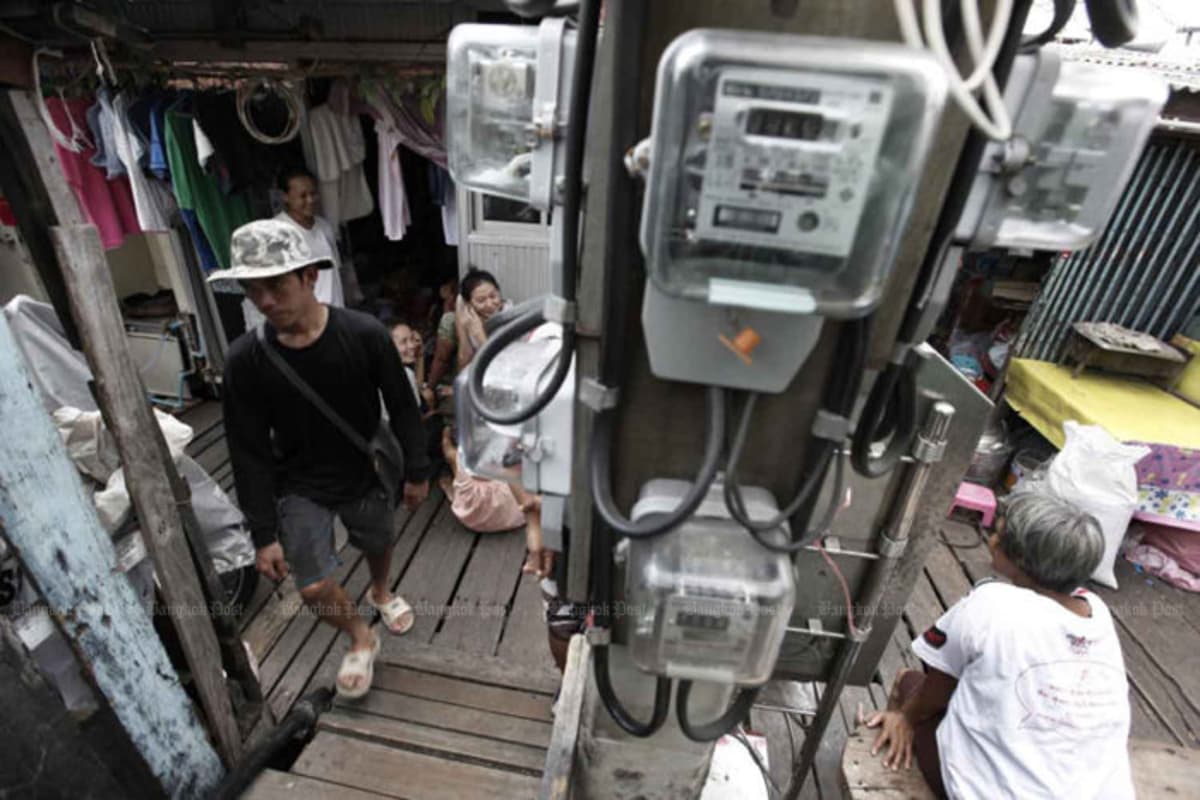
Higher Electricity Prices to Hit Large Thai Families
Why It Matters
The new tariff shifts the cost burden toward high‑usage consumers, aiming to stabilize public finances while nudging households toward renewable energy adoption.
Key Takeaways
- •New tiered tariff caps low‑use households at 3 baht/kWh (~$0.08)
- •Large families and home‑based businesses face higher bills from July
- •Government ends electricity subsidies, reducing state debt of ~40 bn baht ($1.1 bn)
- •Rooftop solar incentives pay 2.2 baht/kWh (~$0.06) with 10‑year guarantee
- •Tax deduction up to 200,000 baht ($5,600) encourages renewable adoption
Pulse Analysis
Thailand’s electricity market is undergoing a pivotal shift as the Energy Regulatory Commission (ERC) prepares a progressive tariff slated for July. The policy builds on a 2023 tiered system introduced amid soaring global fuel prices, but now tightens rates for consumers exceeding 200 kilowatt‑hours per month. By capping low‑usage households at 3 baht per kilowatt‑hour—roughly eight cents in U.S. dollars—the government seeks to protect vulnerable families while recouping the roughly 40 billion baht ($1.1 billion) debt accrued from pandemic‑era subsidies. The removal of blanket subsidies reflects a broader fiscal tightening as Thailand grapples with lingering effects of the Russia‑Ukraine conflict and regional geopolitical tensions.
For large Thai families and small enterprises operating from residential premises, the revised structure translates into noticeably higher monthly bills. The ERC’s data, sourced from state distributors MEA and PEA, indicates that high‑consumption users will shoulder a larger share of generation and fuel adjustment costs, a move designed to discourage wasteful consumption. This reallocation of costs aims to balance the utility sector’s financial health with social equity, ensuring that the cheapest tier remains affordable while prompting heavier users to reconsider their energy habits.
Simultaneously, the government is bolstering renewable energy adoption through an expanded rooftop‑solar program. Participants can sell surplus electricity back to the grid at 2.2 baht per unit (~$0.06) under a guaranteed ten‑year contract, and claim personal income‑tax deductions of up to 200,000 baht ($5,600). By raising the program’s capacity ceiling to 500 megawatts—well above the 90‑megawatt limit of the 2013 scheme—Thailand signals a strategic pivot toward clean power. The combined effect of higher tariffs for heavy users and attractive solar incentives is expected to accelerate the country’s transition to a more sustainable, financially resilient energy landscape.
Higher electricity prices to hit large Thai families
Comments
Want to join the conversation?
Loading comments...