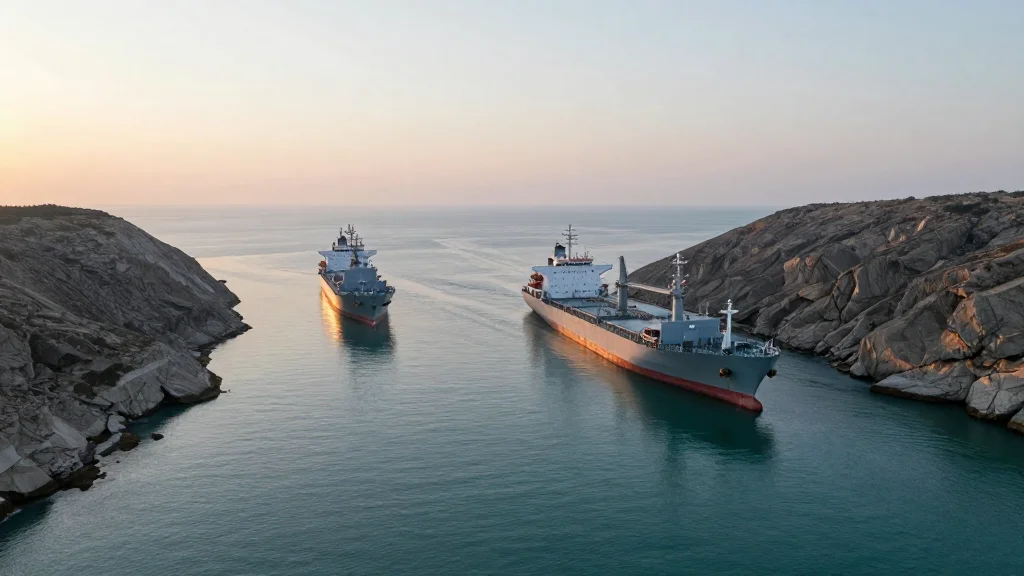
Hormuz Traffic Remains Near Zero as Peace Talks Stall
Why It Matters
The near‑zero flow threatens global oil supply chains and underscores how diplomatic deadlock can quickly translate into market volatility. Continued naval restrictions and tracking disruptions heighten uncertainty for shippers and investors alike.
Key Takeaways
- •Only six commercial transits recorded across Hormuz in past 24 hours
- •Iran demands Lebanon ceasefire before accepting U.S. deal
- •U.S. Central Command redirected 129 vessels, disabled six
- •Four Iranian crude tankers anchored off Bandar‑e‑Jask, unseen in counts
- •GPS jamming and "dark‑fleet" tactics obscure real traffic levels
Pulse Analysis
The Strait of Hormuz remains a chokepoint for global energy flows, handling roughly a fifth of the world’s petroleum. Recent ship‑tracking data shows a dramatic drop to just six commercial passages in a 24‑hour window, a direct consequence of stalled negotiations between Washington and Tehran. This lull not only curtails the movement of crude and refined products but also amplifies price sensitivity in oil markets, where any hint of supply disruption can trigger rapid price swings.
Diplomatic friction centers on Iran’s demand that a ceasefire in Lebanon be secured before it agrees to a U.S.‑proposed extension of the existing truce. The United States, meanwhile, maintains a robust naval presence, denying Iranian accusations of hostile fire and asserting that its forces have redirected 129 commercial vessels while disabling six to enforce a blockade of Iranian ports. The impasse reflects broader geopolitical tensions, as Tehran leverages the strait’s strategic value to extract concessions, while Washington seeks to prevent any escalation that could jeopardize regional stability and global energy security.
Operationally, the situation is compounded by sophisticated evasion tactics. Iranian‑linked tankers have been observed anchoring off Bandar‑e‑Jask, effectively disappearing from official transit counts, while GPS jamming and transponder shutdowns create a “dark‑fleet” phenomenon that hampers real‑time monitoring. These challenges make it difficult for analysts to gauge true traffic levels, prompting reliance on satellite imagery and third‑party trackers. As talks remain at an impasse, the combination of naval enforcement and opaque vessel movements will likely keep the Hormuz corridor in a state of heightened uncertainty for the foreseeable future.
Hormuz Traffic Remains Near Zero as Peace Talks Stall
Comments
Want to join the conversation?
Loading comments...