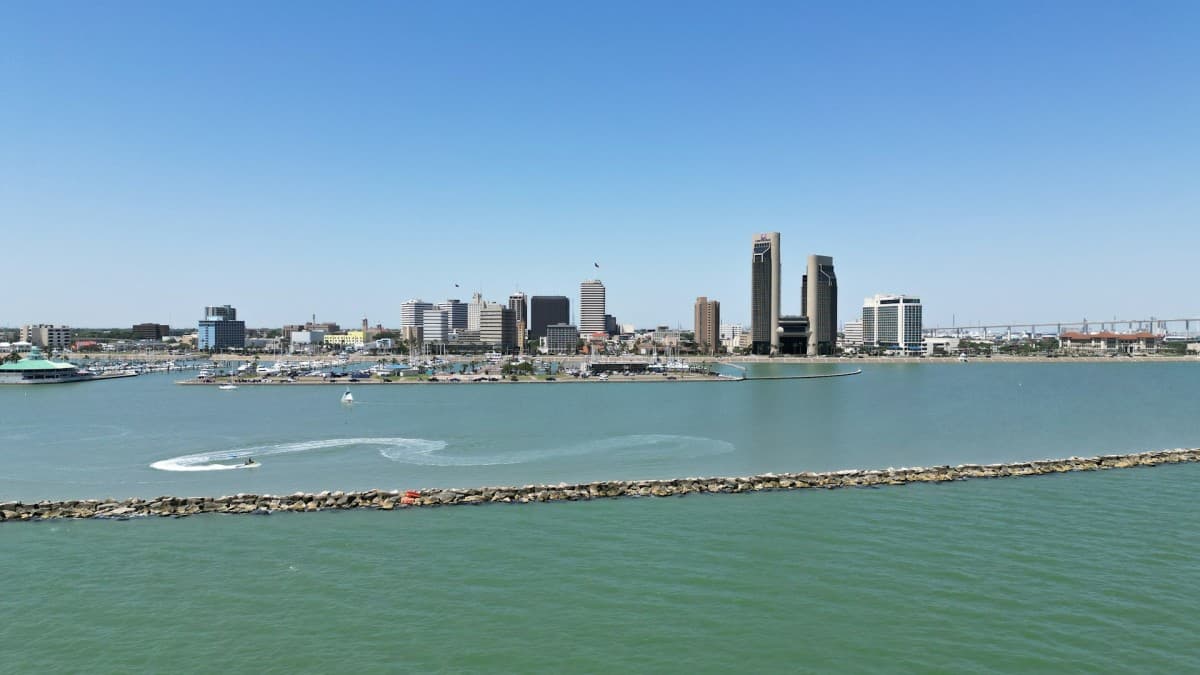
How a Regional Gulf Coast Port Became America's Crude Oil Export Capital
Why It Matters
Corpus Christi’s export dominance reshapes U.S. energy trade, but infrastructure bottlenecks could curb future revenue and global market share.
Key Takeaways
- •Corpus Christi ships >2 M barrels daily, U.S. export leader
- •Growth driven by 2015 ban lift and Permian shale boom
- •Pipeline capacity now limits further crude export expansion
- •LNG projects position the port for next energy export wave
- •Water scarcity emerging as a critical support‑system challenge
Pulse Analysis
The Port of Corpus Christi’s ascent to America’s top crude‑oil export hub is a textbook example of how geology, policy, and logistics can converge. The Permian Basin’s unprecedented output, unlocked by horizontal drilling and hydraulic fracturing, created a surplus that could not be absorbed domestically. When Congress repealed the 1970s‑era export ban in 2015, producers rushed to find overseas markets, and Corpus Christi’s proximity—closer to the Eagle Ford pipeline and the basin’s sweet spots than Houston—gave it a decisive edge. Deepening the ship channel and modernizing terminal operations turned that geographic advantage into a high‑throughput export corridor handling more than two million barrels per day.
Despite the rapid scale‑up, the system now bumps against a familiar bottleneck: takeaway capacity. Existing pipelines from the Permian to the Gulf are operating near full design, and any further surge in crude volumes would require new mid‑stream projects or reverse‑flow arrangements. Port officials warn that without additional lines, export growth will plateau, pressuring shippers to pay higher tariffs. At the same time, the region’s water footprint is swelling, as refineries, petrochemical complexes, and upcoming LNG plants compete for a limited groundwater supply, prompting investors to fund reuse and desalination schemes.
Looking ahead, natural‑gas liquefaction offers the next growth vector for Corpus Christi. The United States now leads global LNG shipments, and the port’s existing liquefaction train, coupled with several under‑construction projects, positions it to capture a larger slice of European and Asian demand driven by energy‑security concerns. Successful expansion will hinge on coordinated permitting, financing, and the same infrastructure discipline that powered the crude boom. If managed well, the dual‑commodity model could cement the Gulf Coast as a permanent gateway for U.S. energy, reinforcing trade balances and geopolitical influence.
How a Regional Gulf Coast Port Became America's Crude Oil Export Capital
Comments
Want to join the conversation?
Loading comments...