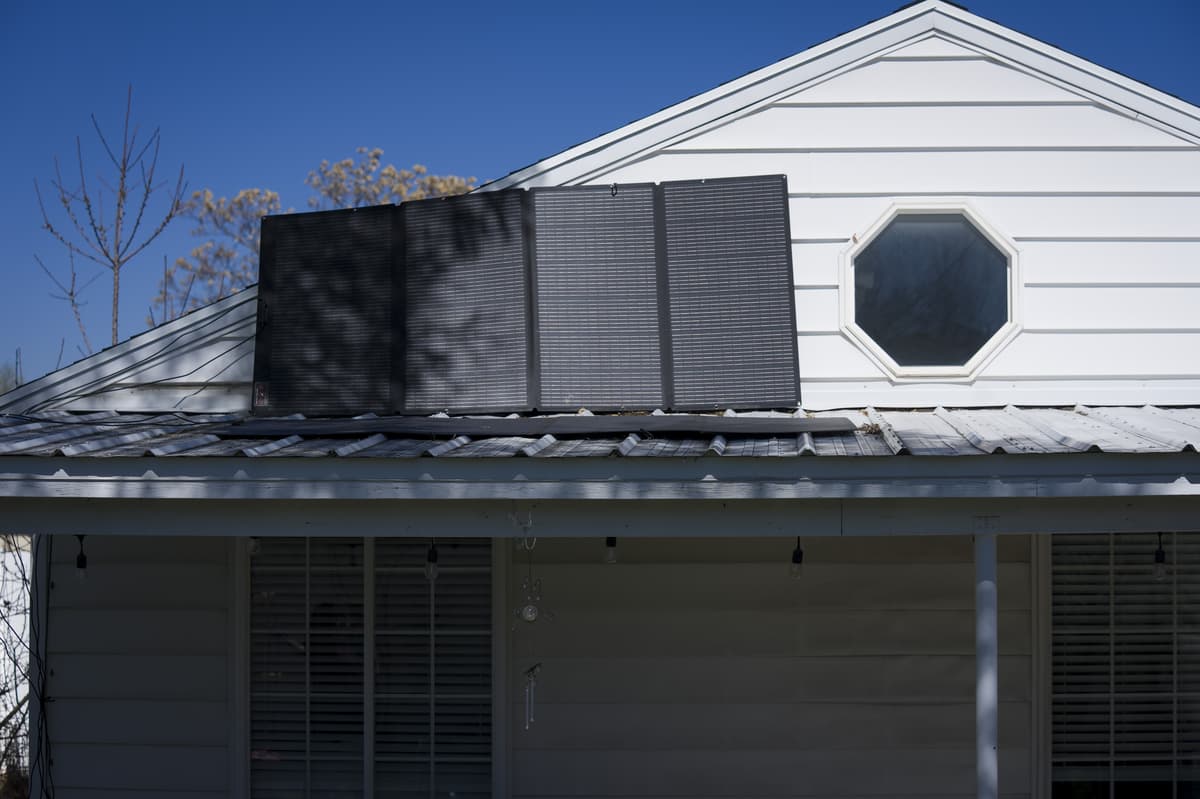
How Deep-Red Utah Helped Launch a Portable Plug-In Solar Movement
Why It Matters
The legislation provides an affordable entry point to residential solar, accelerating the U.S. clean‑energy transition while opening a new market for manufacturers and forcing utilities to adapt to bidirectional power flows.
Key Takeaways
- •Utah passed HB 340, enabling plug‑in solar directly into outlets.
- •30+ states drafting similar plug‑in solar legislation after Utah’s lead.
- •UL developing safety certification, first for U.S. plug‑in panels.
- •Portable panels cost $250‑$1,000; inverter $300; battery system $1,200.
- •Early adopters report ~10% bill reduction, about $1 daily savings.
Pulse Analysis
The plug‑in solar concept, long popular on European balconies, gained a foothold in the United States when Utah lawmakers approved HB 340. By allowing homeowners to connect modular photovoltaic arrays to a regular wall outlet, the state created a low‑cost alternative to traditional rooftop installations. This approach aligns with broader trends toward decentralized energy generation and offers a practical solution for renters and multi‑unit dwellers who lack roof access.
Regulatory clarity has been the biggest hurdle. Utah’s bill uniquely mandates UL to develop a safety certification specifically for plug‑in panels, addressing utility concerns about back‑feeding electricity and line‑worker safety. The 1,200‑watt output cap and liability protections for utilities aim to balance consumer freedom with grid reliability. As UL finalizes standards, manufacturers can bring certified products to market, reducing the risk of ad‑hoc DIY setups that could jeopardize safety.
Cost and convenience are driving early adoption. With panels priced between $250 and $1,000, inverters at $300, and battery‑integrated kits around $1,200, users can achieve modest savings—roughly $1 to $2 per day—without the $30,000 expense of a full roof system. The model is gaining legislative traction, with more than 30 states considering similar laws. If certification rolls out quickly, the portable solar market could expand rapidly, providing a scalable boost to the U.S. clean‑energy agenda while reshaping how utilities manage distributed generation.
How deep-red Utah helped launch a portable plug-in solar movement
Comments
Want to join the conversation?
Loading comments...