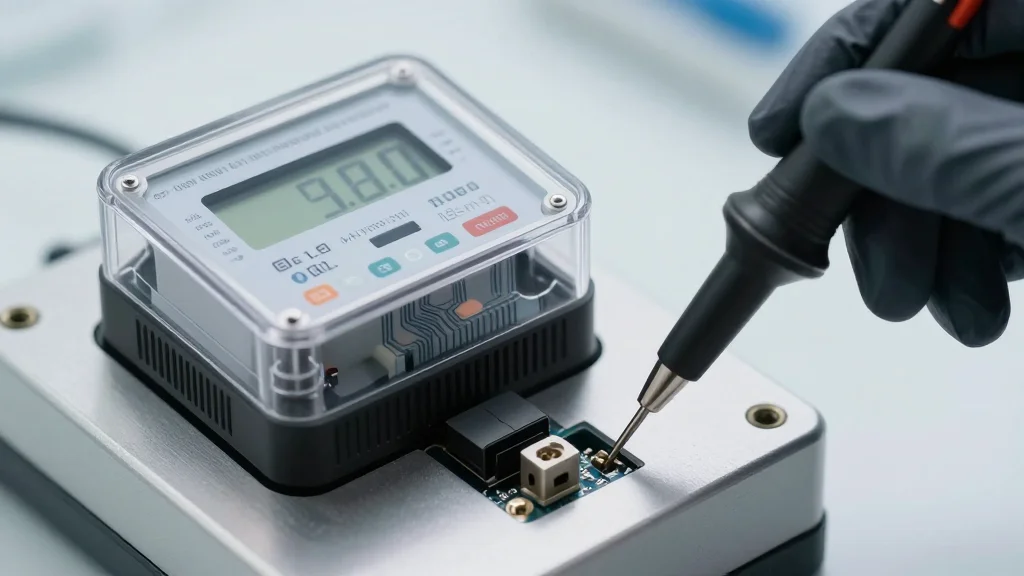
How ICT Ensures Energy Meters Secure Performance
Why It Matters
Ensuring meter accuracy protects utilities from billions in lost revenue and shields manufacturers from costly fines, while delivering a clear competitive advantage in the smart‑grid market.
Key Takeaways
- •ICT uncovers hidden PCB defects that bench tests miss
- •High‑frequency pulse and RTC testing lock meter accuracy to 1 ppm
- •Unified test station cuts cycle time, supports 10,000+ units/hour
- •Compliance with MID avoids fines up to 10% of revenue
- •Reliable NB‑IoT/LoRaWAN validation prevents communication failures
Pulse Analysis
Smart meters have evolved from simple electromechanical counters into data‑rich devices that feed real‑time consumption information to utility control centers. This transformation is driven by regulatory mandates such as the EU Clean Energy Package and the need to recoup $55‑110 billion in annual non‑revenue losses caused by tampering and measurement errors. As meters become more complex, they must maintain pinpoint accuracy over decades, a requirement that traditional pass/fail bench testing simply cannot guarantee.
Traditional testing methods focus on component presence and basic functionality, leaving subtle assembly‑level defects, quartz drift, and communication glitches undetected. These hidden failures surface months later as billing discrepancies or lost connectivity, eroding consumer trust and exposing manufacturers to fines up to 10% of annual revenue. In‑circuit testing (ICT) addresses these gaps by probing every critical node on the PCB, applying high‑frequency pulse stress, and verifying real‑time clock stability to within 1 ppm. SPEA’s DEEPICT® solution further consolidates firmware flashing and communication profile checks for NB‑IoT and LoRaWAN, ensuring that data exchange remains reliable under field conditions.
The business impact of adopting a unified ICT platform is profound. By achieving 100% fault detection at speeds beyond 10,000 units per hour, manufacturers eliminate costly field returns, reduce scrap, and accelerate time‑to‑market. Compliance with MID standards becomes a built‑in outcome rather than a post‑production hurdle, safeguarding revenue streams and enhancing brand reputation. In a market where precision and reliability are non‑negotiable, ICT delivers the ROI and competitive edge needed to thrive in the smart‑grid era.
How ICT Ensures Energy Meters Secure Performance
Comments
Want to join the conversation?
Loading comments...