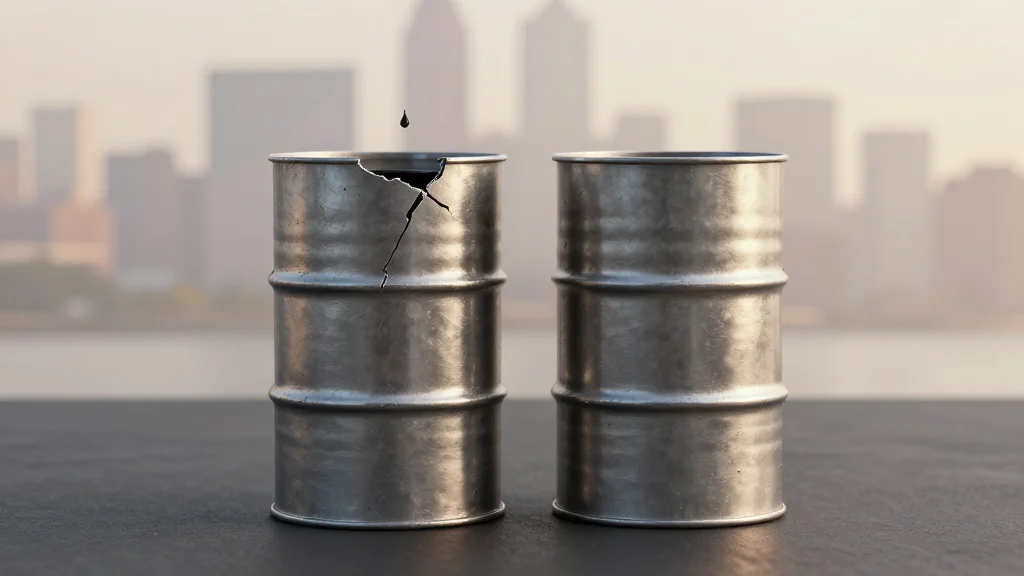
How Oil Shocks Cause Demand Destruction
Why It Matters
Understanding how successive oil shocks reshape demand helps investors, policymakers, and energy firms anticipate long‑term market realignment and plan for a lower‑growth oil landscape.
Key Takeaways
- •1970s oil shocks cut ~6 million b/d demand growth
- •Second shock erased another ~14 million b/d of growth
- •Mechanisms include emergency measures, behavior shifts, efficiency gains
- •Sequential shocks can permanently bend oil demand curve
Pulse Analysis
The 1970s oil crises provide a textbook case of demand destruction, where abrupt supply constraints forced economies to curtail consumption. The first shock in 1973‑74 stalled the rapid expansion of oil use, wiping out an estimated 6 million barrels per day of projected growth. A second, more severe shock in 1979‑80 compounded the effect, erasing an additional 14 million barrels per day. These twin events illustrate that demand can be knocked back not merely by price spikes but by the systemic adjustments that follow.
Demand erosion unfolded through several channels. Governments imposed emergency measures such as rationing and price controls, while consumers altered travel habits, reduced vehicle miles, and adopted smaller, more efficient engines. The economic slowdown reduced industrial output, and fuel switching—moving from oil to coal, natural gas, or nuclear—further cut oil’s share. Over time, heightened efficiency standards and technological innovation locked in lower consumption patterns, creating a lasting downward shift in the demand curve.
For today’s market, the Iran war’s disruption mirrors those historic shocks. If the conflict extends, policymakers may see similar emergency responses and behavioral shifts, potentially accelerating the transition to alternative fuels. Energy firms and investors should monitor signs of permanent demand contraction, such as rising efficiency investments and fuel‑mix diversification. Recognizing the cumulative impact of back‑to‑back shocks equips stakeholders to navigate a future where oil demand growth is no longer a given, reshaping strategies across the energy value chain.
How Oil Shocks Cause Demand Destruction
Comments
Want to join the conversation?
Loading comments...