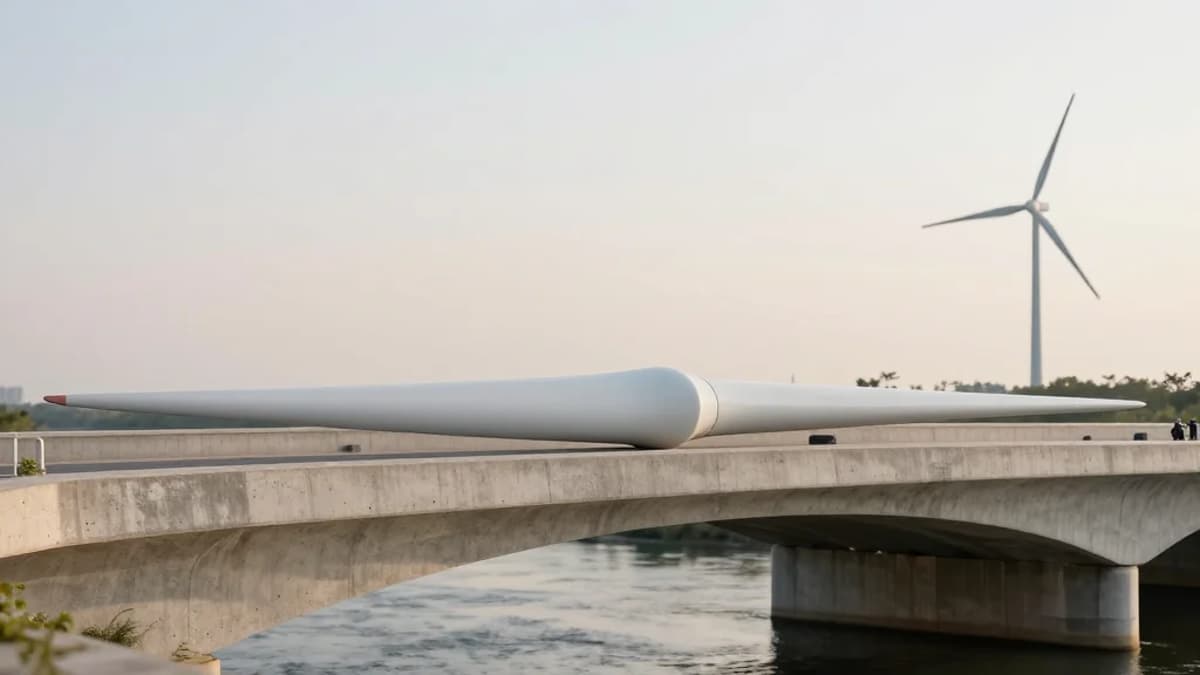
How Queensland Coal Plant Waste Is Helping to Build a (Concrete) Bridge to Renewables
•February 16, 2026
0
Why It Matters
The project demonstrates how legacy coal infrastructure can be leveraged to lower environmental impact while accelerating renewable deployment, setting a precedent for other utilities facing ash disposal dilemmas.
Key Takeaways
- •CS Energy uses fly ash in bridge concrete.
- •80‑metre bridge transports 100‑tonne turbine components.
- •Fly ash reuse cuts landfill waste and carbon footprint.
- •Project links Callide plant to 285 MW Lotus Creek wind farm.
- •Demonstrates circular‑economy model for coal‑dependent utilities.
Pulse Analysis
Australia produces roughly 12 million tonnes of coal ash annually, much of which ends up in wet‑storage dams that threaten soil and water quality. The fine fraction, known as fly ash, possesses pozzolanic properties that make it an effective cement substitute, yet regulatory and logistical hurdles have limited its large‑scale adoption. Recent research and pilot projects have highlighted the material’s potential to lower concrete’s carbon intensity, prompting utilities to explore reuse pathways that mitigate both waste and emissions.
CS Energy’s Yellow Creek Bridge exemplifies this shift. By blending fly ash from Callide Power Station into the bridge’s concrete mix, the company not only diverts waste from a containment dam but also reduces the embodied carbon of the structure. The 80‑metre span is engineered to handle turbine components exceeding 100 tonnes, streamlining logistics for the Lotus Creek Wind Farm’s construction. This dual‑purpose infrastructure illustrates how existing coal‑plant by‑products can be transformed into value‑adding assets, delivering cost savings and reinforcing the company’s renewable rollout.
The broader implications extend beyond Queensland. As utilities worldwide grapple with de‑commissioning coal assets, the CS Energy model offers a replicable blueprint for integrating circular‑economy principles into transition strategies. Policymakers may consider incentives for fly‑ash‑based concrete, while developers can leverage such materials to meet increasingly stringent sustainability criteria. Ultimately, turning coal waste into construction material not only eases environmental liabilities but also accelerates the shift toward a low‑carbon energy future.
How Queensland coal plant waste is helping to build a (concrete) bridge to renewables
0
Comments
Want to join the conversation?
Loading comments...