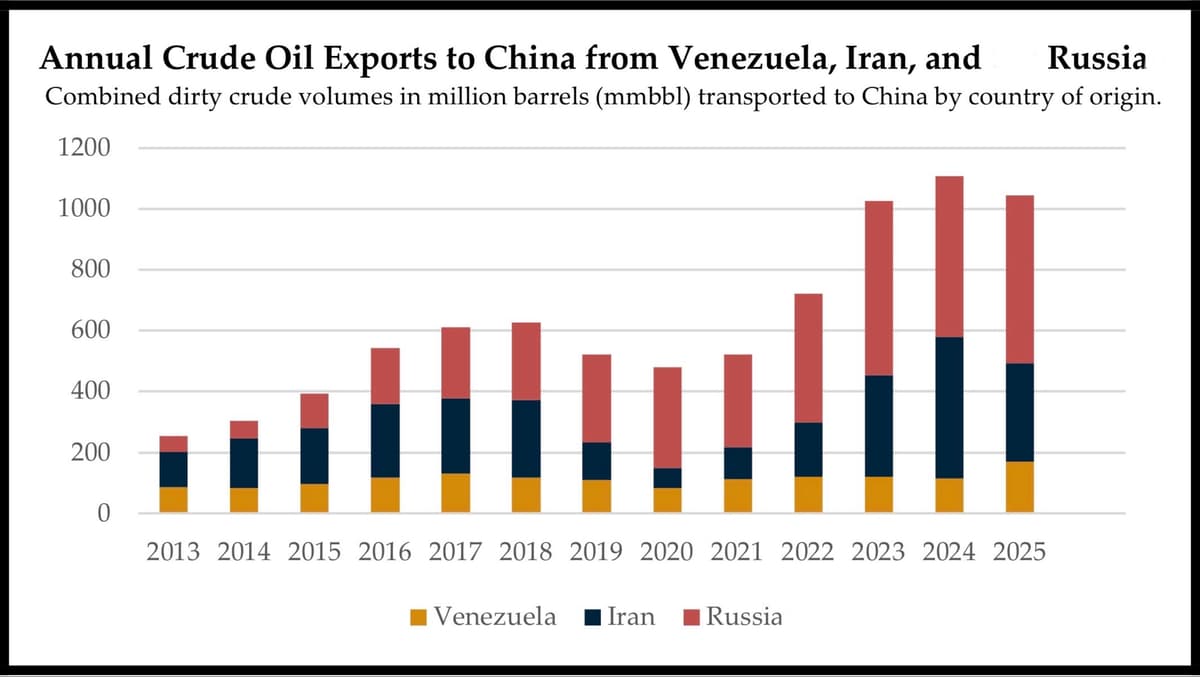
How the Chinese Communist Party Has Kept the Economies of Iran and Russia Afloat

Key Takeaways
- •China's shadow fleet moved 69.3M barrels, worth ~$4B
- •Two‑thirds of seized oil landed at Shandong terminals
- •China built a strategic reserve of 1.2B barrels below market price
- •Shadow tankers staffed by Chinese and Russian military, posing cyber threats
- •U.S. recommends sanctions on ports, whistleblower rewards, CFTC market‑manipulation probe
Pulse Analysis
The investigation highlights a sophisticated evasion architecture that lets Beijing acquire discounted, sanctioned crude while insulating the transaction from traditional Western enforcement points. By routing oil through ship‑to‑ship transfers in Southeast Asian waters and re‑issuing falsified certificates of origin, China sidesteps sanctions on insurers, banks and refiners. This method not only supplies cheap feedstock for its expanding strategic petroleum reserve but also creates a reliable cash flow for regimes whose oil revenues fund military campaigns in Ukraine, the Middle East and Latin America.
For policymakers, the findings raise urgent questions about the effectiveness of existing sanctions regimes. The report urges targeted measures such as sanctioning port operators that handle shadow‑fleet cargo, establishing a global whistleblower reward program, and tasking the CFTC with probing whether the systematic purchase of steeply discounted Russian oil constitutes market manipulation. Implementing these steps could raise the compliance cost for illicit traders, disrupt the shadow fleet’s logistics, and restore the intended financial pressure on authoritarian oil exporters.
Strategically, the shadow‑fleet underscores how energy security and geopolitical leverage are increasingly intertwined with cyber and intelligence operations. Vessels staffed by Chinese and Russian military personnel double as unaudited cyber‑threat vectors, complicating detection and response. As the United States and allies recalibrate their approach to energy sanctions, they must consider a multi‑layered response that blends financial, legal, and cyber‑defense tools to dismantle the infrastructure that enables sanctioned oil to flow unchecked.
How the Chinese Communist Party Has Kept the Economies of Iran and Russia Afloat
Comments
Want to join the conversation?