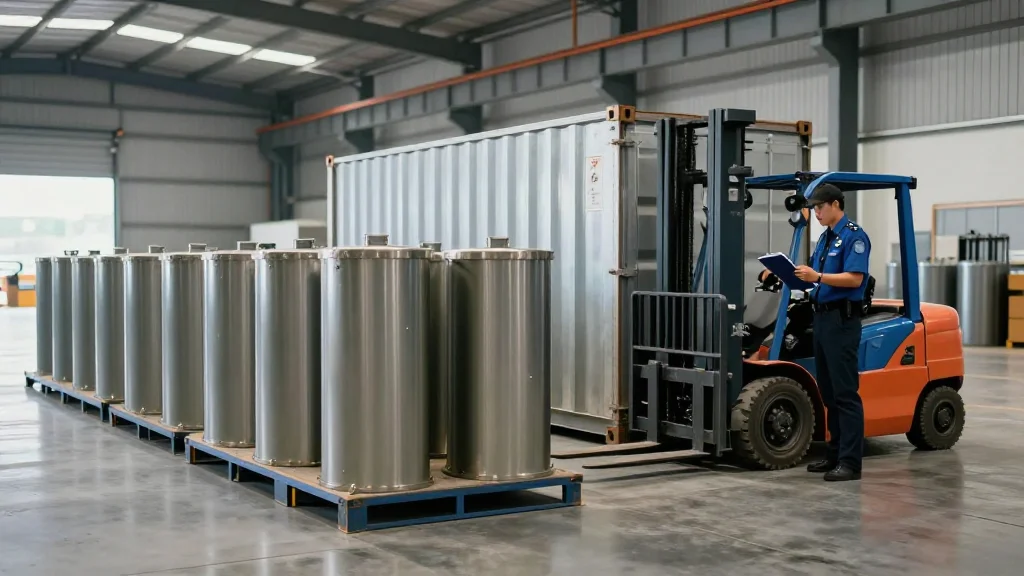
HSN Classification Muddle Raises Costs for Battery Storage Sector
Why It Matters
Clarifying HSN classifications and duty structures will reduce upfront costs, accelerate deployment, and strengthen India’s domestic battery supply chain, crucial for meeting aggressive renewable‑energy targets.
Key Takeaways
- •Single HSN code classifies BESS as power banks, raising duties
- •Industry seeks separate HSN codes for cells, packs, and systems
- •Approved manufacturer list aims to boost domestic supply chain
- •Clarification on customs‑duty deferment could lower project costs
- •Demand for grid‑level storage projected 23% CAGR through 2035
Pulse Analysis
The Harmonised System of Nomenclature (HSN) is the global taxonomy that determines tariff rates for imported goods. In India, battery‑energy‑storage systems (BESS) and their components are currently lumped under a single code, which customs officials sometimes interpret as "power banks." This misclassification triggers higher import duties, adding millions of dollars to project budgets and creating uncertainty for developers. By aligning India’s HSN framework with industry realities, the government can eliminate a costly bottleneck that has slowed the rollout of grid‑scale storage.
Industry stakeholders are lobbying for three concrete policy adjustments. First, they want separate HSN codes for lithium‑ion cells, battery packs and complete storage systems, enabling duty rates that reflect each product’s value chain. Second, an approved list of domestic manufacturers—mirroring existing solar‑module schemes—would act as a non‑tariff barrier, encouraging local production and reducing reliance on imports. Third, clear guidance on customs‑duty deferment under the manufacture‑and‑warehouse rules could allow developers to spread duty payments over the 12‑year operational life of a BESS, improving cash‑flow and investment attractiveness. Additionally, relaxing the rule that storage must charge only from co‑located renewable sources would boost utilisation rates and lower levelized costs.
The timing of these reforms is critical. The India Energy Storage Alliance forecasts a compound annual growth rate above 23% for grid‑level storage through 2035, as utilities seek to balance intermittent solar and wind output and shave peak demand. A streamlined HSN regime and supportive fiscal policies would not only cut costs but also signal policy certainty, attracting foreign capital and accelerating the build‑out of a domestic battery ecosystem. In the longer term, a robust storage market will underpin India’s ambition to achieve 450 GW of renewable capacity by 2030, making the HSN clarification a pivotal piece of the nation’s clean‑energy puzzle.
HSN classification muddle raises costs for battery storage sector
Comments
Want to join the conversation?
Loading comments...