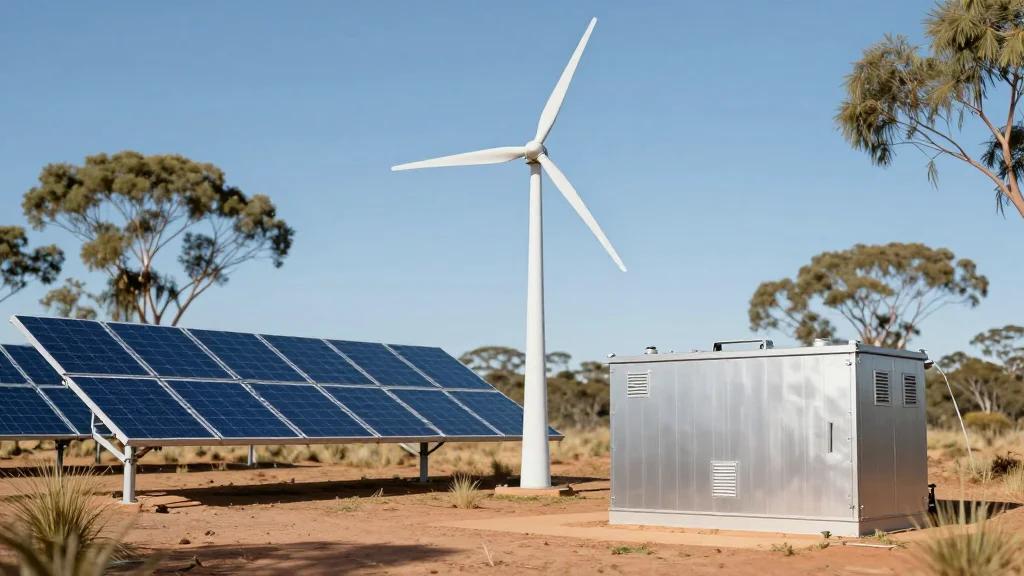
Hybridisation of Wind, Solar and Battery Storage Is No Longer Optional – It’s the New Baseline
Why It Matters
Hybrid assets align generation with market value, improving revenue stability and making projects bankable in an environment of rising interest rates and constrained grid connections. This changes investment criteria and accelerates the transition toward more resilient, flexible renewable portfolios.
Key Takeaways
- •Hybrid solar‑storage projects now default for utility‑scale renewables
- •Revenue depends on output timing, not just generation volume
- •Grid connection limits make storage essential for maximizing MW value
- •Misaligned contracts and financing risk undermine hybrid project returns
- •Wind‑plus‑storage gaining traction as wind penetration rises
Pulse Analysis
The economics of renewable power are no longer measured by megawatt‑hours alone. As solar and wind penetration deepens, daytime price suppression and frequent negative‑price events erode the revenue of standalone generators. Battery storage lets developers shift production into higher‑priced intervals, smoothing cash flows and reducing exposure to intraday volatility. This "shape"‑focused approach transforms storage from a peripheral arbitrage tool into a core revenue lever, reshaping project valuation models across the National Electricity Market.
Grid constraints amplify the case for hybridisation. In many regions, the point of connection is the most valuable asset, with export limits capping the amount of energy a plant can deliver. Co‑locating batteries enables developers to pack more economic output into the same connection slot, mitigating curtailment and improving utilization rates. However, the commercial architecture of these hybrids remains unsettled; lenders and equity investors demand clear, integrated contracts that align optimisation strategies with financing assumptions. Misalignment between off‑take agreements, dispatch rights and financing structures can erode the very value that storage is meant to unlock, making rigorous integration from the design phase essential.
Looking ahead, the hybrid model is extending beyond solar to wind, where variability and market participation challenges are even more pronounced. Turbine manufacturers are embedding storage solutions, and investors are treating flexibility as a primary asset class attribute. As the industry refines contractual frameworks and testing standards for integrated systems, hybrid projects are poised to become the cornerstone of a resilient, bankable renewable portfolio, delivering both capacity and the dispatchability needed for a low‑carbon grid.
Hybridisation of wind, solar and battery storage is no longer optional – it’s the new baseline
Comments
Want to join the conversation?
Loading comments...