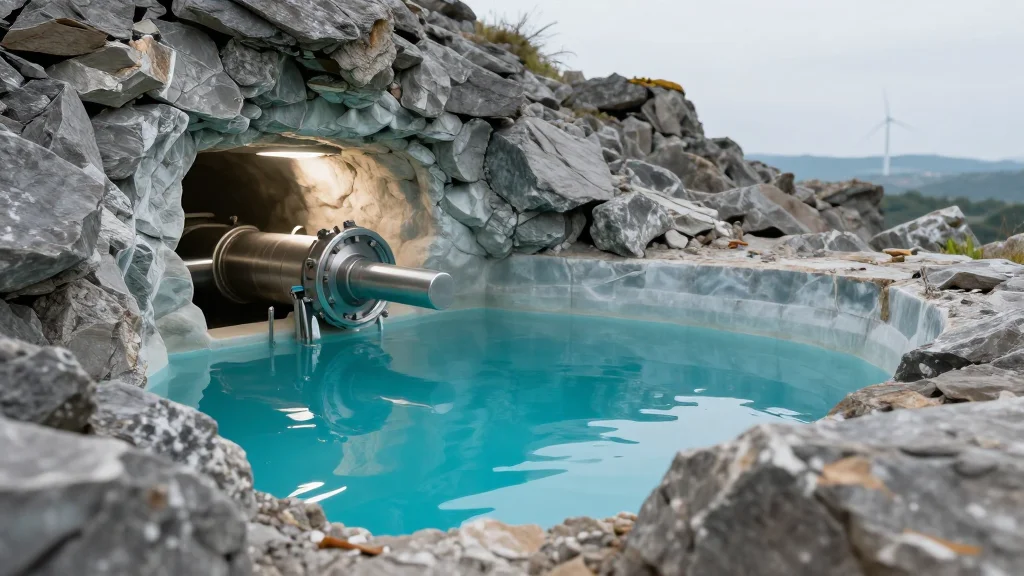
Hydrostor Pitches 500‑MW Underground Pumped‑hydro Storage in Ontario’s Grid Choke Point

Why It Matters
Ontario’s electricity system is under pressure from rising renewable penetration and aging transmission assets. Adding 500 MW of flexible, long‑duration storage could defer costly transmission upgrades and provide a reliable back‑up for wind and solar output. The project also tests a novel engineering solution that could be replicated in other regions lacking natural elevation, expanding the toolkit for grid decarbonization. If Hydrostor’s A‑CAES model proves technically and environmentally viable, it could unlock billions of dollars of investment in underground storage, offering a lower‑impact alternative to surface reservoirs and large battery farms. Conversely, unresolved groundwater and land‑use issues could stall the project, reinforcing reliance on more conventional, but potentially less efficient, storage options.
Key Takeaways
- •Hydrostor proposes a 500 MW, 4 GWh underground pumped‑hydro facility near Napanee, Ontario.
- •The project targets the IESO’s long‑lead‑time RFP, which can grant 40‑year contracts.
- •A‑CAES technology stores compression heat and uses a 600‑800 m water column for pressure.
- •Local conservation authority flags groundwater uncertainty and feasibility of water‑intake routes.
- •The site lies on prime agricultural land, prompting recommendations for future holding symbols.
Pulse Analysis
Hydrostor’s bid arrives at a moment when Ontario’s grid operators are scrambling for long‑duration storage that can bridge the gap between intermittent renewables and firm capacity. Traditional pumped‑hydro projects are limited by geography; batteries, while proliferating, still face cost and duration constraints for multi‑hour discharge. By moving the storage medium underground, Hydrostor sidesteps the need for surface reservoirs and the associated environmental and land‑use battles that have stalled many hydro projects worldwide.
However, the underground approach is not a silver bullet. The reliance on deep aquifers for water pressure introduces a new set of hydrogeological risks, especially in a region where groundwater serves agricultural and municipal users. The conservation authority’s cautionary statements suggest that regulators will demand rigorous, data‑driven assessments before green‑lighting such a venture. If Hydrostor can demonstrate that its water‑intake system will not jeopardize local water tables, it could set a regulatory precedent that eases the path for similar projects.
From a market perspective, securing a 40‑year contract would provide the revenue certainty needed to attract the heavy capital investment typical of pumped‑hydro‑scale projects. It would also signal to investors that underground storage is a credible, bankable asset class. This could accelerate financing pipelines for other A‑CAES projects across North America, where grid constraints are increasingly common. The next few months will be a litmus test: successful mitigation of groundwater concerns could unlock a new frontier in energy storage; failure to do so may reinforce the dominance of surface‑based solutions and battery farms in the short term.
Hydrostor pitches 500‑MW underground pumped‑hydro storage in Ontario’s grid choke point
Comments
Want to join the conversation?
Loading comments...