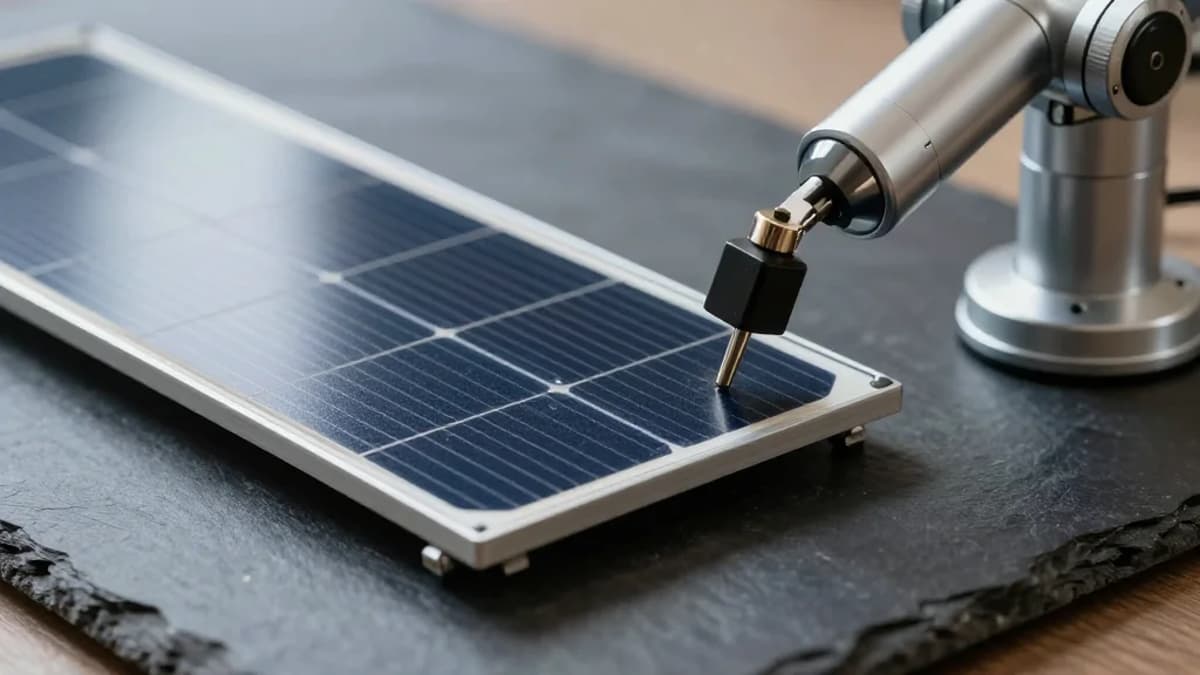
The lack of standardized specs and incentives hampers cost‑effective reuse, limiting waste reduction and value recovery from aging solar assets. Implementing IEC standards and supportive policies could unlock a sizable market, boosting EU energy resilience and decarbonization.
Second‑life photovoltaic modules promise to extend the economic life of solar farms while curbing landfill waste, yet the market is stalled by a patchwork of qualification criteria. The IEA‑PVPS report underscores that IEC‑based technical specifications are the linchpin for consistent re‑qualification, safety assurance, and grid compliance. By codifying testing protocols—such as IV curves, electroluminescence imaging, and insulation resistance—manufacturers and installers can classify modules into reuse, repair, or recycle streams with confidence, accelerating adoption across the value chain.
Automation emerges as the catalyst for scalability. Modern test rigs equipped with AI‑driven diagnostics and mobile labs can evaluate thousands of panels per day, slashing labor costs that have traditionally made manual repairs prohibitive. Real‑world case studies reveal that defects like bypass‑diode failures achieve over 90% restoration, while more systemic solder issues linger at single‑digit success rates, suggesting a targeted repair strategy for remote or logistics‑challenged sites. Coupled with aerial inspections and predictive analytics, these technologies create a data‑rich ecosystem that informs investment decisions and minimizes performance risk.
Policy and finance remain the final frontier. The European Union currently offers no direct incentives for panel reuse, leaving a cost gap between refurbished and new modules that deters large‑scale projects. Introducing subsidies, low‑interest loans, or performance‑based contracts could bridge this divide, while harmonized warranty frameworks would protect investors. As Europe’s installed capacity ages, a coherent regulatory environment combined with robust IEC standards could unlock gigawatt‑scale second‑life markets, reinforcing energy security, reducing price volatility, and delivering measurable emissions cuts.
The latest report from the International Energy Agency’s (IEA) Photovoltaic Power Systems Programme (PVPS) says second-life PV modules have the potential to reduce waste and extend the value of solar assets, but their market today remains underdeveloped and requires advances in technical qualifications, scalable reuse infrastructure and supportive policy frameworks.
The photovoltaic industry needs to introduce supportive policy frameworks for second-life PV modules to prevent the market remaining niche and underdeveloped, according to a new report from IEA-PVPS.
The Task 13 report explains that while the repair of PV modules, by addressing issues such as solder bond failures, cracked backsheets or junction box issues, is technically feasible, such repairs are often labour-intensive, costly and difficult to scale without automation.
The second-life PV module market remains fragmented as a result, according to the report, compounded by a lack of harmonized qualification criteria, standardized testing protocols and repair guidelines.
The report’s authors recommend fast-tracking IEC-based technical specifications for the requalification and safety of reused modules, introducing financial instruments to close the cost gap between new and second-life modules and batteries, and supporting investments in automated testing hubs and logistics networks.
The report adds that automated testing systems capable of IV characterization, electroluminescence imaging and insulation resistance testing are key to providing a scalable path for second-life modules. “This approach allows efficient classification into ‘reuse’, ‘repair’ or ‘recycle’ streams, minimizing labour costs and ensuring greater consistency,” the report explains. “Advances in aerial inspection, AI-based diagnostics and mobile test labs can further reduce costs and risks while increasing throughput.”
Case studies highlighted in the report reveal that certain defects, such as bypass diode failures, can achieve greater than 90% restoration rates, while modules with systemic soldering defects had success rates as low as 10% to 15%. This leads to the conclusion that repairs are best reserved for specific contexts such as remote areas or where logistics make replacement prohibitive.
The report’s conclusion says pilot projects confirm that second-life PV and battery systems can “deliver tangible benefits in energy autonomy, reduced emissions, and protection against electricity price volatility.”
“However, they also underline persistent challenges: technical compatibility of heterogeneous module batches, evolving grid compliance requirements and the limited economic advantage of second-life batteries compared to new ones,” the report adds. “These experiences highlight the need for robust system integration guidelines and regulatory flexibility to unlock wider adoption.”
Stephan Padlewski, founding partner of France-based solar panel maintenance service DOTSun, told pv magazine a market opportunity for second-life PV modules in the EU already extends to the gigawatt scale and is growing rapidly as Europe’s installed assets continue to age.
He added that extending the operational lifetime of PV panels within a maturing second‑life market would not only offer significant advantages across all renewable‑energy metrics, but also strengthen the regional PV ecosystem, reshore significant expertise and regional value‑added activities, improve EU resilience and reduce overdependency on imported products.
“Buying new panels at $0.10/W may sound attractive, but repowering means rebuilding the entire plant – mounting systems, cabling, and inverters included,” Padlewski said. “In that context, repair becomes highly competitive, and enables systems to reach their full operational lifetime without unnecessary waste.”
Padlewski added that the development of a second-life market will require a coherent and stronger EU-level regulatory framework that actively supports the reuse of panels in a secondary market.
“The EU market should certainly consider the reuse of modules decommissioned during their mid‑life or even end‑of‑life – provided they continue to perform adequately well and remain compliant with electrical‑integrity requirements after repair and retesting,” he said. “But today, there is no incentive for reuse despite its clear environmental and economic benefits.”
Padlewski also suggested that new testing protocols and quality-assurance standards must be established prior to any panel reuse, with additional clarification regarding the warranty ownership.
Comments
Want to join the conversation?
Loading comments...