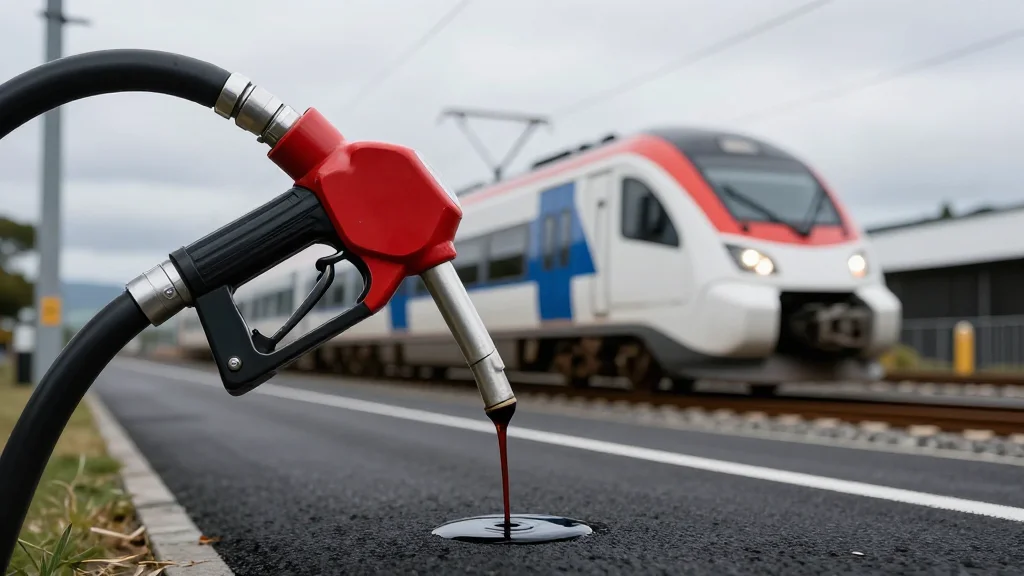
If only We Didn't Need so Much Petrol... The Electrification Plans NZ Has Dreamed up, and Abandoned
Companies Mentioned
Why It Matters
The fuel price shock forces New Zealand to accelerate electrification, directly affecting cost of living, climate targets, and long‑term energy security.
Key Takeaways
- •Diesel at $4 per litre fuels NZ electrification push
- •Clean Car Discount spent $173M USD, ended 2023
- •Full North Island rail electrification costs about $600M USD
- •Government allocates $36M USD for 2,500 EV chargers
- •Outer islands still depend on diesel despite $6.6M wind aid
Pulse Analysis
The recent surge in diesel to roughly $4 per litre – a 33 % jump in household fuel bills – has thrust New Zealand’s reliance on imported oil into the spotlight. With global oil markets volatile, policymakers and businesses are scrambling for alternatives that can blunt the cost‑of‑living squeeze and meet the country’s 2050 net‑zero target. Electrification, whether of transport, rail or remote power systems, is being re‑examined as a pragmatic response, offering both emissions reductions and insulation from future fuel spikes.
Several electrification initiatives have languished for years. The Clean Car Discount, which collected NZ$118 million (≈ $71 million USD) in levies but paid out $288 million (≈ $173 million USD) in subsidies, was scrapped in 2023, yet EV registrations surged again as fuel prices climbed. Rail electrification remains fragmented: completing the North Island Main Trunk is estimated at $1 billion NZD (≈ $600 million USD), while a 2021 study suggested a $400 million NZD (≈ $240 million USD) phased approach. A ‘golden triangle’ proposal adds another $430 million NZD (≈ $258 million USD) to the mix, highlighting the scale of investment required.
The Luxon administration is now channeling funds to accelerate the transition. A $60 million NZD (≈ $36 million USD) package will co‑fund 2,500 public EV chargers, aiming for 4,400 by 2030, and regulatory tweaks to the Resource Management Act are intended to speed renewable projects. Nevertheless, remote communities such as Stewart and the Chatham Islands continue to depend on diesel, despite a $11 million NZD (≈ $6.6 million USD) wind‑turbine programme. The coming years will test whether these investments can deliver a resilient, low‑carbon energy system.
If only we didn't need so much petrol... the electrification plans NZ has dreamed up, and abandoned
Comments
Want to join the conversation?
Loading comments...