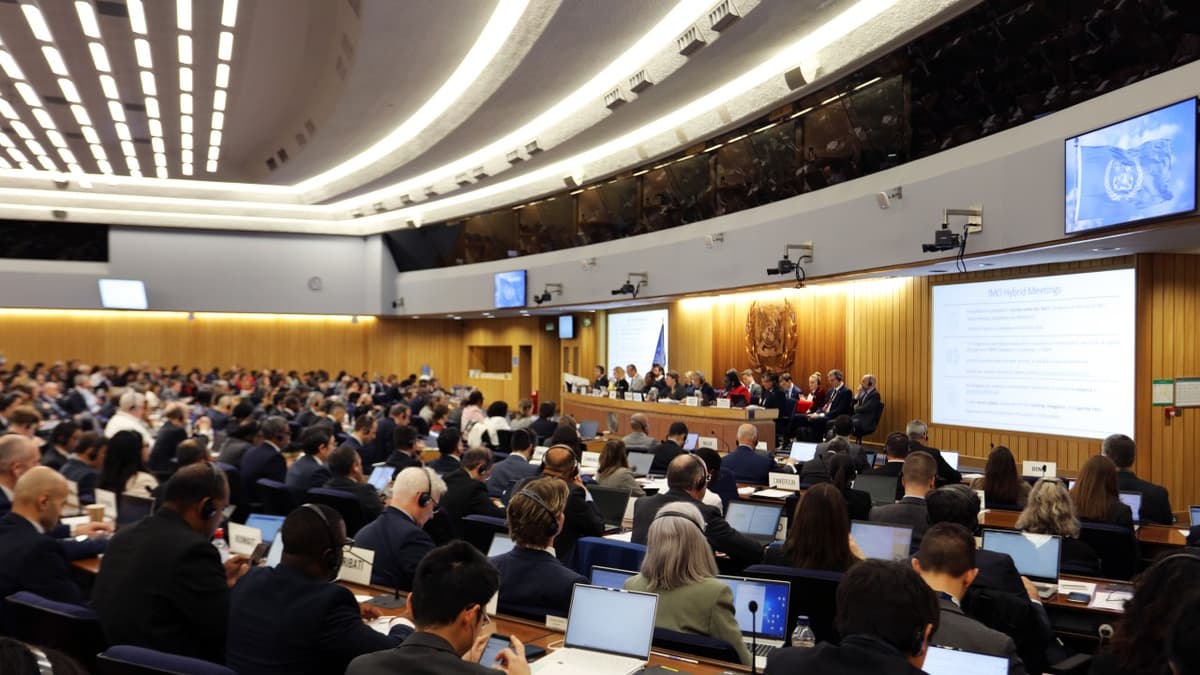
IMO NZF Would Send Stable Demand Signal for Zero-Emission Fuels
•February 19, 2026
0
Why It Matters
The NZF’s design will shape global maritime decarbonisation pathways, influencing fuel markets, investment flows, and the ability of developing nations to meet IMO emissions targets.
Key Takeaways
- •NZF as‑is provides stable demand for zero‑emission fuels
- •Removing economic elements eliminates compliance incentives, raising investment risk
- •Single‑tier global fuel standard risks regulatory fragmentation globally
- •Lower‑income nations face higher costs under the current NZF
Pulse Analysis
The International Maritime Organization’s Net Zero Framework sits at the crossroads of policy ambition and market reality. By embedding compliance mechanisms, revenue streams, and a phased fuel standard, the "as‑is" version creates a predictable demand environment that can unlock financing for large‑scale production of ammonia, methanol, and other zero‑emission marine fuels. Analysts argue that without these economic levers, shipowners may defer investments, pushing commercial availability of clean fuels well beyond the 2030 checkpoint and jeopardizing the 2050 net‑zero goal.
Alternative proposals—stripping the framework of its economic elements or consolidating fuel standards into a single trajectory—appear attractive to cost‑sensitive governments but introduce significant downsides. Eliminating penalties for non‑compliance erodes the market signal that drives technology adoption, while a one‑size‑fits‑all fuel standard could spark a patchwork of regional regulations as nations seek bespoke solutions. Both paths increase financing uncertainty, elevate capex for shipbuilders, and risk a fragmented regulatory landscape that hampers global supply chain coordination.
For the broader maritime industry, the stakes extend beyond emissions metrics. Stable policy signals influence shipyard planning, insurance underwriting, and the strategic positioning of energy firms entering the marine fuel market. Developing economies, which already face higher transition costs, could be left further behind if the framework is weakened, widening the gap between high‑income and low‑income nations in meeting IMO targets. Maintaining the current NZF, despite its imperfections, therefore offers the most pragmatic route to align commercial incentives with the urgent climate agenda.
IMO NZF would send stable demand signal for zero-emission fuels
0
Comments
Want to join the conversation?
Loading comments...