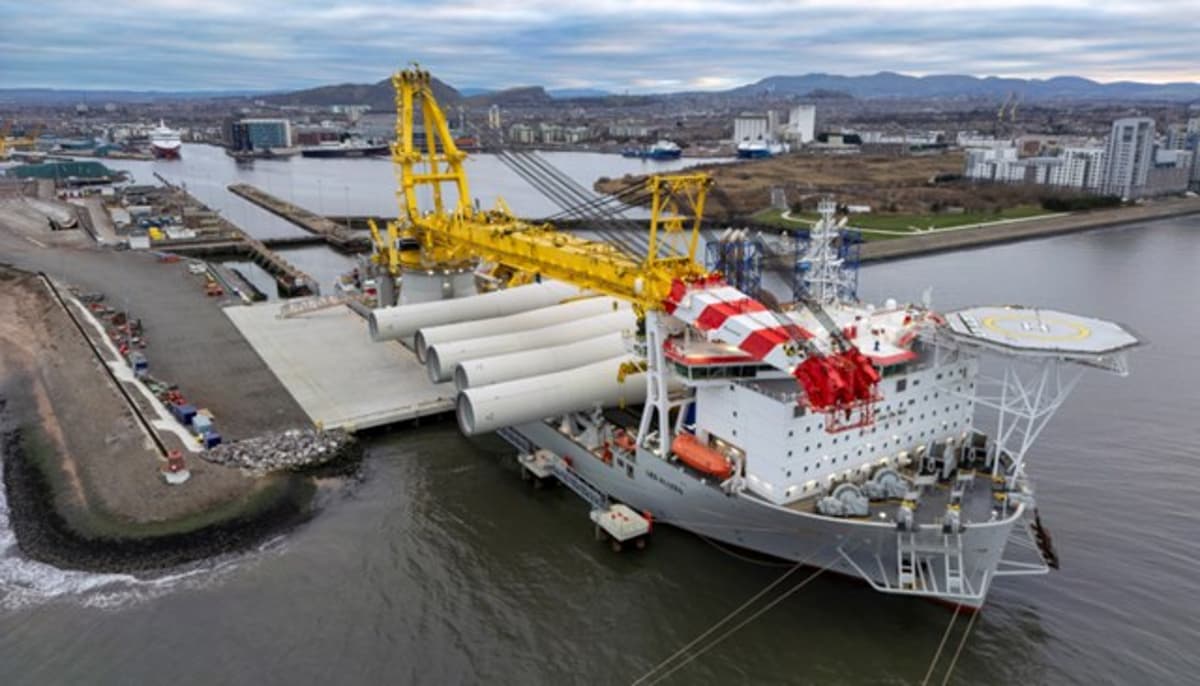
Why It Matters
The investment underpins the UK’s net‑zero roadmap, boosting offshore wind capacity while catalysing regional economic growth and high‑skill employment.
Key Takeaways
- •£4.7bn total UK investment
- •£2.7bn spent in Scotland
- •2,600 peak construction jobs
- •150 Scottish suppliers involved
- •First power late 2026, full operation 2027
Pulse Analysis
The United Kingdom has set an ambitious target to generate 50 GW of offshore wind by 2030, positioning the sector as a cornerstone of its decarbonisation strategy. 2‑GW offshore wind farm located off the east coast of Scotland, exemplifies this push, with construction slated to begin delivering electricity by late 2026. Backed by a 50/50 partnership between Ireland’s ESB and Ireland‑based Red Rock Renewables, the project aligns with the UK’s Renewable Energy Guarantees and the European Green Deal, promising a steady flow of clean power that will help meet the nation’s net‑zero by 2050 commitments. The newly published BiGGAR Economics report quantifies the broader economic ripple effects of Inch Cape.
7 billion is directed to Scotland, will stimulate regional growth, especially in eastern counties such as East Lothian and Angus. At its construction peak, the development will support 2,600 full‑time‑equivalent jobs and has already contracted more than 320 UK firms, including 150 based in Scotland. This supply‑chain mobilisation not only creates high‑skill employment but also strengthens domestic manufacturing capabilities in turbines, foundations and subsea cables.
Beyond immediate financial benefits, Inch Cape contributes to long‑term energy security and industrial resilience. The project’s export‑cable network, linking ports from Leith to Blyth, will enhance grid connectivity and lay groundwork for future hydrogen or storage integration. With an expected annual generation of over five terawatt‑hours, the farm will supply clean electricity to millions of homes while reducing reliance on fossil fuels. As the UK scales up offshore wind, projects like Inch Cape demonstrate how strategic capital deployment can accelerate the transition to a low‑carbon economy and deliver lasting socio‑economic dividends.
Inch Cape report outlines UK impact
0
Comments
Want to join the conversation?
Loading comments...