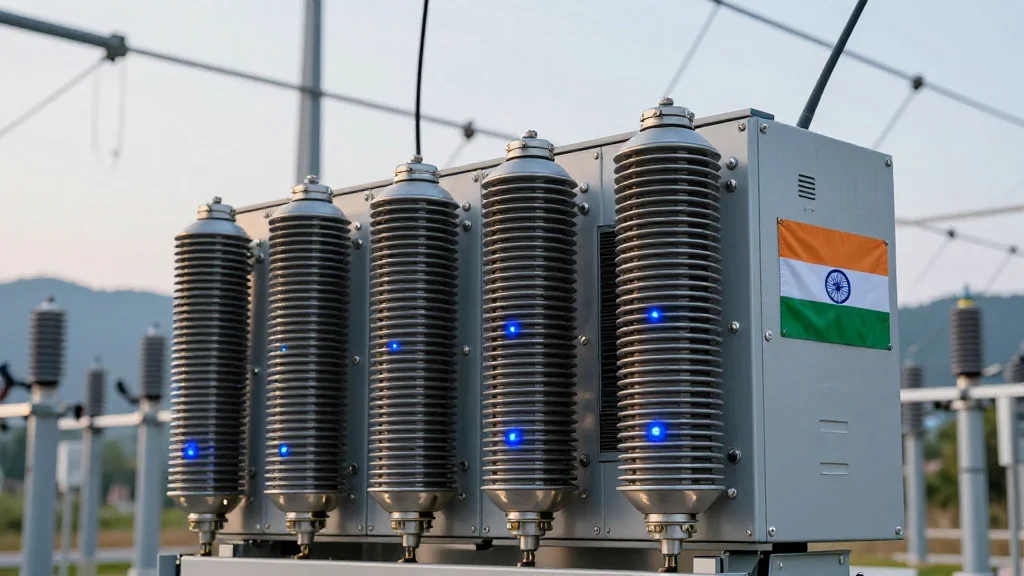
India Eases HVDC Localisation Rules, Sets Timeline to Reach 60% Local Content by 2035
Why It Matters
The policy accelerates domestic production of high‑value power infrastructure, reducing import dependence and bolstering India’s energy security and job creation.
Key Takeaways
- •30% local content required for HVDC substations until Mar 2028.
- •Target rises to 40% from Apr 2028‑Mar 2030.
- •50% local content mandated Apr 2030‑Mar 2032.
- •60% local content goal reached by Mar 2035.
- •Policy gives Indian firms five years to upscale HVDC capabilities.
Pulse Analysis
India’s power grid is increasingly reliant on high‑voltage direct current (HVDC) technology to transmit electricity over vast distances with minimal losses. As the country expands its renewable generation capacity, especially solar and wind farms located far from demand centres, HVDC corridors become essential. The Make in India initiative, launched in 2014, aims to nurture domestic manufacturing across sectors, and the latest amendment targets the high‑value, technology‑intensive HVDC substation market, signalling the government’s intent to embed local expertise into critical infrastructure.
The phased local‑content schedule—30 percent by 2028, 40 percent by 2030, 50 percent by 2032 and 60 percent by 2035—offers a realistic transition for Indian suppliers. It encourages existing equipment makers to upgrade facilities, spurs new entrants to develop specialised components, and aligns procurement with the Public Procurement (Preference to Make in India) framework. While the incremental targets mitigate shock to project timelines, manufacturers must address challenges such as advanced semiconductor production, high‑precision engineering, and compliance with international standards to meet the rising thresholds.
Beyond domestic industrial growth, the localisation drive strengthens India’s energy security by reducing exposure to geopolitical supply risks and foreign exchange volatility. It also positions the country as a potential exporter of HVDC technology to neighbouring regions seeking grid interconnections. Investors are likely to view the clear policy roadmap as a signal of stable demand, prompting increased capital inflows into the power‑equipment sector. Over the next decade, the cumulative effect could be a more resilient, self‑sufficient power network that supports the nation’s ambitious net‑zero targets.
India eases HVDC localisation rules, sets timeline to reach 60% local content by 2035
Comments
Want to join the conversation?
Loading comments...