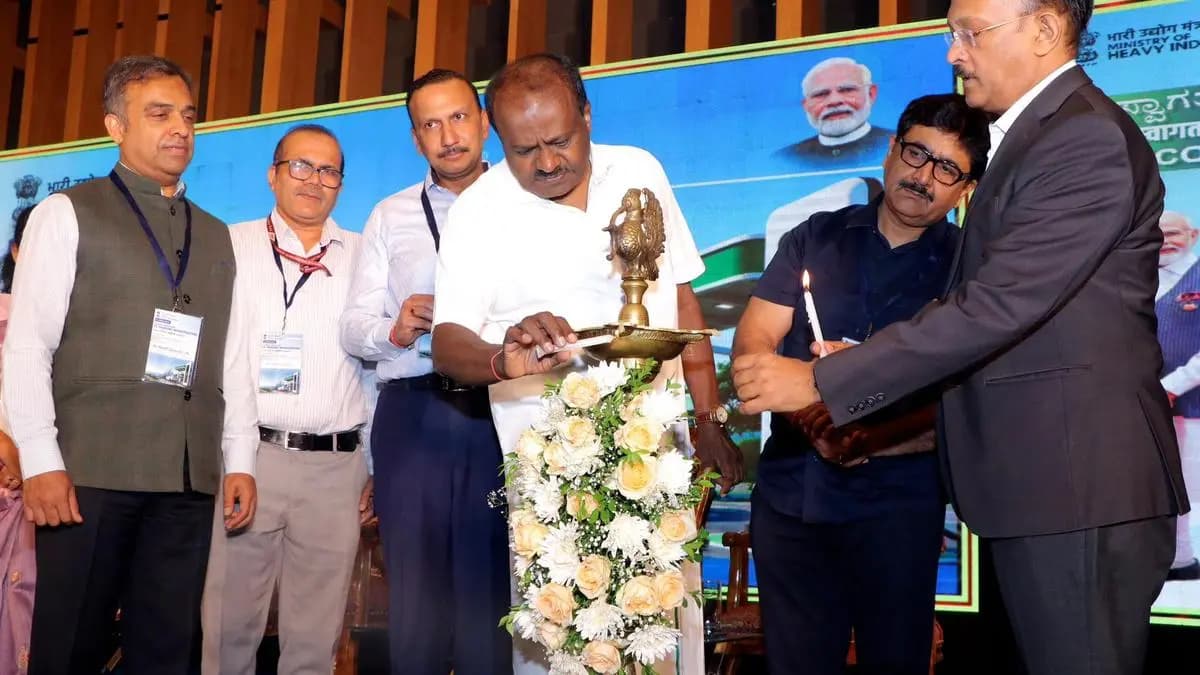
India Gets Its UPI for EV Charging as Kumaraswamy Unveils Unified Bharat E-Charge
Companies Mentioned
Why It Matters
By removing fragmentation in payment and discovery, UBC can dramatically improve charger utilisation and accelerate EV adoption, a key lever for India’s goal to cut oil imports and meet its climate targets.
Key Takeaways
- •UBC lets users locate, book, pay at any charger via one app
- •Government allocated $241 million, with $61 million funded for 4,874 chargers
- •India targets 72,000 public chargers by 2030; 67,000 already mapped
- •Karnataka hosts 8,600 stations, approved 1,243 new chargers under UBC
- •Oil majors plan national charging corridors, aiming one station every 100 km
Pulse Analysis
India’s electric‑vehicle market has surged, but fragmented payment systems and disparate charger interfaces have kept utilisation low. The Unified Bharat e‑Charge (UBC) platform mirrors the success of the Unified Payments Interface by offering a single digital layer where users can discover, reserve, and settle payments at any participating station. Backed by the government and NPCI, the open‑protocol solution aggregates data from oil‑company networks, state‑run stations and private operators, creating a real‑time marketplace that promises to cut transaction friction and boost consumer confidence in EVs.
Funding under the PM E‑DRIVE scheme underscores the strategic priority of the initiative. Of the $241 million earmarked, $61 million has already been deployed to install 4,874 chargers, bringing the national total to over 67,000 units, including 25,000 fast chargers. Yet grid connectivity remains a bottleneck, with roughly 1,800 approved sites awaiting power links. Simultaneously, the sector grapples with a “right to charge” gap: nearly 90 % of charging occurs at homes or workplaces, while policy focus stays on the public 10 %. Karnataka’s leadership, with 8,600 stations and new approvals, illustrates how state‑level coordination can accelerate rollout, but nationwide success will require parallel advances in residential infrastructure.
For industry players, UBC offers a catalyst for new business models. Oil majors are repurposing fuel‑station footprints into national charging corridors, targeting a station every 100 km, while automakers like Tata and MG are feeding vehicle telematics into the platform to optimise charger placement. If the platform delivers on its promise of seamless access, it could unlock higher charger utilisation, lower operating costs, and faster EV adoption—mirroring the transformative impact UPI had on digital payments across India.
India gets its UPI for EV charging as Kumaraswamy unveils unified Bharat e-charge
Comments
Want to join the conversation?
Loading comments...