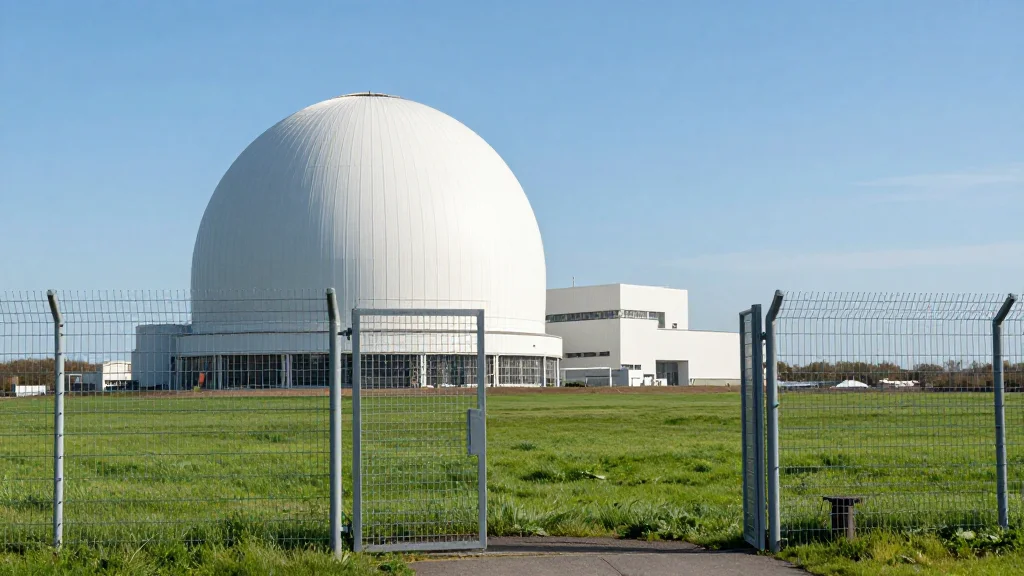
India to Shrink Zones Around Nuclear Reactors to Free up Land, Sources Say
Companies Mentioned
Why It Matters
Smaller buffers accelerate nuclear capacity growth, crucial for India’s clean‑energy targets, while raising safety and public‑acceptance challenges.
Key Takeaways
- •Buffer zones cut by up to two‑thirds, freeing land
- •Potential to triple reactor capacity on existing sites
- •Private firms like Tata, Adani eye accelerated nuclear investments
- •Aligns India with U.S. and France safety norms
- •Opposition fears diluted safety oversight and public backlash
Pulse Analysis
India’s nuclear roadmap hinges on overcoming a persistent land bottleneck. Current regulations mandate a roughly 1‑kilometre buffer around each plant, reserving about 1,000 hectares per site. By halving or even reducing that footprint, the government can repurpose valuable acreage for additional reactors, industrial zones, or other economic activities. This land efficiency is pivotal to the ambitious target of scaling nuclear output from roughly 8 GW today to 100 GW by 2047, a cornerstone of the nation’s decarbonisation strategy.
The technical justification rests on newer reactor designs that emit far lower radiation levels than older models, aligning India with safety practices in the United States and France, where fixed exclusion distances are not mandated. Smaller buffers also make it feasible to deploy small modular reactors (SMRs) in industrial parks for captive power, and to share infrastructure among multiple units at a single complex. Private players such as Tata Power, Adani Power and Reliance Industries stand to benefit from faster site approvals and lower capital costs, potentially accelerating capital inflows and technology transfer.
Nonetheless, the policy shift is not without controversy. Opposition parties and civil‑society groups argue that shrinking buffers could erode safety margins and diminish public confidence, especially in a country where nuclear energy has historically faced skepticism. The regulatory framework will need robust oversight mechanisms to address liability, waste management, and emergency response concerns. Balancing rapid capacity expansion with transparent safety assurances will determine whether the land‑saving reforms translate into sustained investment and public trust.
India to shrink zones around nuclear reactors to free up land, sources say
Comments
Want to join the conversation?
Loading comments...