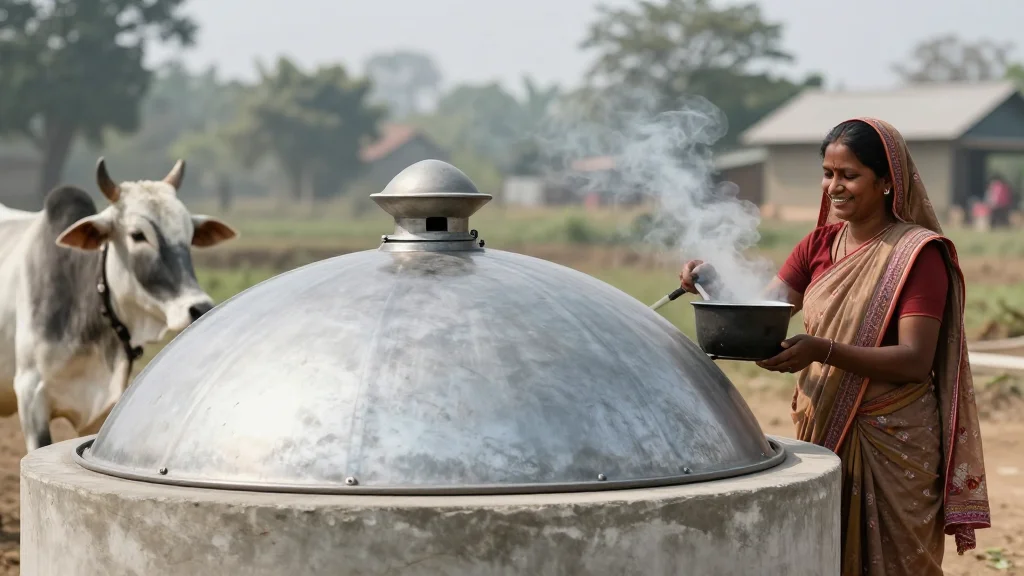
India's Cows Offer Biogas Alternative to Mideast Energy Crunch
Why It Matters
Biogas offers a home‑grown, renewable alternative that eases LPG shortages while delivering fertilizer benefits, advancing India’s energy resilience and climate targets. Its adoption could reshape rural fuel markets and lower dependence on imported hydrocarbons.
Key Takeaways
- •Biogas units cost ₹25k‑30k (~$265‑$318) with subsidies.
- •Over 5 million digesters installed since 1980s across India.
- •Biogas meets cooking needs, reducing LPG cylinder queues.
- •Slurry by‑product acts as high‑nitrogen “black gold” fertilizer.
- •Government targets 5% biogas share of domestic gas by 2028.
Pulse Analysis
India’s LPG market, which consumes more than 30 million tonnes annually and imports over half of its supply, has felt the ripple effects of geopolitical tensions in the Middle East. The Iran conflict has tightened global energy flows, prompting panic buying and lengthy queues for cooking‑gas cylinders in villages like Nekpur, Uttar Pradesh. For households that depend on a steady fuel supply for daily meals, the shortage has highlighted the vulnerability of a system reliant on imported hydrocarbons and underscored the need for locally sourced alternatives.
Biogas, produced by anaerobic digestion of cow dung, has emerged as a practical solution. Since the 1980s, the Indian government has subsidised more than five million small‑scale digesters, keeping installation costs around ₹25,000‑30,000 ($265‑$318). These units generate a piped methane stream that powers stoves, while the residual slurry—referred to by farmers as “black gold”—provides a nitrogen‑rich fertilizer that improves crop yields. In villages where biogas plants are operational, residents report uninterrupted cooking even when LPG supplies falter, and the dual output of energy and fertilizer creates a compelling economic case for adoption.
Despite its promise, biogas remains a niche fuel due to upfront costs, space constraints, and the need for regular maintenance. The Indian Biogas Association stresses that community‑based models and cooperative ownership can overcome these barriers, ensuring reliable operation and broader reach. The government’s policy goal—to raise biogas’s share of domestic gas from 1% to 5% by 2028—signals a strategic push toward renewable energy and carbon neutrality by 2070. If scaled effectively, biogas could not only alleviate short‑term LPG shortages but also transform rural energy infrastructure, reduce import dependence, and contribute to India’s climate commitments.
India's cows offer biogas alternative to Mideast energy crunch
Comments
Want to join the conversation?
Loading comments...