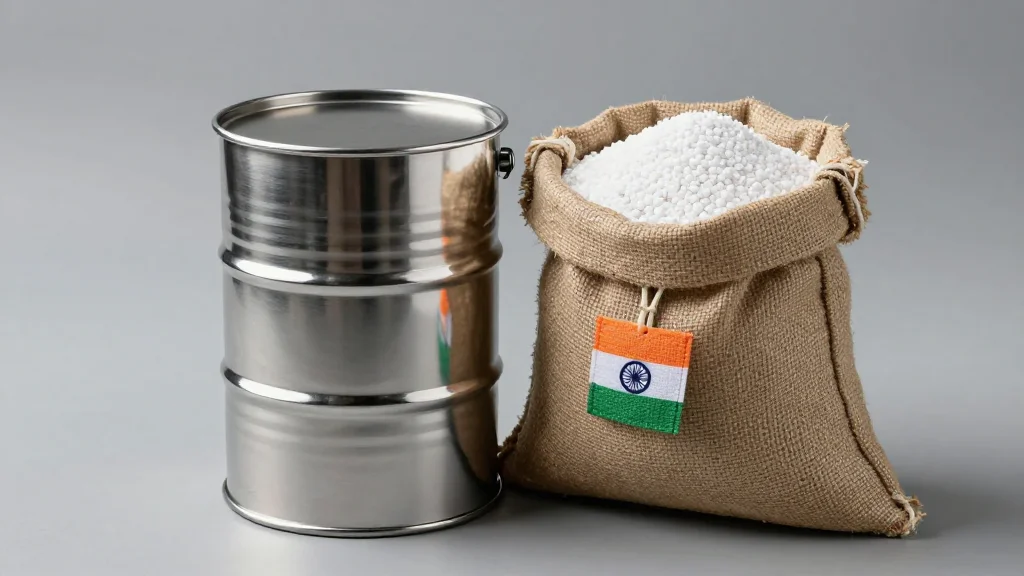
India's Discounted Russian Crude Buy "on Right Track": Geopolitical Risk Advisor Col Macgregor
Why It Matters
India’s dual focus on cheaper oil and fertilizer self‑sufficiency strengthens its energy and food security while reshaping global commodity flows amid heightened Middle‑East tensions.
Key Takeaways
- •India buying discounted Russian oil to offset Hormuz risk
- •$36 bn fertilizer shield built via coal gasification, biomass
- •Strategic Petroleum Reserve could deplete in 3‑8 weeks
- •Iran threatens Gulf attacks, could cut global economy 30‑36%
- •US inflation may trap Fed, limiting rate hikes
Pulse Analysis
India’s decision to tap discounted Russian crude reflects a pragmatic response to escalating geopolitical risk in the Persian Gulf. With the Hormuz Strait—through which roughly a third of global oil passes—facing potential closure, Moscow’s willingness to offer price‑cut contracts provides a cost‑effective hedge for New Delhi. The arrangement not only lowers import bills but also diversifies supply sources, reducing reliance on volatile Middle‑East shipments. Analysts expect the move to modestly ease India’s trade deficit and could pressure regional exporters to reconsider pricing strategies.
Simultaneously, the government’s $36 billion fertilizer shield targets self‑sufficiency in a sector traditionally dependent on imported nitrogen and phosphates. By investing in coal‑gasification and biomass‑derived ammonia plants, India aims to secure a stable feedstock pipeline for its vast agricultural base. This initiative aligns with broader food‑security goals, especially as climate‑related yield pressures mount. Domestic production is projected to cut import exposure by up to 40 percent, shielding farmers from price spikes and supporting rural economies.
Globally, the backdrop of a potentially exhausted U.S. Strategic Petroleum Reserve and Iran’s aggressive rhetoric amplifies market uncertainty. If the reserve depletes within weeks, oil prices could surge, triggering inflationary pressures that already challenge the Federal Reserve’s policy room. The prospect of a 30‑36 percent contraction in global output underscores the systemic risk of a Gulf escalation. Investors and policymakers alike are watching India’s strategy as a template for resource sovereignty, balancing immediate energy needs with long‑term economic resilience.
India's discounted Russian crude buy "on right track": Geopolitical Risk Advisor Col Macgregor
Comments
Want to join the conversation?
Loading comments...