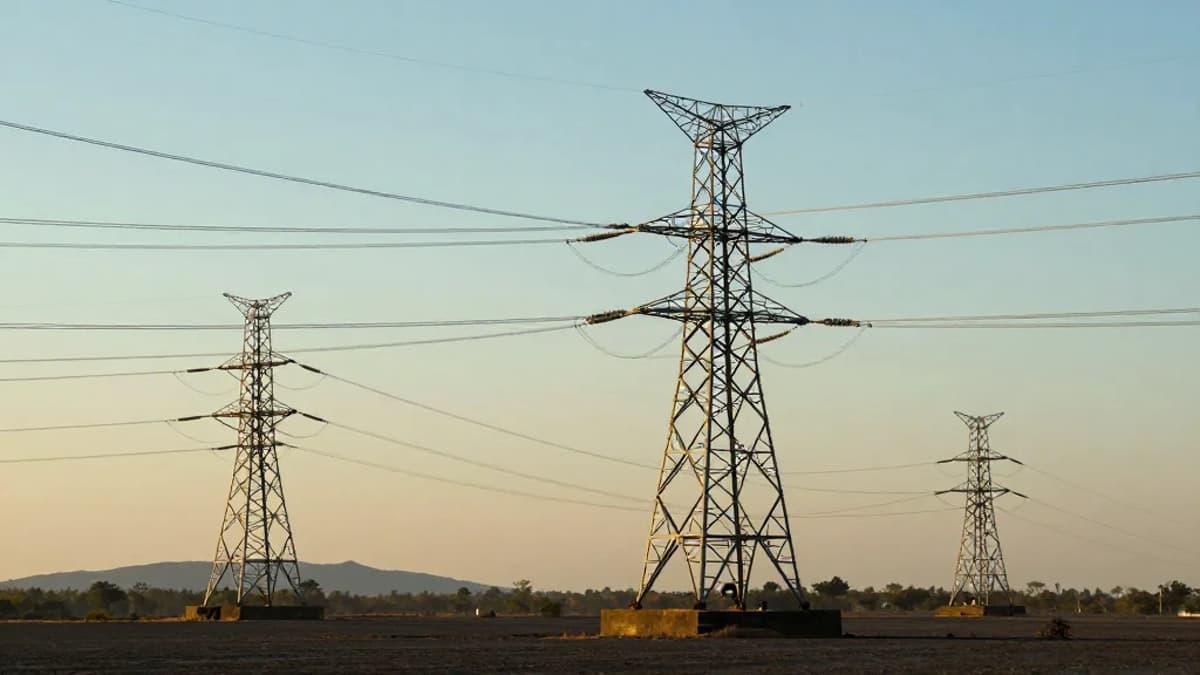
India's Inter-Regional Transmission Capacity to Hit 143 GW by 2027: Shripad Naik
•March 9, 2026
0
Why It Matters
The expansion secures reliable power flows for a rapidly growing economy and underpins India’s renewable‑energy ambitions. Delays risk bottlenecks that could hinder investment and grid stability.
Key Takeaways
- •Inter‑regional capacity target: 143 GW by 2027.
- •Projected peak demand 388 GW by 2032.
- •Transmission network to reach 6.48 lakh circuit‑km by 2032.
- •Right‑of‑way issues delay 25 inter‑state projects.
- •States hold primary responsibility for intra‑state grid development.
Pulse Analysis
India’s electricity consumption is on a steep upward trajectory, driven by industrialisation, urbanisation and a surge in electric‑vehicle adoption. Forecasts from the Ministry of Power place peak demand at 388 GW by 2032, a level that far exceeds today’s supply. To prevent systemic overloads, the government is prioritising inter‑regional transmission upgrades, recognising that a robust national grid is essential for balancing regional generation surpluses and deficits, especially as renewable sources become a larger share of the mix.
The transmission roadmap outlines a step‑wise increase from the current 120 GW to 143 GW by 2027, and ultimately 168 GW by 2032. Parallel to capacity growth, the high‑voltage network (220 kV and above) will expand to 6.48 lakh circuit‑kilometres, while transformer capability will climb to 2,345 GVA. These enhancements aim to eliminate congestion, lower curtailment of solar and wind farms, and improve market efficiency by enabling smoother power transfers across state boundaries. Investors view these targets as a signal of long‑term stability and a catalyst for further private‑sector participation in grid infrastructure.
Despite the ambitious plan, execution faces tangible hurdles. Right‑of‑way clearances have stalled roughly 25 inter‑state transmission projects, exposing a regulatory bottleneck that could delay capacity roll‑out. Moreover, while the central government sets overarching goals, state authorities retain primary responsibility for intra‑state grid development, creating coordination challenges. Addressing these issues will require streamlined land‑acquisition policies, stronger public‑private partnerships, and consistent state‑level commitment. Successfully navigating these obstacles will be pivotal for India to meet its energy security objectives and sustain its transition to a low‑carbon economy.
India's inter-regional transmission capacity to hit 143 GW by 2027: Shripad Naik
0
Comments
Want to join the conversation?
Loading comments...