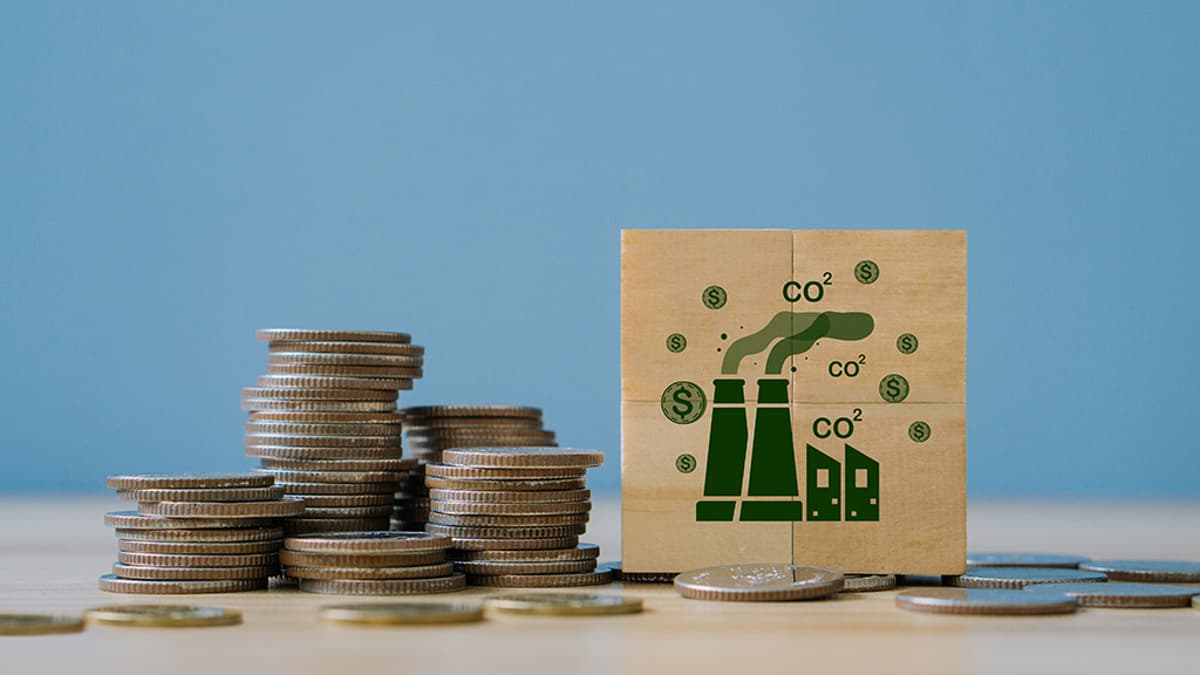
Industrial Carbon Price Eroding Canada’s Competitiveness: CAPP Boss
Why It Matters
Higher carbon costs threaten investment and export competitiveness, making infrastructure decisions critical for Canada’s role in global energy security.
Key Takeaways
- •Canada’s industrial carbon tax will rise to $130 CAD/tonne (~$95 USD).
- •Increased carbon costs add up to $0.6‑$2.7 USD per barrel.
- •New West Coast pipeline could add $7+ USD per barrel profit.
- •Global crude surge gives Canadian producers windfall despite carbon price.
- •Alberta aims to file pipeline application this summer under federal MOU.
Pulse Analysis
Canada’s industrial carbon pricing scheme is at a crossroads. While the federal‑provincial agreement aims to fund carbon‑capture projects, the slated hike to $130 CAD per tonne—roughly $95 USD—means oilsands operators will face an extra $0.6‑$2.7 USD per barrel in fees. Compared with peers such as the United States, Norway and Saudi Arabia, which impose no comparable levy on producers, the tax threatens to narrow Canada’s price advantage and could deter new capital unless offset by other incentives.
At the same time, the province of Alberta is pushing a new West Coast crude pipeline to diversify export routes beyond the United States. The project, slated for a summer application to the federal major projects office, is tied to the carbon‑price framework and the ambitious Pathways carbon‑capture plan. Analysts estimate the pipeline could boost net margins by more than $7 USD per barrel, comfortably outweighing the added carbon cost. The infrastructure would also open Asian markets, where higher WTI‑linked prices are expected to persist.
The broader market backdrop reinforces Canada’s strategic position. The ongoing Middle‑East conflict has lifted global oil prices, delivering a windfall for Canadian producers whose oil sells above $70 USD per barrel. With 177 billion barrels of proven reserves—the fourth‑largest globally—Canada is poised to meet rising demand for energy security. However, sustained competitiveness will hinge on balancing carbon‑policy costs with timely infrastructure delivery and market diversification.
Industrial carbon price eroding Canada’s competitiveness: CAPP boss
Comments
Want to join the conversation?
Loading comments...