Inside the Race to Rebuild America’s Fuel Supply Chain for a ‘Second Nuclear Age’
Companies Mentioned
Why It Matters
Without a robust U.S. fuel supply chain, the ambitious goal to quadruple nuclear capacity could stall, driving up electricity costs and jeopardizing energy security. The race to secure uranium and HALEU domestically is critical for AI‑driven data centers and the broader clean‑energy transition.
Key Takeaways
- •Antares' Mark‑0 microreactor achieved criticality in June, meeting July 4 deadline
- •U.S. imports 98% of uranium, exposing supply risk after 2028 ban
- •Urenco plans 50% capacity boost by 2036, adding HALEU production
- •LIS aims for 2032 Tennessee plant, cutting U.S. reliance on Russia
- •TerraPower's Wyoming plant marks first commercial nuclear build in 13 years
Pulse Analysis
The United States is positioning nuclear power as a cornerstone of the next wave of AI‑driven growth. Federal initiatives, spurred by the Trump administration’s pilot program, have accelerated the deployment of small modular reactors (SMRs) and microreactors, with Antares, TerraPower and Kairos Power leading the charge. These reactors promise rapid, low‑carbon electricity for data centers, but their success hinges on a reliable supply of enriched uranium, a resource the country currently sources almost entirely from abroad. As AI hyperscalers sign long‑term power contracts, the pressure mounts to close the fuel‑chain gap before the 2028 ban on Russian enrichment takes effect.
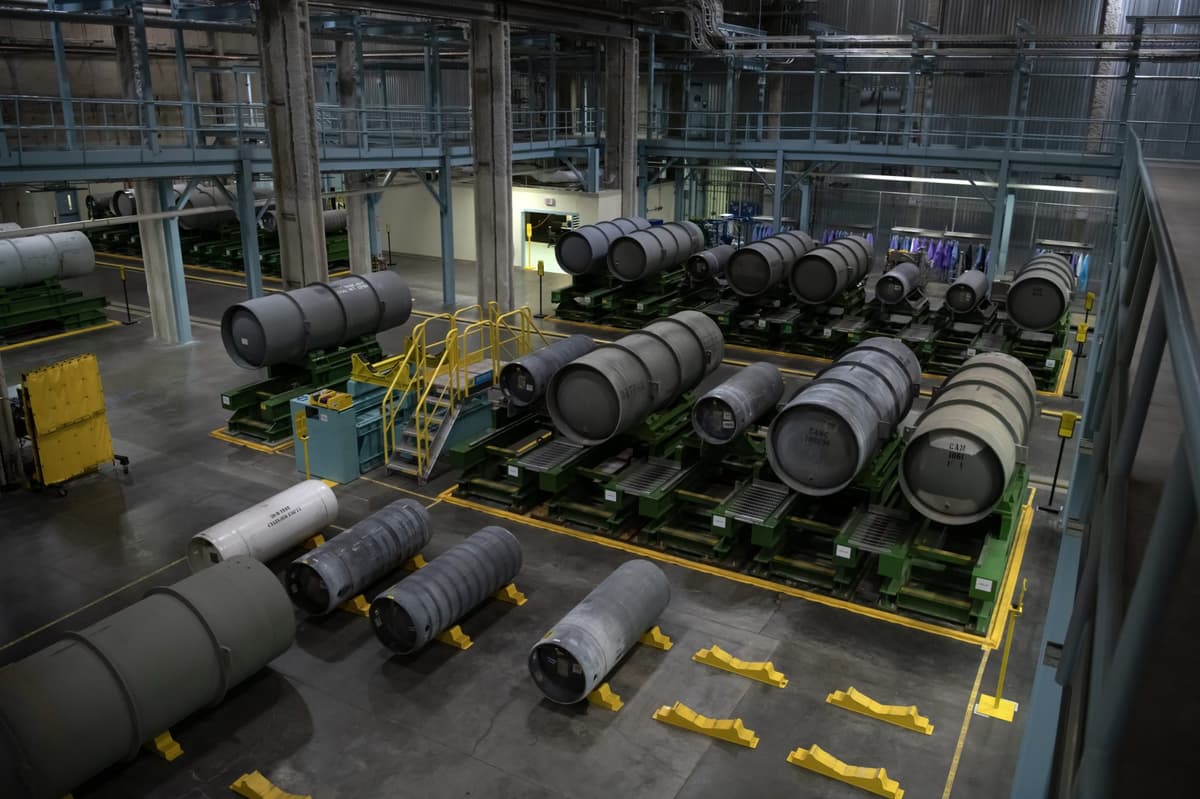
Domestic uranium production faces a steep uphill climb. Canada’s Cameco, the continent’s largest miner, reports that roughly a third of its capacity sits idle, and new mines can take 15‑20 years to become operational. Conversion and enrichment facilities are similarly under‑utilized, with only one active enricher—Urenco’s New Mexico plant—meeting about one‑third of U.S. demand. Start‑ups like LIS Technologies are betting on laser enrichment to boost capacity, while European firms such as Orano seek DOE‑backed licenses for multi‑billion‑dollar projects in Tennessee. The rollout of high‑assay low‑enriched uranium (HALEU) is especially critical for next‑generation reactors, yet current capacity would satisfy merely 7% of the projected demand if nuclear capacity quadruples.
Policy certainty will be the decisive factor. The looming 2028 prohibition on Russian enriched uranium forces utilities and developers to lock in long‑term contracts with domestic producers, or risk supply shortages that could inflate power prices. Federal funding—exemplified by $900 million DOE awards to enrichment projects in Ohio, Kentucky and Tennessee—signals a commitment to energy security, but sustained investment is needed to revive mining, streamline permitting and standardize reactor designs. A coordinated approach that aligns government incentives with private‑sector capital can ensure the fuel chain scales in step with reactor construction, safeguarding the United States’ ambition to power a data‑intensive future with clean nuclear energy.
Inside the race to rebuild America’s fuel supply chain for a ‘second nuclear age’
Comments
Want to join the conversation?
Loading comments...