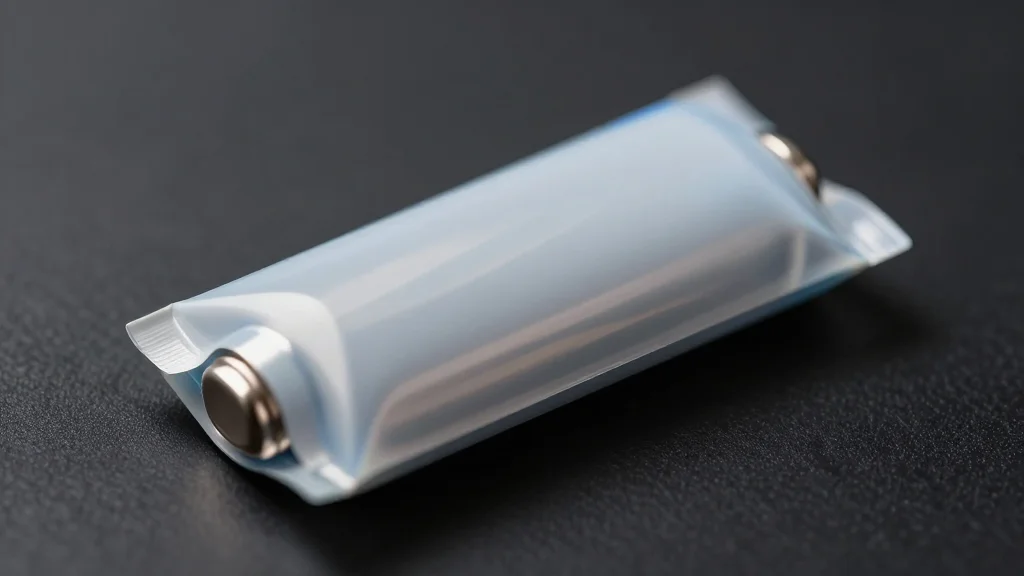
Interfacial Polarity Modulation of Positive Electrode Active Materials for High-Potential Lithium Metal Batteries
Why It Matters
High‑voltage operation unlocks >500 Wh kg⁻¹ energy density for EVs, while improved interfacial stability extends cycle life and safety, accelerating commercialization of lithium‑metal batteries.
Key Takeaways
- •Polarity-tuned cathode surfaces reduce electrolyte oxidation at 4.6 V.
- •Self‑assembled monolayers create LiF‑rich interphase, extending cycle life.
- •Demonstrated 500 Wh kg⁻¹ pouch cell with 200‑cycle stability.
- •Interfacial engineering enables practical high‑voltage Li‑metal operation.
- •Reduced impedance improves rate capability and safety.
Pulse Analysis
High‑voltage lithium‑metal batteries promise energy densities far beyond current lithium‑ion technology, but their adoption has been hampered by rapid electrolyte oxidation and unstable cathode interfaces at potentials above 4.5 V. Conventional solutions—such as highly concentrated electrolytes, fluorinated solvents, or robust solid‑electrolyte interphases—have improved stability but often at the cost of ionic conductivity or manufacturing complexity. Recent literature underscores the importance of tailoring the electric double layer at the electrode surface, where dipole orientation and interfacial polarity dictate solvent decomposition pathways and ion transport.
The new polarity‑modulation approach leverages molecular‑scale surface engineering to align dipoles and create a LiF‑rich interphase directly on the positive electrode. By grafting self‑assembled monolayers with fluorinated tail groups, the researchers induce a favorable electric field that suppresses high‑energy solvent oxidation while promoting uniform lithium‑ion flux. This dual effect reduces charge‑transfer resistance and enables stable cycling at 4.6 V, delivering a 500 Wh kg⁻¹ pouch cell that retains over 80 % capacity after 150 cycles—metrics comparable to the most advanced lab‑scale demonstrations. Compared with prior strategies, the polarity‑tuned coating is thin, scalable, and compatible with existing roll‑to‑roll manufacturing, addressing a key barrier to commercial rollout.
For the battery industry, mastering interfacial polarity could translate into electric‑vehicle ranges exceeding 600 km per charge and lower total‑cost‑of‑ownership through longer cycle life and safer operation. Grid‑scale storage would also benefit from higher voltage stacks, reducing balance‑of‑plant costs. Future work will likely focus on in‑situ spectroscopic monitoring of dipole dynamics, integration with high‑entropy electrolytes, and lifecycle assessments to validate the environmental impact. As these advances converge, high‑potential lithium‑metal batteries move from niche prototypes toward mainstream energy solutions.
Interfacial polarity modulation of positive electrode active materials for high-potential lithium metal batteries
Comments
Want to join the conversation?
Loading comments...