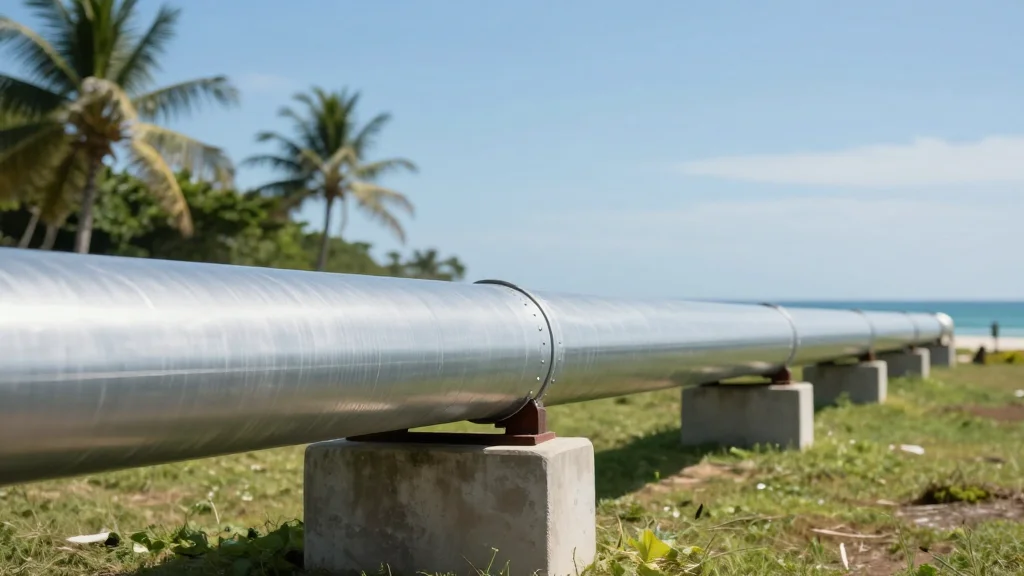
IOC Wins Bid for Kochi–Kanyakumari–Thoothukudi Natural Gas Pipeline
Why It Matters
The pipeline bolsters southern India’s gas supply chain, enabling broader clean‑energy adoption and supporting industrial growth. It also deepens integration with India’s national gas grid, advancing the country’s energy security goals.
Key Takeaways
- •425‑km pipeline approved by PNGRB for Indian Oil
- •Capacity of 6.84 MMSCMD transports regasified LNG southward
- •Enables City Gas Distribution expansion in Kerala and Tamil Nadu
- •Supplies natural gas to power plants, industry, and transport sector
- •Boosts regional clean‑energy adoption and grid integration
Pulse Analysis
India’s push to diversify its energy mix has placed natural gas at the forefront of policy, and the newly authorized Kochi‑Kanyakumari‑Thoothukudi pipeline is a tangible outcome of that strategy. Spanning roughly 425 kilometres, the line will link the Kochi LNG terminal—one of the country’s key import points—to the industrial belt of southern Tamil Nadu. With a design capacity of 6.84 million standard cubic metres per day, the conduit can move significant volumes of regasified LNG, easing bottlenecks that have historically limited gas flow to the region.
Beyond sheer volume, the pipeline is a catalyst for expanding City Gas Distribution (CGD) networks across Kerala and Tamil Nadu. CGD projects rely on steady feedstock to deliver piped natural gas (PNG) and compressed natural gas (CNG) to households, commercial establishments, and the transport sector. By providing a reliable supply line, the project reduces dependence on diesel and liquefied petroleum gas, cutting emissions and operational costs for end users. Industrial consumers, particularly in petrochemicals and power generation, will also benefit from lower‑cost, cleaner fuel, enhancing competitiveness in a market increasingly focused on sustainability.
Strategically, the pipeline strengthens India’s regional gas infrastructure and aligns with the national goal of integrating disparate gas grids into a unified network. It positions southern India as a viable market for future LNG imports and domestic gas production, encouraging further private investment in downstream infrastructure. Moreover, the project underscores Indian Oil’s role in executing large‑scale energy projects, signaling confidence to global investors about the country’s commitment to a low‑carbon transition. As the pipeline becomes operational, it is expected to drive economic activity, create jobs, and contribute to India’s broader energy security agenda.
IOC wins bid for Kochi–Kanyakumari–Thoothukudi natural gas pipeline
Comments
Want to join the conversation?
Loading comments...