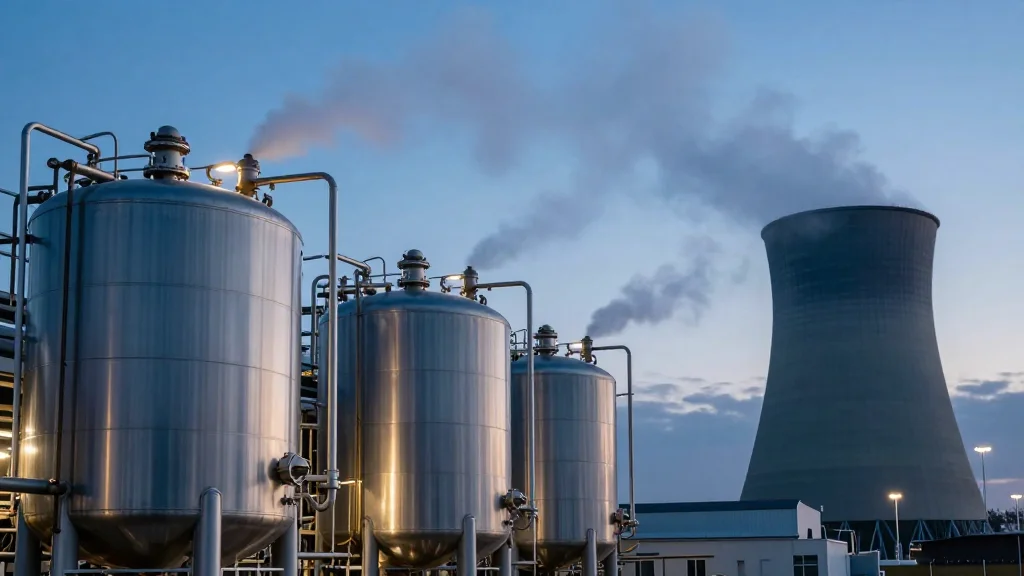
Iran Conflict Forces Government to Reopen CO2 Plant to Support Nuclear Power Security
Companies Mentioned
Why It Matters
Securing a reliable CO₂ supply protects the operation of the UK’s unique AGR fleet and safeguards key downstream industries, reducing exposure to geopolitical supply shocks.
Key Takeaways
- •UK restarts Ensus bioethanol plant to produce CO₂ for nuclear reactors
- •Iran conflict disrupts European fertilizer CO₂ imports, prompting supply risk
- •AGR reactors at Hartlepool, Heysham, Torness rely on CO₂ coolant
- •Government aims to diversify domestic CO₂ sources for long‑term resilience
- •Temporary three‑month restart supports food, healthcare, and sustainable fuel sectors
Pulse Analysis
The Iran‑driven surge in gas prices and the shutdown of several European CO₂ facilities have exposed a hidden vulnerability in the UK’s energy infrastructure. While most countries use water or liquid metal as reactor coolants, Britain’s advanced gas‑cooled reactors depend on high‑purity carbon dioxide. A shortfall in this niche commodity could force reactors offline, jeopardising a portion of the nation’s baseload electricity and undermining commitments to low‑carbon generation. By reviving the Ensus plant, the government quickly injected domestic CO₂ capacity, buying time for the nuclear fleet and related sectors to adjust.
Beyond the immediate nuclear implications, the CO₂ shortage ripples through food preservation, medical sterilisation and emerging sustainable‑fuel pathways. Packaged‑meat producers, hospitals, and abattoirs all rely on CO₂ for rapid cooling and sanitation, while bio‑fuel developers need it for feedstock processing. The three‑month plant restart not only stabilises these supply chains but also provides a modest economic boost to Teesside, preserving jobs and supporting ancillary manufacturers. In parallel, the Department for Business and Trade has signalled a strategic shift toward building a more resilient domestic CO₂ market, exploring options such as dedicated capture projects and partnerships with renewable‑energy‑linked carbon capture facilities.
Looking ahead, the episode underscores the strategic importance of securing critical inputs for legacy energy assets. Policymakers are likely to embed CO₂ supply considerations into broader energy security frameworks, encouraging diversification away from import‑dependent streams. Investors may see new opportunities in carbon capture, utilisation and storage (CCUS) projects that can supply high‑purity CO₂ for both industrial and power‑generation needs. Ultimately, the temporary plant restart serves as a catalyst for a longer‑term policy dialogue on how the UK can safeguard essential commodities against geopolitical turbulence while advancing its net‑zero agenda.
Iran conflict forces government to reopen CO2 plant to support nuclear power security
Comments
Want to join the conversation?
Loading comments...