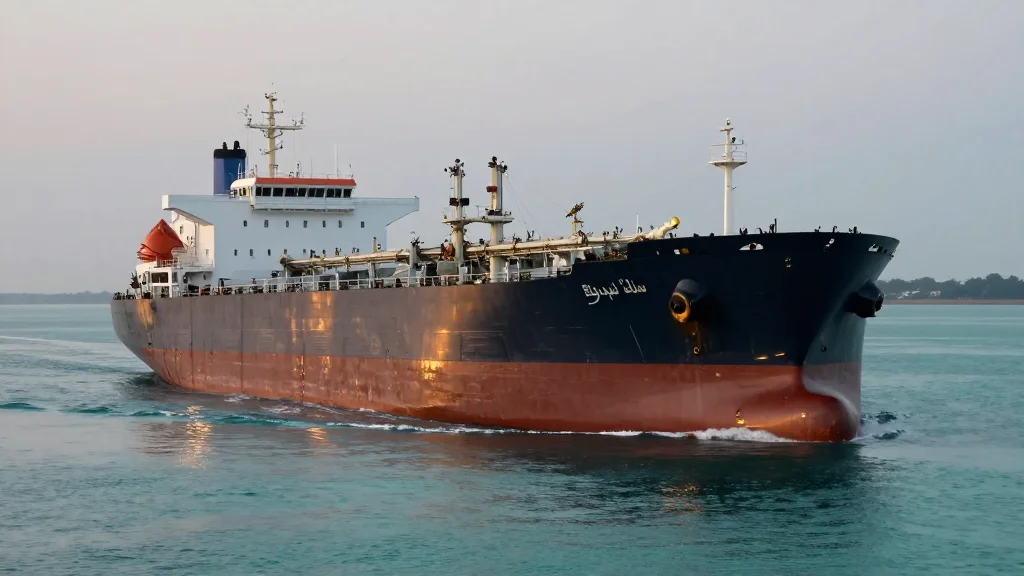
Iran Holds the Trump Card in This Energy Crisis
Companies Mentioned
Why It Matters
A prolonged disruption would tighten global oil markets, drive fuel prices sharply higher, and heighten geopolitical tensions between the U.S., Iran and China.
Key Takeaways
- •Oil flow down 13 M bpd, could climb to 15 M bpd
- •US blockade may seize Chinese‑flagged tankers, heightening Sino‑US friction
- •Iran threatens Red Sea closure, risking an extra 6 M bpd loss
- •Gasoline could surge to $8 per gallon as supply tightens
- •IEA emergency releases and US strategic reserve are nearing depletion
Pulse Analysis
The International Energy Agency warns the world is losing about 13 million barrels of oil per day amid the Gulf standoff, a figure that could rise to 15 million if the U.S. Navy successfully blocks Iranian shipments through the Strait of Hormuz. That loss represents roughly one‑eighth of global supply, straining inventories already thin after rapid drawdowns of strategic reserves. The IEA’s emergency release program is running out, and the U.S. Strategic Petroleum Reserve is approaching its cavern capacity limits, leaving little buffer for a prolonged disruption.
Tehran has leveraged the crisis by threatening to expand hostilities to the Red Sea, a move that would jeopardize another six million barrels per day flowing through Saudi Arabia’s Yanbu terminal. At the same time, Washington’s plan to interdict Chinese‑flagged tankers raises the specter of a direct Sino‑U.S. confrontation, a scenario Beijing’s President Xi has framed as an attack on China’s energy lifeline. The interplay of Iranian asymmetrical tactics and U.S. naval posturing creates a volatile “war of attrition” that could spill over into broader regional flashpoints.
Market analysts project that every $10 increase in crude could lift U.S. pump prices by roughly 30 cents per gallon, pushing the current $4.12 average toward $8 per gallon if the supply gap widens. With the IEA’s emergency stockpile dwindling and the U.S. reserve unable to sustain long‑term releases, policymakers face a narrow window to negotiate a de‑escalation. A five‑year suspension of Iran’s uranium enrichment, as briefly offered in recent talks, may provide a diplomatic lever, but any settlement will need to balance Tehran’s leverage against the risk of further destabilizing global energy markets.
Iran holds the trump card in this energy crisis
Comments
Want to join the conversation?
Loading comments...