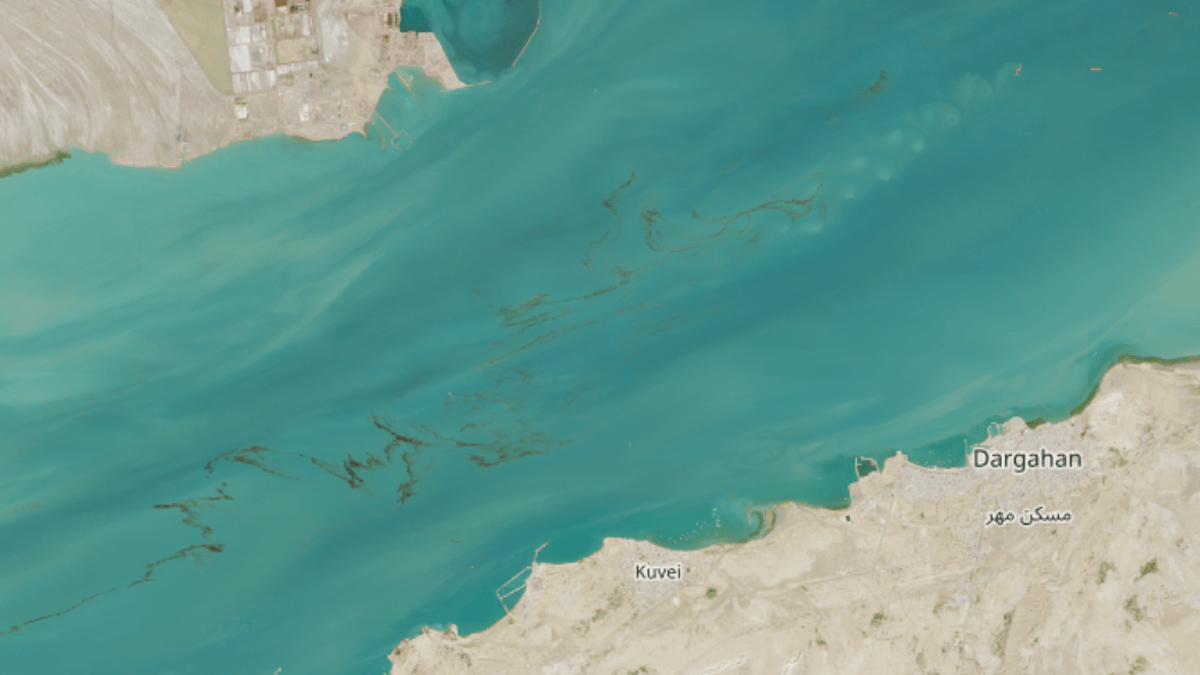
'Iran's Maldives' Could Drown in Oil Due to Spills From Air Strikes, Satellites Show
Companies Mentioned
Why It Matters
The environmental emergency jeopardizes regional water security and marine biodiversity, while the immobilized oil represents a massive economic and geopolitical risk.
Key Takeaways
- •Satellite images reveal oil slicks off Lavan and Qeshm islands
- •Spills threaten Shidvar wildlife refuge, home to turtles and birds
- •Desalination plants for 100 million people risk contamination
- •Around 5 trillion gallons of oil (~$9.5 trillion) trapped in Gulf
- •Cleanup unlikely while air strikes continue, per Greenpeace
Pulse Analysis
The latest satellite passes over the Persian Gulf have turned the region into a stark visual of modern warfare’s collateral damage. High‑resolution Sentinel‑2 images show dark ribbons of crude oil spilling from damaged facilities on Lavan, Qeshm and Kuwait’s Shuaiba port. These observations confirm that coordinated air strikes by U.S., Israeli and Iranian forces have repeatedly punctured storage tanks and tankers, creating a cascade of leaks that are now visible from orbit. The ability to monitor such incidents in near‑real time underscores how space‑based assets are reshaping conflict reporting and environmental oversight.
Beyond the immediate visual impact, the spills pose a severe threat to the Gulf’s fragile ecosystem. Shidvar Island, often dubbed “Iran’s Maldives,” hosts nesting grounds for green and hawksbill turtles and breeding colonies of seabirds. Oil coating their feathers or shells can lead to loss of buoyancy and hypothermia, while marine mammals such as dugongs and Arabian humpback whales face long‑term habitat degradation. Moreover, the region’s desalination infrastructure—critical for supplying potable water to almost 100 million people—relies on clean intake water; oil contamination could force costly shutdowns or reduce output, amplifying public‑health concerns.
Economically, the Gulf sits on a floating treasure of roughly 5 trillion gallons of crude, valued at an estimated $9.5 trillion. These tankers are stranded in the Strait of Hormuz, a chokepoint already vulnerable to geopolitical tension. Prolonged blockage threatens global oil supply chains, potentially spiking prices and prompting strategic stockpiling. The environmental damage, combined with the immobilized oil, creates a dual crisis that pressures regional governments, multinational corporations, and international bodies to negotiate cease‑fires, invest in rapid spill response, and consider longer‑term energy diversification to mitigate future risks.
'Iran's Maldives' could drown in oil due to spills from air strikes, satellites show
Comments
Want to join the conversation?
Loading comments...