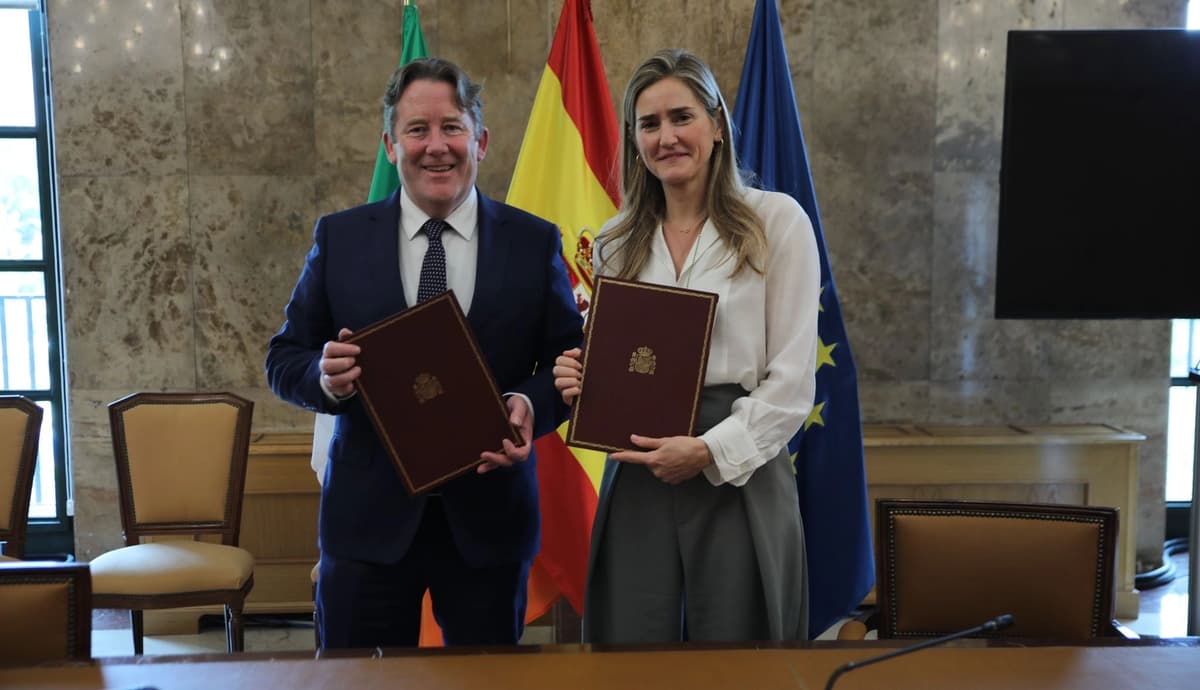
Ireland and Spain Formalize Plan to Explore Electricity Interconnection
Why It Matters
A successful Ireland‑Spain interconnector would deepen European energy markets, boost renewable power sharing, and strengthen grid resilience amid the continent’s decarbonisation drive.
Key Takeaways
- •Ireland and Spain sign MoU to study a direct power link
- •Project supports EU goal of higher cross‑border electricity interconnection
- •Feasibility study follows Ireland’s 2023 policy targeting Spain, Belgium, Netherlands
- •Interconnector could boost renewable integration and lower consumer costs
- •Early studies align with EirGrid and Redeia strategic plans
Pulse Analysis
The EU’s ambition to create a tightly knit electricity network has gained momentum as member states seek to balance intermittent renewable generation with reliable supply. Ireland’s recent policy overhaul, which earmarks new cross‑border links with Spain, Belgium, and the Netherlands, reflects a broader strategy to diversify import routes and reduce reliance on a single market. By formalising an MoU with Spain, both nations signal commitment to the European Commission’s interconnection targets, positioning themselves as proactive participants in the continent’s energy transition.
Technically, an Ireland‑Spain interconnector would likely involve a long‑distance subsea cable, potentially spanning over 1,500 km and requiring advanced HVDC technology. Such a link could tap Ireland’s abundant offshore wind resources and Spain’s solar capacity, enabling power trade that smooths seasonal variability and lowers wholesale price volatility. For consumers, the added transmission capacity may translate into cheaper, greener electricity, while generators gain access to a larger market, encouraging further investment in renewables on both sides of the Atlantic.
Realising the project, however, faces hurdles including high capital costs, complex regulatory approvals, and the need for coordinated financing mechanisms, possibly leveraging EU funds like the Connecting Europe Facility. Timeline estimates suggest a multi‑year horizon for feasibility, permitting, and construction phases. If successful, the interconnector would not only reinforce energy security for Ireland and Spain but also serve as a blueprint for future long‑range links, accelerating Europe’s path toward a resilient, low‑carbon power system.
Ireland and Spain formalize plan to explore electricity interconnection
Comments
Want to join the conversation?
Loading comments...