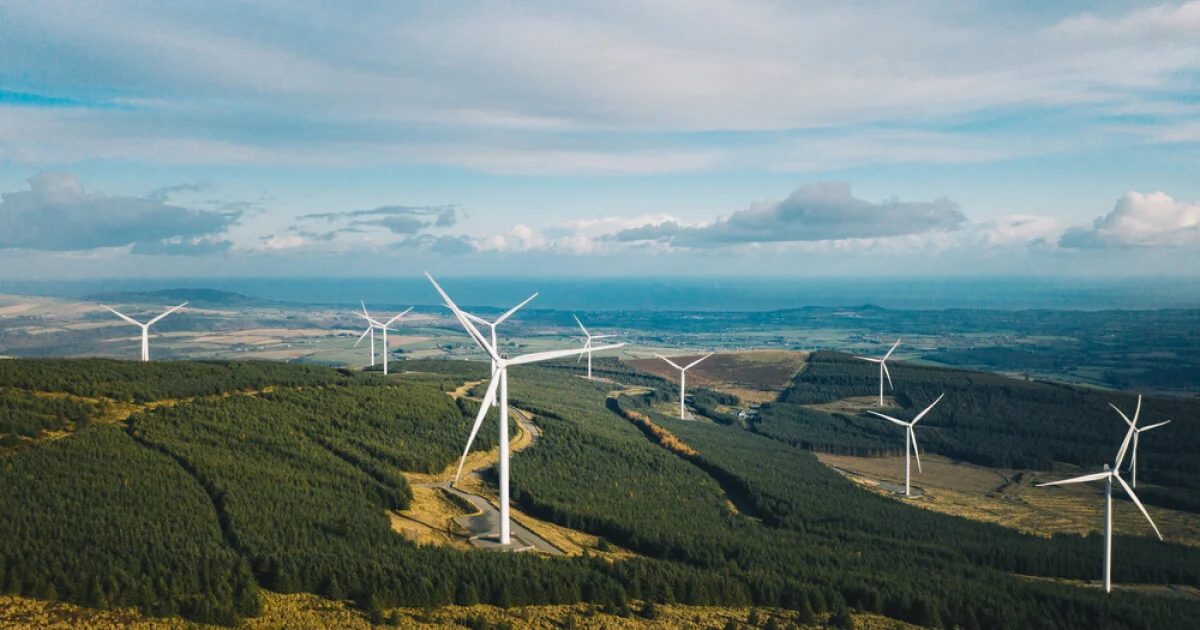
Ireland’s Ongoing Transformation Into a Global Electrostate
Companies Mentioned
Why It Matters
Ireland’s renewable surge secures energy independence, creates export‑ready clean power, and fuels high‑tech manufacturing, reshaping its competitive edge in Europe.
Key Takeaways
- •Ireland reached 8 GW renewable capacity, 49% of March 2026 electricity.
- •Offshore wind goal: 5 GW by 2030, 20 GW by 2040, 37 GW by 2050.
- •Greenlink (500 MW) and Celtic (700 MW) interconnectors boost EU grid ties.
- •Port of Cork secured $96 million investment for offshore‑renewable hub.
- •EirGrid plans $20.6 billion grid upgrades to integrate future offshore power.
Pulse Analysis
Ireland’s energy landscape has shifted from fossil‑fuel reliance to a renewable‑driven model, highlighted by the recent 8 GW capacity milestone. By supplying nearly half of its electricity from wind and solar, the island nation reduces exposure to volatile global fuel prices and strengthens national security. This transition dovetails with Ireland’s established semiconductor and AI sectors, creating a "Silicon meets Green" ecosystem where high‑tech firms can source low‑carbon power locally, enhancing both sustainability credentials and cost predictability.
The offshore wind agenda is the cornerstone of Ireland’s electrostate ambition. Government auctions have attracted global players like Ørsted and ESB, securing contracts that will deliver 5 GW by 2030 and scale to 37 GW by 2050—enough to power the continent multiple times over. Critical infrastructure is keeping pace: the Greenlink interconnector, operational since 2025, and the forthcoming Celtic link will together move up to 1.2 GW across the Irish Sea, opening export markets and providing grid resilience. Port upgrades, exemplified by Cork’s $96 million offshore‑renewable hub, and EirGrid’s $20.6 billion transmission plan, address supply‑chain and network constraints, ensuring that turbine components and generated power flow efficiently.
Despite rapid progress, regulatory capacity, port readiness, and grid reinforcement remain bottlenecks. The Maritime Area Regulatory Authority and the Offshore Wind Energy Clearing House aim to streamline approvals, while continued public‑private collaboration is essential for timely delivery. Emerging technologies such as green hydrogen and large‑scale storage promise to smooth intermittency, but they require sustained R&D funding and skilled talent. If Ireland can resolve these challenges, it will not only meet its own energy needs but also become a net exporter of clean electricity, cementing its role as a pivotal hub in Europe’s low‑carbon future.
Ireland’s Ongoing Transformation Into a Global Electrostate
Comments
Want to join the conversation?
Loading comments...