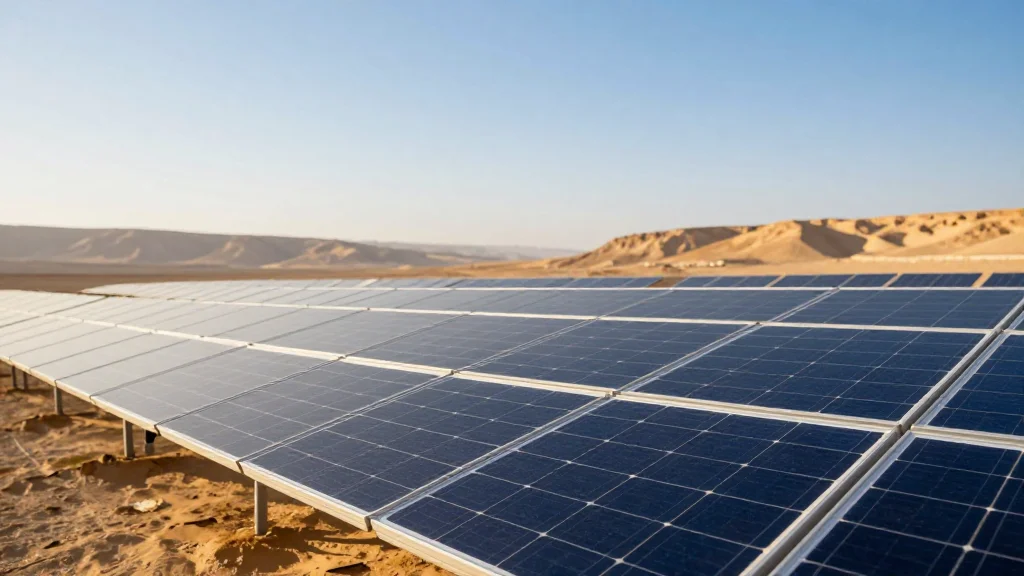
Israel’s Biggest Solar Power Plant Receives Final Approval
Why It Matters
The project delivers record‑low solar tariffs, boosting Israel’s energy security while accelerating its renewable‑energy targets and creating high‑skill jobs in the south.
Key Takeaways
- •EDF Renewables to build 265 MW solar plant near Dimona.
- •Project will deliver electricity at $0.022 per kWh, Israel’s lowest rate.
- •PPP model gives EDF 25‑year operational control before state ownership.
- •Plant supports Israel’s goal of 30% renewable energy by 2030.
Pulse Analysis
Israel’s Dimona solar venture marks a pivotal step in the nation’s transition from fossil fuels to clean energy. The Negev Desert’s abundant sunshine makes it an ideal location for large‑scale photovoltaics, and the 265 MW capacity will more than double the output of the country’s previous biggest solar installation. By securing the lowest-ever tariff at roughly two cents per kilowatt‑hour, EDF Renewables has set a benchmark that could pressure future bidders to drive costs down further, reinforcing Israel’s competitiveness in the regional energy market.
The public‑private partnership framework grants EDF full responsibility for design, financing, construction, operation, and maintenance for a quarter‑century, after which ownership reverts to the state. This arrangement reduces upfront fiscal pressure on the government while leveraging private‑sector expertise. The low‑cost electricity is expected to attract data‑center operators and AI firms to the south, aligning with Minister Eli Cohen’s vision of a high‑tech clean‑energy hub that fuels job growth and strengthens national energy security.
However, the absence of integrated storage means the plant will primarily feed the grid during off‑peak periods, limiting its ability to smooth intermittent generation. As Israel scales up to the 800 MW target across multiple sites, grid upgrades and ancillary services will become critical. The Dimona project, therefore, serves both as a proof‑of‑concept for ultra‑low‑cost solar and a catalyst for broader infrastructure investments needed to fully realize the country’s 2030 renewable ambitions.
Israel’s biggest solar power plant receives final approval
Comments
Want to join the conversation?
Loading comments...