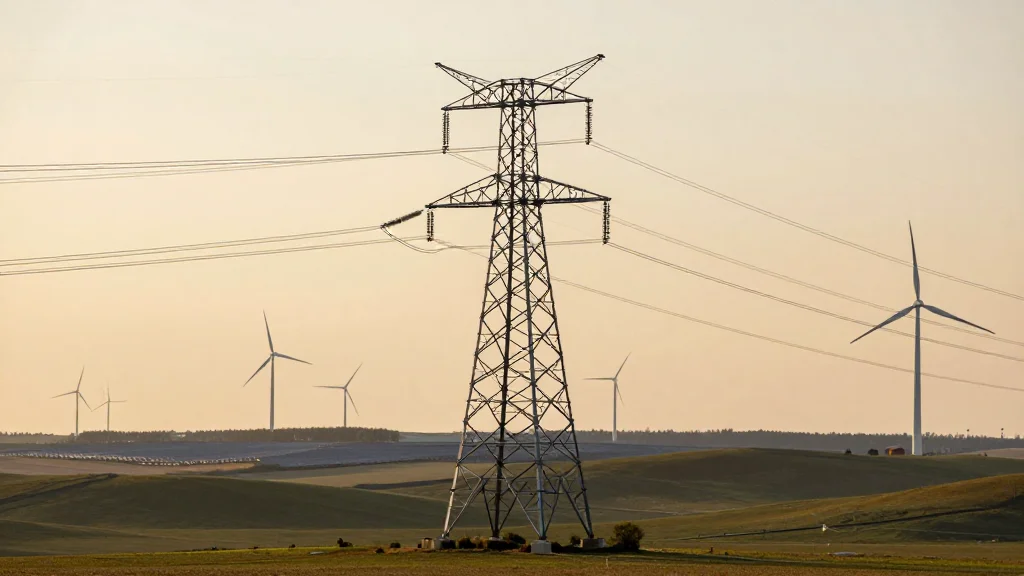
ITC Holdings CEO Calls Grid Monitoring Key to Modernizing U.S. Transmission

Companies Mentioned

Why It Matters
The Midwest’s transmission network is a bottleneck for integrating wind and solar resources that are increasingly located far from load centers. By expanding capacity and deploying real‑time monitoring, ITC Holdings can alleviate congestion, lower electricity costs, and reduce the risk of large‑scale outages. The company’s actions also illustrate how privately owned transmission owners can complement public utilities in meeting national climate and reliability goals. Furthermore, the emphasis on data‑driven operations signals a broader shift in the energy sector toward digital twins and predictive maintenance, technologies that could become standard across the grid. As regulators and policymakers push for more resilient infrastructure, ITC’s model may serve as a template for other independent transmission owners nationwide.
Key Takeaways
- •ITC Holdings operates ~16,000 miles of high‑voltage transmission across the Midwest.
- •The firm plans to build >450 miles of new 345‑kV lines in Michigan over the next decade.
- •ITC Michigan maintains 9,100 miles of lines and employs ~900 staff, most in Michigan.
- •CEO Charles Marshall cites the 2003 Northeast Blackout as a catalyst for modern monitoring.
- •Advanced grid‑monitoring platform aims to reduce congestion and support renewable integration.
Pulse Analysis
ITC Holdings’ push for expanded transmission capacity and real‑time monitoring reflects a strategic response to two converging pressures: the surge in renewable generation and the aging legacy of the U.S. grid. Historically, transmission upgrades have lagged behind generation growth due to high capital costs and lengthy regulatory approvals. By leveraging its independent status, ITC can move more swiftly than vertically integrated utilities, aligning project timelines with market demand for clean energy.
The company’s focus on data analytics mirrors a broader industry trend where utilities are adopting digital twins, AI‑driven outage prediction, and automated fault detection. These tools not only improve reliability but also create new revenue streams through ancillary services such as frequency regulation and congestion management. As FERC continues to refine its rules around transmission cost allocation, firms like ITC that can demonstrate measurable reliability benefits may secure more favorable rate treatment.
Looking forward, the success of ITC’s Michigan build‑out will hinge on securing financing amid a competitive capital market and navigating state‑level permitting processes. If the firm can deliver on its timeline, it will set a precedent for other independent transmission owners to pursue similar digital‑first, capacity‑focused strategies, accelerating the nation’s path toward a resilient, low‑carbon grid.
ITC Holdings CEO Calls Grid Monitoring Key to Modernizing U.S. Transmission
Comments
Want to join the conversation?
Loading comments...