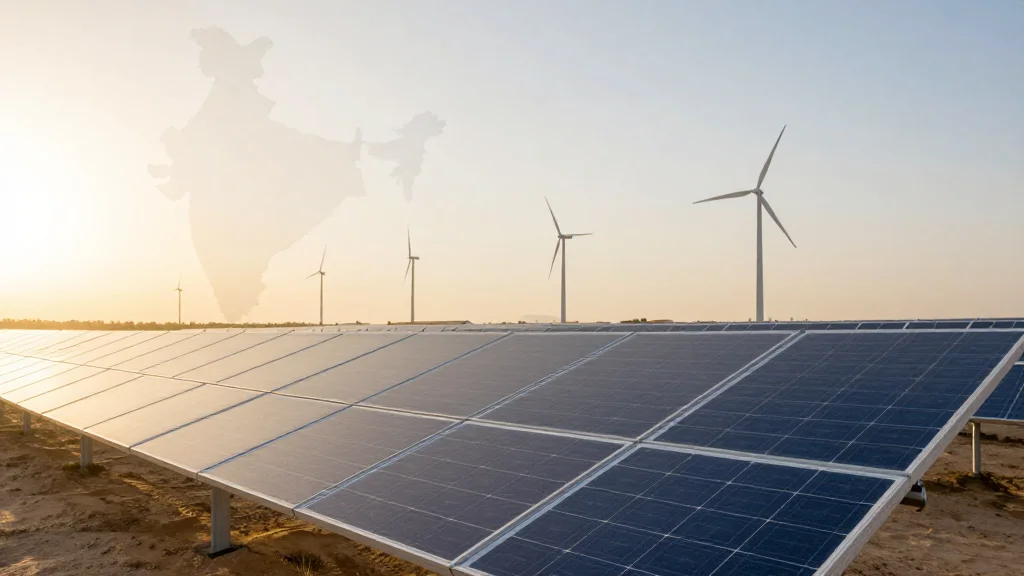
Jefferies Forecasts India's Renewable Capacity to Hit 359 GW by FY25‑30

Companies Mentioned
Why It Matters
India's renewable surge is pivotal for global climate goals, as the country accounts for roughly 7% of worldwide CO₂ emissions. Reaching 359 GW would not only move India closer to its 450 GW net‑zero ambition but also create a massive market for clean‑technology manufacturers worldwide. The scale of investment required will also test the capacity of both domestic and international capital markets to fund low‑carbon infrastructure. Beyond emissions, the expansion will reshape energy security in South Asia. A larger renewable base reduces reliance on imported coal and gas, potentially lowering trade deficits and stabilizing electricity prices for consumers. The ripple effects on regional grid interconnections could also accelerate cross‑border power trade, fostering a more integrated Asian energy market.
Key Takeaways
- •Jefferies projects India's renewable capacity to reach 359 GW by FY25‑30.
- •Solar is expected to contribute ~210 GW, wind ~120 GW of the total.
- •Achieving the target requires $30 billion in grid upgrades and extensive land allocation.
- •Projected $120 billion in project financing will flow through green bonds and bank loans.
- •Major OEMs are expanding Indian production capacity to meet anticipated demand.
Pulse Analysis
Jefferies' forecast underscores a turning point for India's clean‑energy trajectory. Historically, the country has struggled to translate policy ambition into on‑ground capacity, often hampered by grid constraints and financing gaps. The current outlook suggests that recent reforms—such as streamlined land‑use approvals and higher tariff caps—are beginning to bear fruit, aligning policy intent with market reality.
From a competitive standpoint, the projection intensifies the race among global equipment suppliers to secure Indian contracts. Companies that can demonstrate robust supply‑chain resilience and local manufacturing footprints will likely capture a disproportionate share of the market. This dynamic may also accelerate the shift toward domestic component sourcing, a trend already evident in the government's push for "Make in India" for renewable hardware.
Looking ahead, the key variable will be execution risk. If the grid upgrade programme stalls or financing costs climb further, developers may defer projects, eroding the projected capacity gains. Conversely, successful auction outcomes and stable policy signals could trigger a virtuous cycle of investment, technology deployment, and cost reductions, reinforcing India's role as a global renewable hub. Stakeholders should monitor the upcoming solar auctions, the grid‑integration roadmap, and the evolution of green‑bond issuance to gauge whether the 359 GW target is within reach.
Jefferies forecasts India's renewable capacity to hit 359 GW by FY25‑30
Comments
Want to join the conversation?
Loading comments...