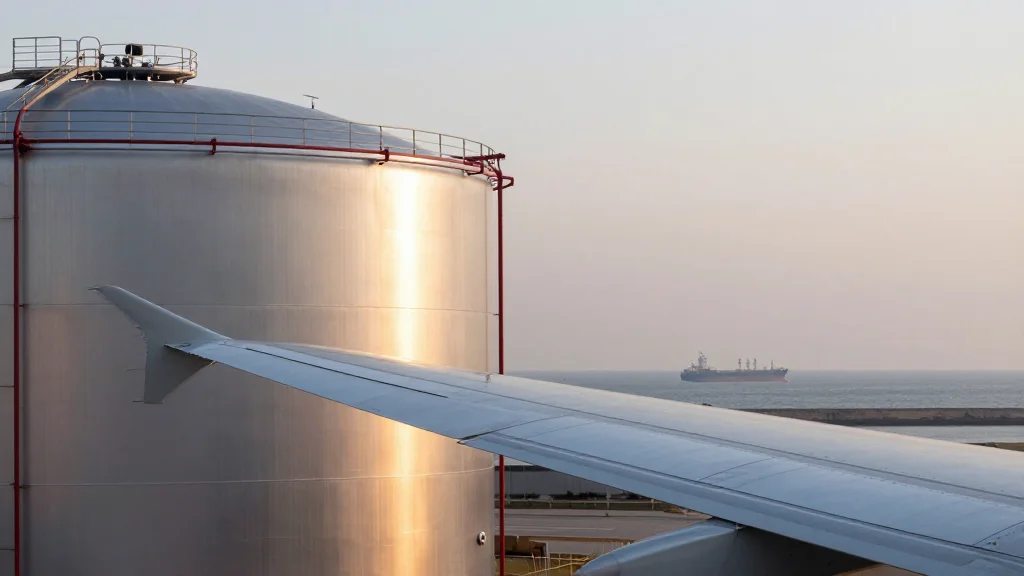
Jet Fuel Intelligence Data: Week Ended Jun. 12, 2026
Why It Matters
A steep jet‑fuel price rise threatens airline profitability, likely prompting higher ticket costs and accelerating the shift toward alternative fuels and supply diversification.
Key Takeaways
- •IATA forecasts 70% jet fuel price surge this summer
- •Airline sector profits projected to drop to $23 billion
- •UK secures Indian jet fuel as Russia ban lifts
- •Hormuz tension easing temporarily lowers spot jet fuel rates
- •Europe's e‑SAF sub‑mandate delays threaten nascent biofuel market
Pulse Analysis
The International Air Transport Association’s new outlook underscores how geopolitical flashpoints can quickly translate into commodity price shocks. A 70% jump in jet‑fuel costs, driven by heightened risk in the Hormuz corridor, would halve airline earnings to about $23 billion. Carriers, already grappling with post‑pandemic demand recovery, may be forced to raise fares or trim capacity, while investors watch profit margins erode. The outlook also highlights the fragility of the global fuel supply chain, where a single chokepoint can ripple through airline balance sheets worldwide.
Yet the market shows signs of resilience. Recent diplomatic overtures have softened tensions, nudging spot jet‑fuel prices lower for a brief window. In a parallel development, the United Kingdom secured its first shipment of Indian jet fuel after Russia’s export ban was temporarily lifted, illustrating how airlines are diversifying sources to mitigate regional risk. Such moves not only stabilize short‑term pricing but also signal a broader shift toward a more multipolar fuel supply network, reducing reliance on traditional Russian and Middle‑East exporters.
Longer‑term, the jet‑fuel price volatility amplifies the urgency for sustainable alternatives. Europe’s e‑SAF sub‑mandate, intended to spur bio‑fuel production, faces implementation delays that could stall the continent’s green‑aviation transition. Coupled with rising carbon‑removal costs and geopolitical instability, airlines are likely to accelerate investments in SAF, hydrogen, and electric propulsion. Stakeholders—from fuel traders to policymakers—must balance immediate supply security with strategic decarbonisation pathways to safeguard the industry’s financial health and environmental commitments.
Jet Fuel Intelligence Data: Week Ended Jun. 12, 2026
Comments
Want to join the conversation?
Loading comments...