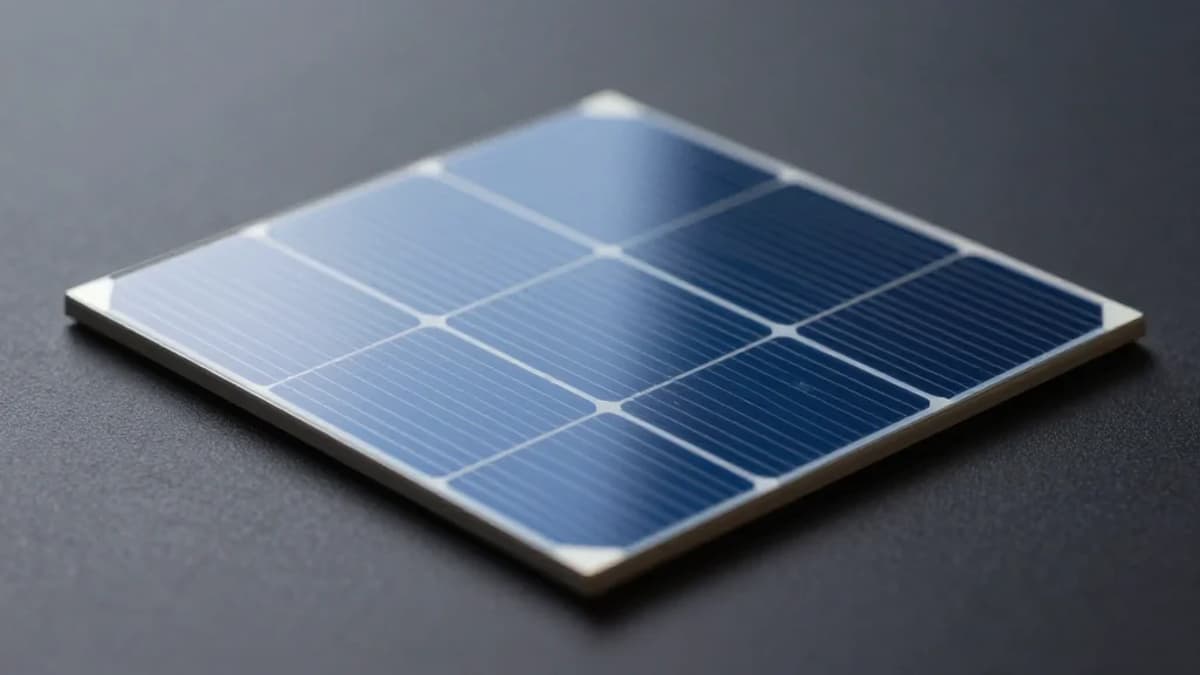
JinkoSolar Achieves Record-Breaking 26.66% Efficiency for TOPCon Solar Cell Based on M10-Size Wafer
•February 25, 2026
0
Why It Matters
The breakthrough narrows the gap to the theoretical efficiency limit, promising lower levelized cost of electricity and faster adoption of high‑efficiency PV modules worldwide.
Key Takeaways
- •26.6% efficiency on industrial M10 wafer
- •World record for TOPCon industrial cells
- •Dual-side refinement reduces carrier losses
- •Bifaciality reaches 88.3% after thinning
- •JinkoSolar targets 28% by 2028
Pulse Analysis
JinkoSolar’s 26.6% efficiency achievement on an M10‑size wafer marks a pivotal moment for TOPCon technology, the most promising pathway to surpass 25% module performance at scale. By confirming the result through an independent third‑party, the company validates that laboratory‑grade efficiencies can be replicated in mass‑production lines, a critical step for investors and utilities seeking reliable, high‑output solar assets. The record also reinforces China’s leadership in photovoltaic innovation, challenging rivals to accelerate their own industrial‑scale research.
The cell’s architecture combines high‑sheet‑resistance boron emitters on the front with a double‑layer tunnel‑oxide/polysilicon rear, effectively suppressing silver diffusion and minimizing recombination losses. This dual‑side electrical refinement yields a 744.6 mV open‑circuit voltage and an 85.57% fill factor, while thinning the polysilicon layer lifts bifaciality to 88.3%, translating into higher energy yield on reflective surfaces. Collaboration with the Chinese Academy of Sciences, Soochow University, and Jiliang University underscores the importance of academic‑industry partnerships in pushing silicon‑based efficiencies toward the 83.8% theoretical ceiling.
Looking ahead, JinkoSolar’s roadmap to exceed 28% efficiency by 2028 could reshape the cost structure of utility‑scale solar projects, driving down the levelized cost of electricity and accelerating the transition to renewable energy. The record also puts pressure on competing manufacturers to adopt similar tunnel‑oxide passivation techniques, potentially standardizing TOPCon as the next generation of silicon PV. As global demand for higher‑efficiency modules intensifies, this milestone positions JinkoSolar to capture premium market share and influence future policy incentives tied to module performance.
JinkoSolar achieves record-breaking 26.66% efficiency for TOPCon solar cell based on M10-size wafer
0
Comments
Want to join the conversation?
Loading comments...