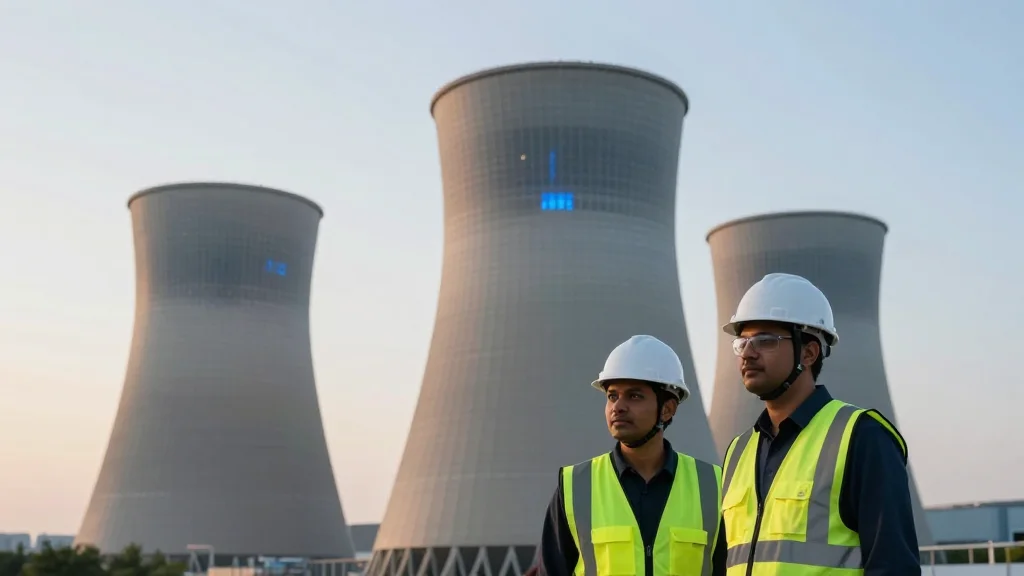
Kalpakkam PFBR Criticality Marks New Phase in India’s Nuclear Programme: Minister Jitendra Singh
Why It Matters
The PFBR launch accelerates India’s nuclear fuel cycle, enhancing energy security and supporting its ambitious decarbonisation roadmap. It also signals India’s emergence as a global leader in advanced reactor technology.
Key Takeaways
- •India achieved PFBR first criticality on April 6, 2026.
- •PFBR is a 500 MWe fast breeder generating extra fissile material.
- •India becomes second country after Russia with commercial fast breeder.
- •Targeting 100 GW nuclear capacity by 2047 to aid clean transition.
- •SMR plan funded with ~$2.4 billion for five reactors by 2033.
Pulse Analysis
India’s first criticality of the Prototype Fast Breeder Reactor (PFBR) at Kalpakkam marks a pivotal step in its long‑term nuclear strategy. The 500 MWe reactor, developed by the Indira Gandhi Centre for Atomic Research and constructed by BHAVINI, exemplifies the second stage of India’s three‑stage programme, which seeks to close the fuel loop by breeding more fissile material than it consumes. By joining Russia as the only country operating a commercial‑scale fast breeder, India not only validates its indigenous design capabilities but also gains a strategic advantage in fuel self‑sufficiency, a critical factor for a nation with limited uranium resources.
The PFBR’s commissioning dovetails with India’s broader clean‑energy ambitions, notably the goal of 100 GW of nuclear capacity by 2047. Fast breeder technology promises higher fuel efficiency and lower waste generation, attributes that align with the country’s sustainability targets and its need for baseload power to complement intermittent renewables. As the grid expands, the PFBR’s ability to produce surplus plutonium could also underpin future thorium‑based reactors, further diversifying the energy mix and reducing reliance on fossil fuels.
Complementing the large‑scale PFBR, India is advancing a suite of Small Modular Reactors (SMRs) with a $2.4 billion budget to deploy five units by 2033. These SMRs aim to serve industrial captive‑power demands, remote regions lacking grid connectivity, and repurposed thermal‑power sites, offering flexible, low‑carbon solutions. The combined rollout of fast breeder and SMR technologies positions India as a burgeoning hub for advanced nuclear innovation, potentially attracting international partnerships and export opportunities while reinforcing its energy security in a geopolitically volatile landscape.
Kalpakkam PFBR criticality marks new phase in India’s nuclear programme: Minister Jitendra Singh
Comments
Want to join the conversation?
Loading comments...