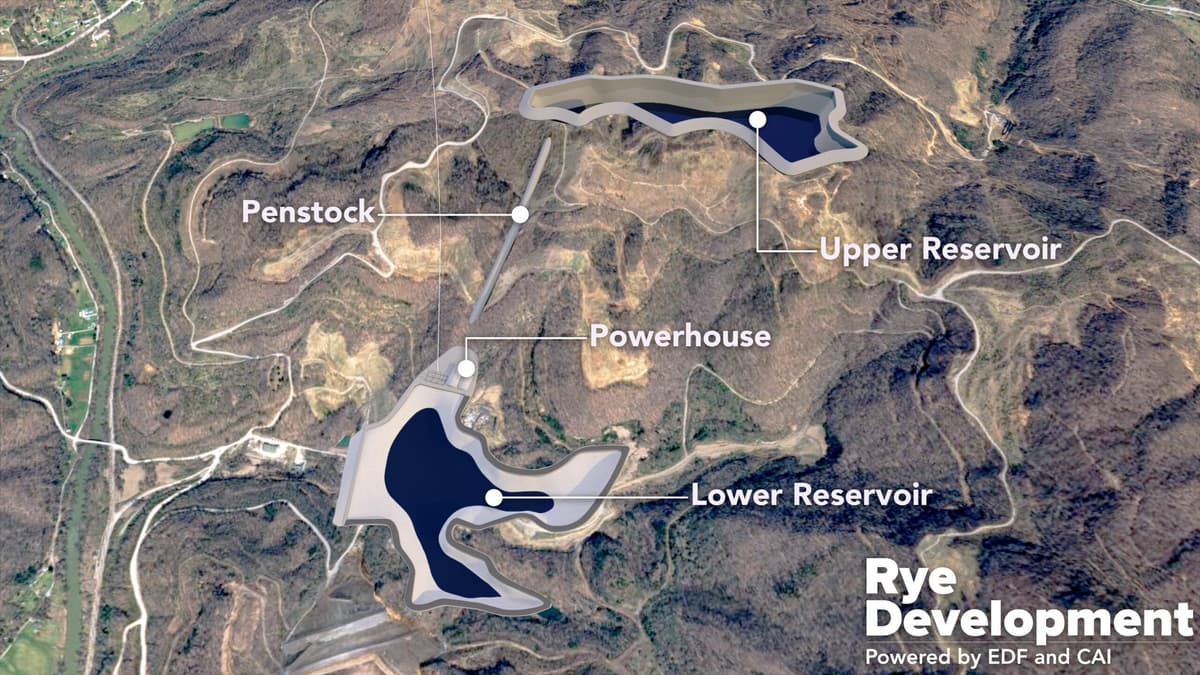
Kentucky Is Getting Its First Pumped Storage Hydropower Project for $1.3B
Why It Matters
The project provides critical flexible capacity to balance intermittent wind and solar, reducing curtailment and enhancing grid resilience in the Southeast. It also signals growing investor confidence in large‑scale storage as a cornerstone of the U.S. clean‑energy transition.
Key Takeaways
- •Kentucky's first pumped storage project approved, $1.3B investment
- •Project will add 1,000 MW of flexible grid capacity
- •Financed by a public‑private partnership, leveraging federal tax credits
- •Expected to store excess wind and solar, reducing curtailment
- •Construction slated to begin 2025, operations by 2032
Pulse Analysis
Pumped‑storage hydropower is emerging as a linchpin for modern electricity grids, and Kentucky’s inaugural $1.3 billion venture underscores that trend. By converting surplus renewable generation into potential energy, the facility can quickly dispatch power during peak demand, smoothing the variability of wind and solar farms across the region. The technology’s round‑trip efficiency—often exceeding 80 percent—makes it one of the most cost‑effective large‑scale storage options, especially where topographical conditions favor reservoir creation.
The financing structure blends state incentives, federal Investment Tax Credits, and private capital, reflecting a broader shift toward collaborative funding models for infrastructure. Such partnerships mitigate risk and accelerate deployment, while also unlocking additional revenue streams through ancillary services like frequency regulation. For utilities and independent power producers, the project offers a reliable back‑up that can defer costly transmission upgrades and reduce reliance on fossil‑fuel peaker plants.
Beyond grid benefits, the Kentucky pumped‑storage project is poised to stimulate local economies through construction jobs and long‑term operational roles. Environmental assessments indicate minimal ecological disruption, as the design incorporates fish‑friendly turbines and water‑level management to protect downstream habitats. As the Southeast grapples with rising electricity demand driven by data centers and electrified transport, this storage asset will be a critical tool for meeting climate goals while maintaining power reliability.
Kentucky is getting its first pumped storage hydropower project for $1.3B
Comments
Want to join the conversation?
Loading comments...