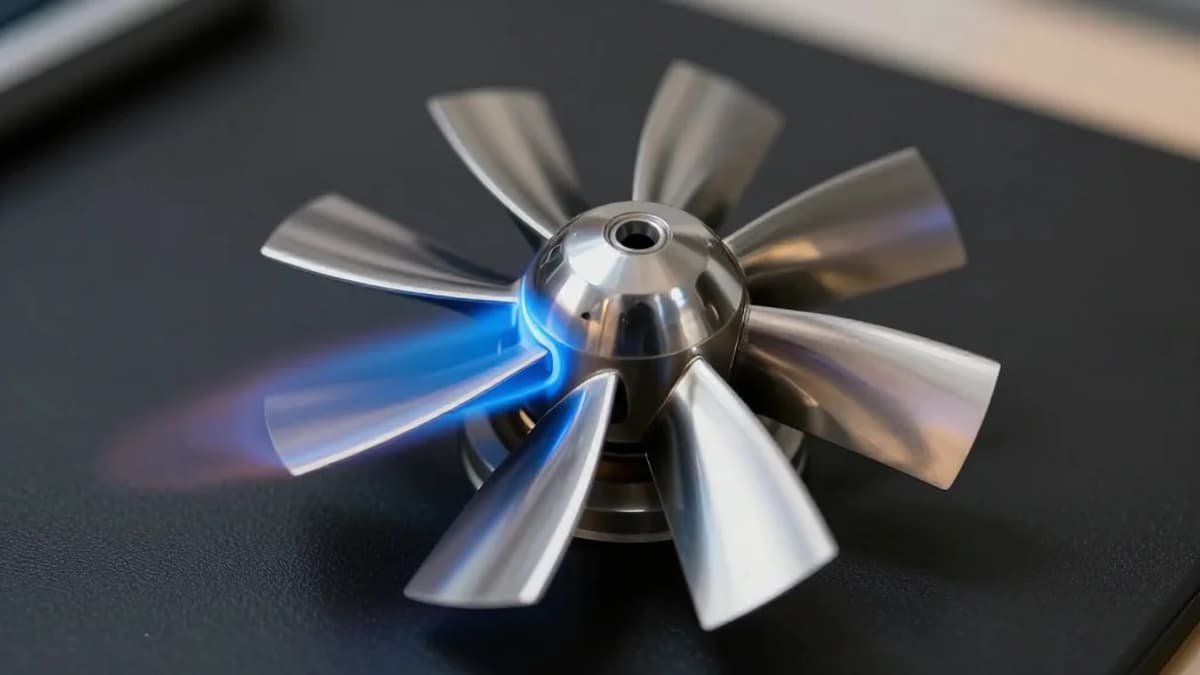
KIT Reaches Milestone: Power Generation with Innovative Compressorless Hydrogen Gas Turbine - NASA Runtime Record Surpassed
•February 17, 2026
0
Why It Matters
Eliminating the compressor can dramatically improve efficiency and lower costs for hydrogen power generation, accelerating the shift to a fossil‑free energy system. The breakthrough also enables lighter turbines for stationary and aviation uses.
Key Takeaways
- •Record: 303‑second compressor‑less hydrogen turbine runtime.
- •Surpasses NASA’s 250‑second benchmark.
- •Pressure‑gain combustion replaces energy‑intensive air compressor.
- •First turbine generated electricity without mechanical compression.
- •Technology to be displayed at Hannover Messe 2026.
Pulse Analysis
Pressure‑gain combustion is reshaping how hydrogen‑fuelled turbines can operate. By harnessing detonation‑driven pressure rises instead of a traditional mechanical compressor, the technology recovers a substantial portion of power that would otherwise be lost. This fundamental shift not only lifts overall cycle efficiency but also reduces moving parts, simplifying maintenance and extending component life—critical factors for large‑scale renewable integration. The KIT record demonstrates that these theoretical gains can be realized in practice, moving the concept from laboratory curiosity toward commercial viability.
The engineering hurdles were significant. Stabilising ultra‑fast combustion waves while delivering consistent torque to a turbine shaft required advanced materials and precise control algorithms. Overcoming thermal stress that previously limited runs to seconds, KIT achieved a five‑minute continuous operation and successfully coupled the turbine to a generator. This validates that pressure‑gain combustion can produce usable electricity, opening doors for compact, high‑power‑density generators in remote micro‑grids and potentially for aircraft propulsion where weight savings are paramount.
From a market perspective, the breakthrough aligns with global decarbonisation targets and the rapid expansion of the hydrogen economy. By cutting the parasitic load of compressors, operators can expect lower capital expenditures and higher net output, making hydrogen‑based power more competitive against natural‑gas and renewable alternatives. The upcoming demonstration at Hannover Messe will allow industry stakeholders to assess scalability, integration challenges, and supply‑chain implications, accelerating pathways to commercial deployment in both stationary power plants and next‑generation aviation engines.
KIT Reaches Milestone: Power Generation with Innovative Compressorless Hydrogen Gas Turbine - NASA Runtime Record Surpassed
0
Comments
Want to join the conversation?
Loading comments...