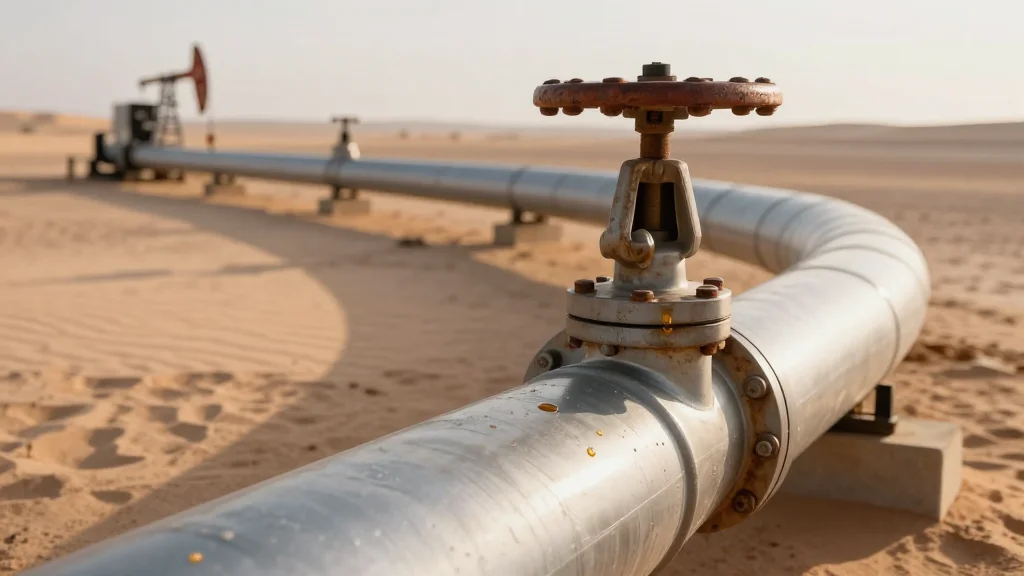
Kuwait Eyes Regional Pipeline Tie-Ups to Bypass Hormuz
Why It Matters
The move could safeguard Kuwait’s export capability and stabilise global oil supply, reducing the market’s exposure to geopolitical chokepoints. It also underscores the growing strategic interdependence among GCC oil exporters.
Key Takeaways
- •Kuwait seeks pipeline capacity from Saudi East‑West and UAE Adcop lines.
- •Hormuz closure cut Kuwait output to 580,000 b/d, 25% of pre‑war level.
- •Saudi and UAE pipelines previously reduced throughput by ~700,000 b/d after attacks.
- •Kuwait estimates 80% production recovery within three weeks once shipping resumes.
- •Pipeline security hinges on compression stations and export terminals, not just pipe.
Pulse Analysis
The Strait of Hormuz has long been the world’s most vulnerable oil artery, handling roughly a fifth of daily global petroleum flows. Kuwait’s total reliance on this narrow waterway left it exposed when the US‑Iran conflict forced a three‑month shutdown, slashing its output to a quarter of normal levels. By courting Saudi and Emirati partners, Kuwait aims to piggyback on the East‑West pipeline, which moves 7 million barrels per day to the Red Sea, and the 1.7 million‑b/d Adcop line that reaches Fujairah on the Gulf of Oman. This regional cooperation could provide a lifeline, allowing Kuwaiti barrels to bypass Hormuz entirely.
Beyond the geopolitical calculus, the technical realities of long‑distance pipelines present new risk vectors. Recent attacks on Saudi and UAE infrastructure demonstrated that while the pipes themselves can be repaired relatively quickly, compression stations and export terminals are far more vulnerable and take longer to restore. A single hit on a compression node can halt flow for weeks, and damage at a terminal renders the entire line ineffective. Kuwait’s officials acknowledge these weaknesses, emphasizing that any shared capacity must include robust safeguards at both ends of the network.
If maritime traffic through Hormuz normalises, Kuwait projects a rapid rebound—80% of its shut‑in production could return within three weeks, pushing output back toward 2.1 million barrels per day. This swift recovery would ease supply concerns and temper price volatility in the broader oil market. However, the final 20% of capacity may linger for months, underscoring the importance of diversified export routes. The proposed pipeline tie‑ups not only mitigate immediate risk but also signal a deeper strategic integration among GCC oil producers, potentially reshaping regional energy logistics for years to come.
Kuwait eyes regional pipeline tie-ups to bypass Hormuz
Comments
Want to join the conversation?
Loading comments...