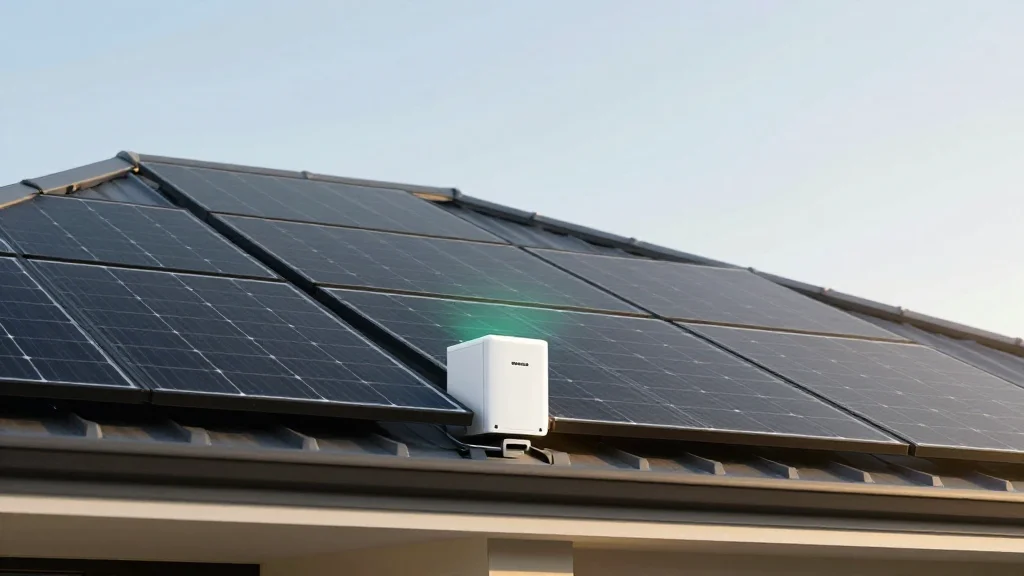
Lessons From Australia for Scaling Rooftop Solar and Home Batteries
Why It Matters
Adopting Australia’s permitting and smart‑inverter framework could slash U.S. distributed‑solar costs, accelerate battery adoption, and unlock billions in grid‑efficiency savings. It offers a roadmap for regulators seeking to meet clean‑energy targets without costly infrastructure upgrades.
Key Takeaways
- •Australian rooftop solar costs <⅓ US prices, driving massive adoption
- •Flexible interconnection via smart inverters removes approval bottlenecks
- •Home battery subsidies target 2 million installs and 40 GWh capacity
- •Utilities that don’t generate power readily back rooftop solar
- •DER integration could save $1.3‑$2.8 B USD in grid costs
Pulse Analysis
Australia’s rooftop solar surge stems from a combination of ultra‑low hardware costs and a regulatory environment that treats interconnection as a given rather than a hurdle. By allowing residential systems to connect without prior approval—provided they accept real‑time export limits—South Australia now draws three‑quarters of its electricity from distributed resources. The model is underpinned by a smart‑inverter standard that lets distribution operators communicate with each inverter over Wi‑Fi, dynamically curbing output when the grid is constrained. This approach not only cuts soft‑costs but also maximizes the utilization of existing distribution assets.
In the United States, the IEEE 1547‑2018 smart‑inverter rule has been adopted by thirteen states, yet deployment remains uneven. Pilot programs in Colorado, New York and California demonstrate the feasibility of flexible interconnection, but utilities often lack the incentive to embrace it. Australian experience shows that when utilities are structurally separated from generation, they become natural allies of rooftop solar. U.S. regulators can replicate this by decoupling performance metrics from generation revenue and by mandating inverter communication capabilities, thereby creating a level playing field for distributed energy resources.
The Australian government’s battery subsidy—aimed at 2 million home installations and 40 GWh of storage—has already delivered 4.6 GWh in six months, surpassing the combined capacity of the nation’s twelve largest grid‑scale batteries. Translating this to U.S. markets could accelerate residential storage adoption, smooth solar variability, and defer costly transmission upgrades. However, equity concerns linger, as roughly 40% of Australians rent and cannot install solar. U.S. policymakers must pair financial incentives with programs that enable renters and low‑income households to participate, ensuring that the clean‑energy transition delivers broad-based benefits.
Lessons from Australia for scaling rooftop solar and home batteries
Comments
Want to join the conversation?
Loading comments...