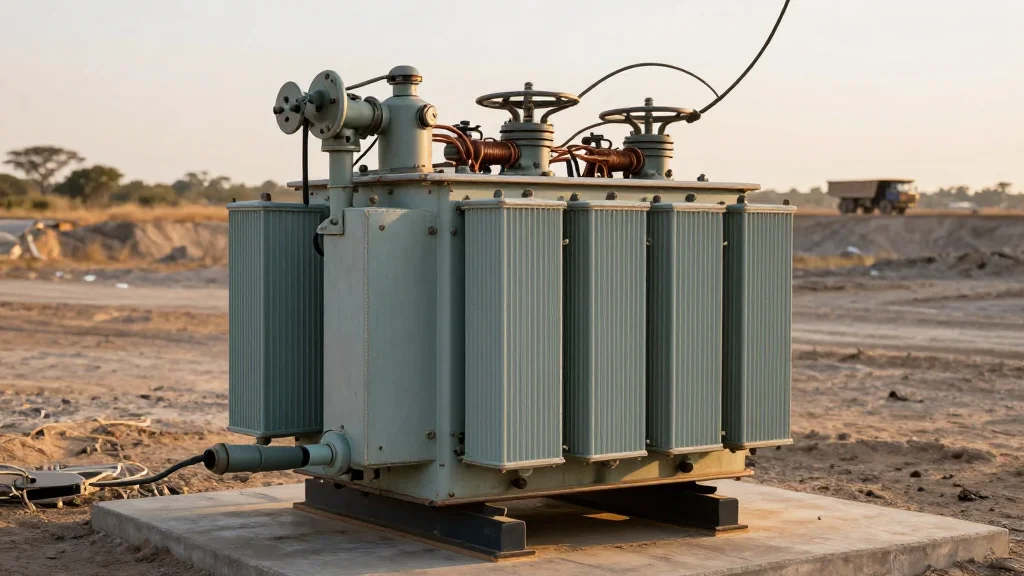
LHM Transforms Botswana Mine House as FATs Due
Companies Mentioned
Why It Matters
Upgrading to high‑capacity transformers ensures uninterrupted power for Botswana’s mining sector, protecting production output and reducing downtime risk. It also signals growing investment in Africa’s mineral infrastructure, attracting further capital and technology partners.
Key Takeaways
- •LHM supplies two 30 MVA transformers for Botswana mining house
- •Existing power grid couldn't meet high-demand mining operations
- •Transformers engineered for high‑voltage, improving reliability and efficiency
- •Project supports Botswana's expanding mineral production and energy resilience
Pulse Analysis
Botswana’s mining industry is entering a phase of rapid expansion, driven by rising global demand for copper, lithium, and other critical minerals. However, many operations have outgrown the legacy power grids originally built for smaller-scale extraction. By installing two 30 MVA transformers, LH Marthinusen addresses a core bottleneck—insufficient electrical capacity—allowing mines to scale output without the risk of voltage drops or frequent outages. This infrastructure boost not only safeguards current production but also positions the country to attract new projects that require robust, high‑voltage supply.
The choice of 30 MVA units reflects a strategic balance between capacity and flexibility. High‑voltage transformers reduce line losses, improve overall system efficiency, and provide a buffer for future load growth. For mining operators, this translates into lower operating costs and higher equipment uptime, critical factors in a sector where margins are tightly linked to energy expenses. Moreover, the engineered design of LHM’s transformers incorporates advanced monitoring and protection features, enabling predictive maintenance and rapid fault isolation—key advantages in remote African sites where service windows are limited.
Beyond the immediate technical benefits, the project underscores a broader trend of private‑sector investment in African energy infrastructure. As global investors seek secure supply chains for strategic minerals, reliable power becomes a decisive factor in site selection. LHM’s involvement signals confidence in Botswana’s regulatory environment and its commitment to modernizing essential services. In the long run, such upgrades can catalyze ancillary economic activity, from local job creation to the development of ancillary services, reinforcing the country’s position as a mining hub in the continent.
LHM transforms Botswana mine house as FATs due
Comments
Want to join the conversation?
Loading comments...