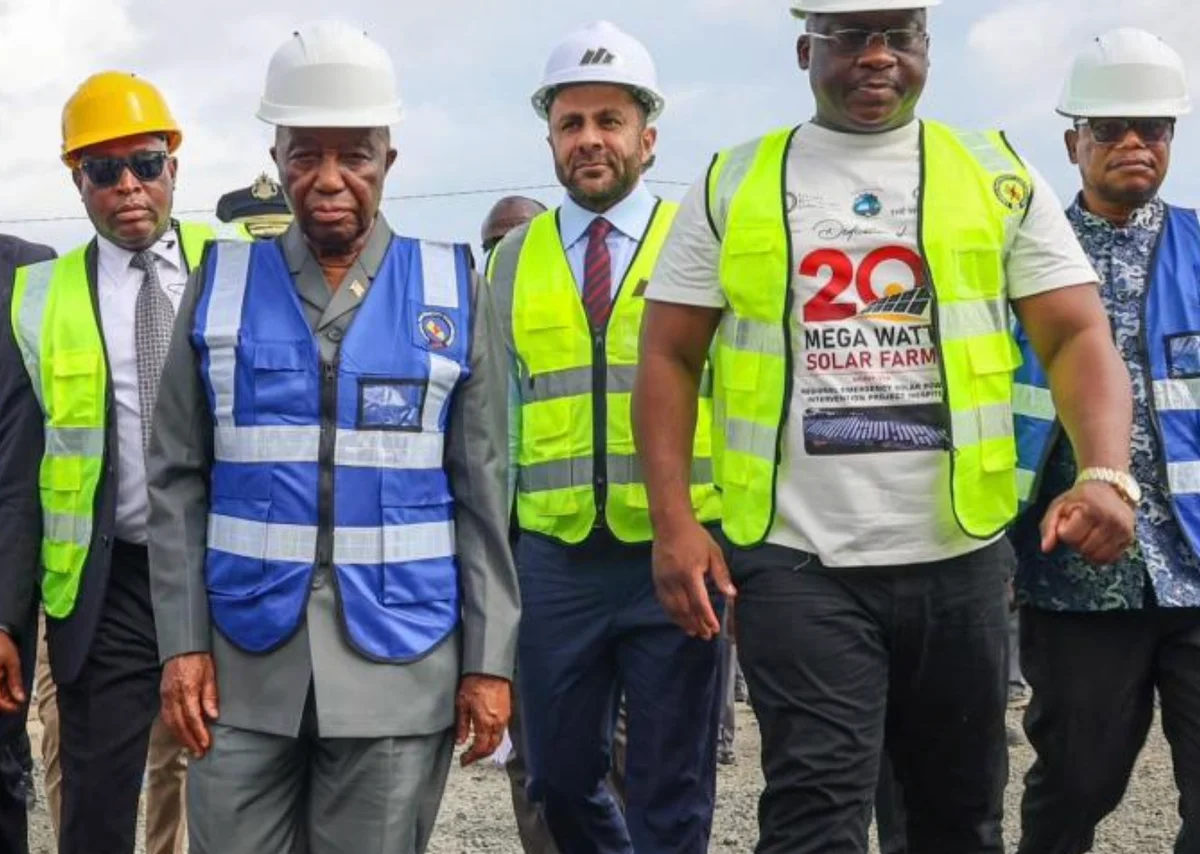
Liberia’s First Utility-Scale Solar Plant Begins Operating
Companies Mentioned
Why It Matters
The project tackles Liberia’s chronic power shortages, attracting investment and supporting economic growth, while showcasing the World Bank’s commitment to scaling renewable grids across the region.
Key Takeaways
- •20 MW Mount Coffee Solar Park begins operations in Liberia
- •World Bank commits $125 million, $57 million for expansion and storage
- •Capacity will rise to 30 MW with a 12 MWh battery by 2027
- •Solar addition complements existing 88 MW hydropower at same site
- •Liberia’s solar fleet totals 130.9 MW, mostly commercial‑industrial projects
Pulse Analysis
Liberia’s energy sector has long been dominated by a fragile hydropower network that struggles to meet demand, leaving businesses and households reliant on costly diesel generators. With an installed capacity of roughly 150 MW, the country faces frequent outages that deter foreign investment and hamper essential services. The introduction of a utility‑scale solar facility marks a pivotal shift toward diversifying the generation mix, reducing dependence on imported fuels, and laying the groundwork for a more resilient grid.
The 20 MW Mount Coffee Solar Park leverages the existing infrastructure of the 88 MW hydropower station, enabling shared transmission lines and streamlined land use. The World Bank’s $125 million package, of which $57 million is earmarked for a capacity boost to 30 MW and a 12 MWh battery energy storage system, reflects confidence in Liberia’s regulatory reforms and its ability to integrate intermittent renewables. The battery, slated for deployment by 2027, will smooth solar output, support peak‑hour demand, and provide ancillary services such as frequency regulation, enhancing overall grid stability.
Regionally, the project aligns with the World Bank’s Regional Emergency Solar Power Intervention Project, which seeks to accelerate renewable adoption across West and Central Africa. By demonstrating a successful hybrid model—combining solar, storage, and hydropower—Liberia positions itself as a testbed for scalable clean‑energy solutions. The anticipated reliability gains could spur new manufacturing, agribusiness, and digital service investments, catalyzing economic growth and advancing the continent’s climate objectives. As more African nations prioritize renewable capacity, Liberia’s early move may attract further financing and technical partnerships, reinforcing its trajectory toward a low‑carbon future.
Liberia’s first utility-scale solar plant begins operating
Comments
Want to join the conversation?
Loading comments...