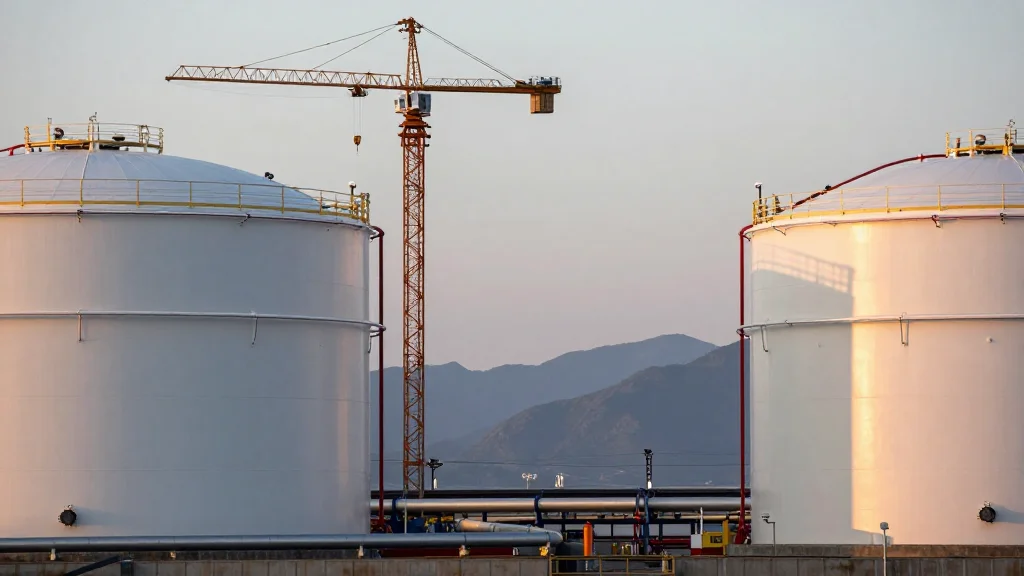
LNG Canada Expansion Edges Toward FID With Fluor-JGC Work
Why It Matters
The expansion would significantly boost Canada’s LNG export capacity, strengthening its position in a tightening global market and delivering new revenue streams for the partners. It also showcases a cost‑effective brownfield model that could accelerate future North‑American LNG projects.
Key Takeaways
- •Phase 2 early work begins, edging toward FID.
- •Expansion aims to double LNG Canada output to ~14 mtpa.
- •Brownfield construction reduces capex versus greenfield builds.
- •Montney gas supply and existing pipelines back expansion.
- •Fluor and JGC secured EPC contracts for Phase 2.
Pulse Analysis
LNG Canada, a joint venture led by Shell and its partners, completed its first phase in 2025, delivering roughly 7 million tonnes per annum (mtpa) of liquefied natural gas from the Montney formation in northeastern British Columbia. The facility, located at the Kitimat port, was built on a brownfield site that already housed a conventional gas processing plant, allowing the project to tap existing infrastructure and reduce environmental footprints. Since startup, the export terminal has secured long‑term contracts with Asian utilities, positioning Canada as a reliable LNG supplier amid tightening global supply.
Earlier this week the partners authorized Fluor and JGC to commence early‑work activities for Phase 2, the first concrete step toward a final investment decision expected later this year. The expansion is designed to double output to about 14 mtpa by adding a second liquefaction train on the same site. By reusing the existing port, pipelines and power supply, the brownfield approach is projected to cut capital expenditures by up to 30 percent compared with a greenfield build. Early‑work includes civil engineering, procurement of key cryogenic equipment, and detailed front‑end engineering, which should accelerate the overall schedule.
If the expansion proceeds, Canada could add roughly 1 billion cubic feet per day of gas to the export pipeline network, reinforcing its role in the Asia‑Pacific market where demand is driven by power‑generation and decarbonisation targets. The additional capacity also provides a hedge against geopolitical volatility in the Middle East and Europe, offering buyers a North‑American source of flexible LNG. For the partners, the project promises incremental revenue of several hundred million dollars annually and strengthens the domestic gas industry’s long‑term viability.
LNG Canada Expansion Edges Toward FID With Fluor-JGC Work
Comments
Want to join the conversation?
Loading comments...