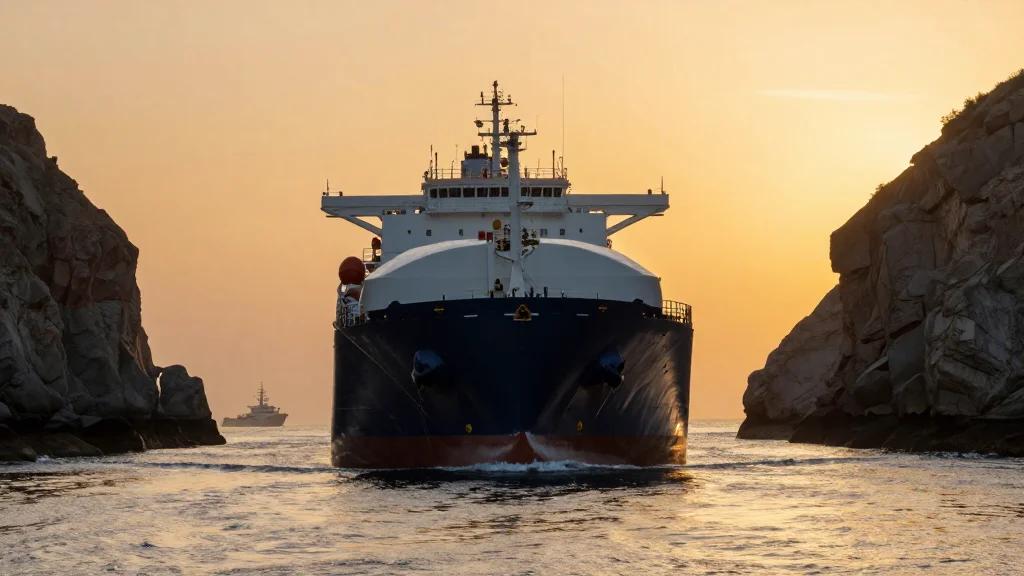
LNG Shipping Rates Surge 600% as Hormuz Risk Reshapes Global Gas Flows
Key Takeaways
- •Spot LNG charter rates jumped 600% to $300k/day.
- •Hormuz risk could cut global LNG shipments by ~20%.
- •Longer routes and JKM‑TTF premium widenings drive rate surge.
- •Limited spot vessels intensify competition, raising charter costs.
- •Ongoing Qatar/UAE cargoes mean further market pressure ahead.
Pulse Analysis
The Strait of Hormuz, a chokepoint for roughly 20% of the world’s oil and a growing share of liquefied natural gas, has become a flashpoint for freight markets. When risk of closure spikes, charterers scramble for alternative supply lines, extending voyages from the United States to Asian hubs. This added distance, combined with a near‑$5/MMBtu JKM‑TTF premium, has propelled spot LNG rates to $300,000 per day—levels not seen since the 2022 gas crisis. The immediate effect is a steep cost curve for buyers and tighter margins for sellers.
Underlying the price surge is a classic supply‑demand imbalance. The global fleet of spot‑ready LNG carriers is finite, and many vessels are already committed to long‑haul contracts or en route from the Gulf. As the JKM‑TTF spread widens, cargoes are redirected from Europe to higher‑priced Asian markets, further stretching the available tonnage. This competition for a scarce asset inflates daily charter fees, while shippers factor in longer transit times and higher fuel consumption, eroding profitability across the value chain.
Looking ahead, a prolonged Hormuz disruption could reshape trade flows permanently. If the strait remains partially blocked, carriers may establish new baselines, favoring U.S. LNG projects and prompting European importers to secure longer‑term contracts to hedge volatility. Investors are likely to monitor fleet expansions, such as next‑generation LNG carriers with dual‑fuel capability, as a hedge against geopolitical shocks. In the short term, market participants must balance the cost of rerouting against the risk of supply shortages, making strategic flexibility a critical competitive advantage.
LNG shipping rates surge 600% as Hormuz risk reshapes global gas flows
Comments
Want to join the conversation?