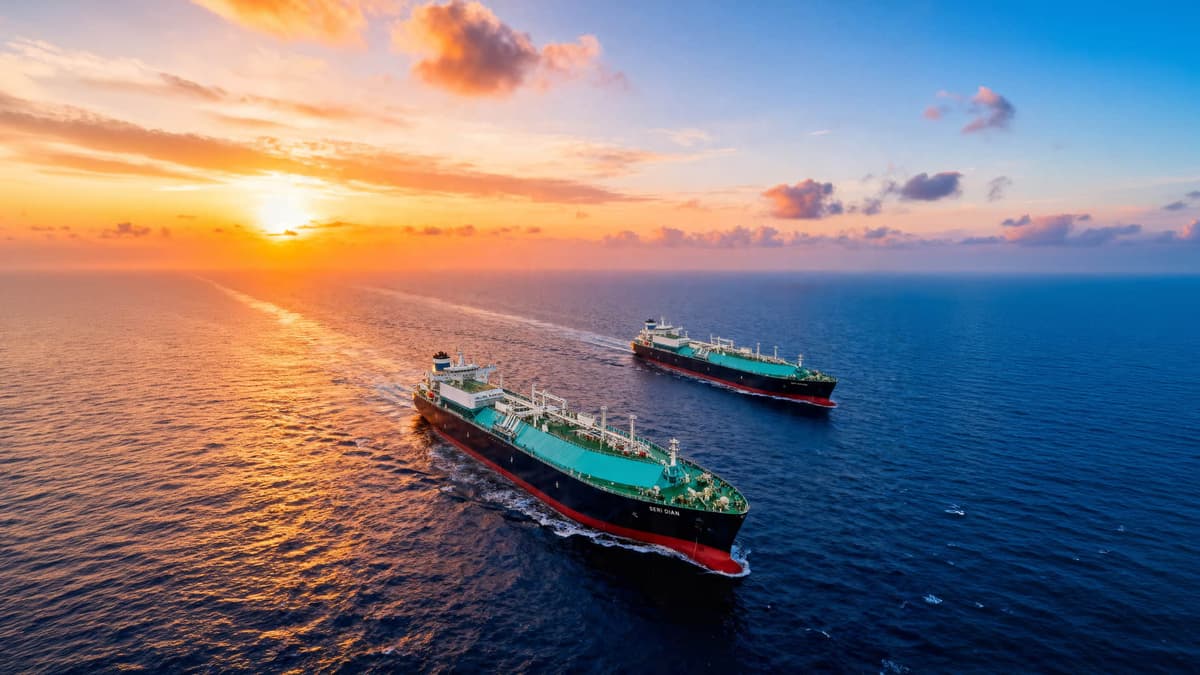
LNG Vessel Pair Enriches MISC’s Fleet
Why It Matters
The new ships boost MISC’s capacity and technological edge, reinforcing its competitive stance in the fast‑growing LNG shipping market and deepening its strategic partnership with ExxonMobil’s SeaRiver Maritime.
Key Takeaways
- •MISC adds two 174,000 cbm LNG carriers built by Hanwha Ocean
- •Vessels feature ICER system and low boil‑off containment for efficiency
- •Fleet now totals 32 LNG carriers, four under long‑term charter with SeaRiver
- •Project contributed two million safe man‑hours with zero lost‑time injuries
- •Expansion strengthens MISC’s position among world’s leading LNG owner‑operators
Pulse Analysis
The global demand for liquefied natural gas continues to rise as utilities and industrial users seek cleaner‑burning fuels. In this context, MISC Group’s fleet expansion is a strategic move that aligns with the broader shift toward LNG as a bridge fuel in the energy transition. By partnering with SeaRiver Maritime, the shipping arm of ExxonMobil, MISC secures long‑term charter contracts that provide revenue stability while supporting ExxonMobil’s extensive LNG supply chain. This collaboration also signals confidence in Asian shipbuilders, as both vessels were constructed at South Korea’s Hanwha Ocean shipyard, a hub for high‑specification energy carriers.
Beyond capacity, the technical specifications of Seri Dian and Seri Dayang set a new benchmark for operational efficiency. The intelligent control by exhaust recycling (ICER) system captures waste heat from the propulsion plant, reducing fuel consumption and emissions. Coupled with an enhanced cargo containment system that cuts boil‑off rates, the ships can transport more cargo per voyage while maintaining tighter temperature control. These innovations not only lower operating costs but also improve safety margins, a point underscored by MISC’s record of two million safe man‑hours and zero lost‑time injuries during the project’s execution.
Strategically, the addition of the two vessels lifts MISC’s LNG fleet to 32 ships, placing the company among the world’s top owner‑operators. The expanded fleet strengthens its ability to meet charter demand from major LNG producers and buyers, especially as Asian markets accelerate import volumes. Moreover, MISC’s recent win to lease, operate, and maintain a floating production unit off Brunei demonstrates its growing expertise in integrated gas infrastructure, positioning the group for further diversification beyond pure shipping. Together, these developments suggest MISC will play an increasingly pivotal role in the global LNG value chain, leveraging technology, safety culture, and strategic alliances to capture market share.
LNG vessel pair enriches MISC’s fleet
Comments
Want to join the conversation?
Loading comments...