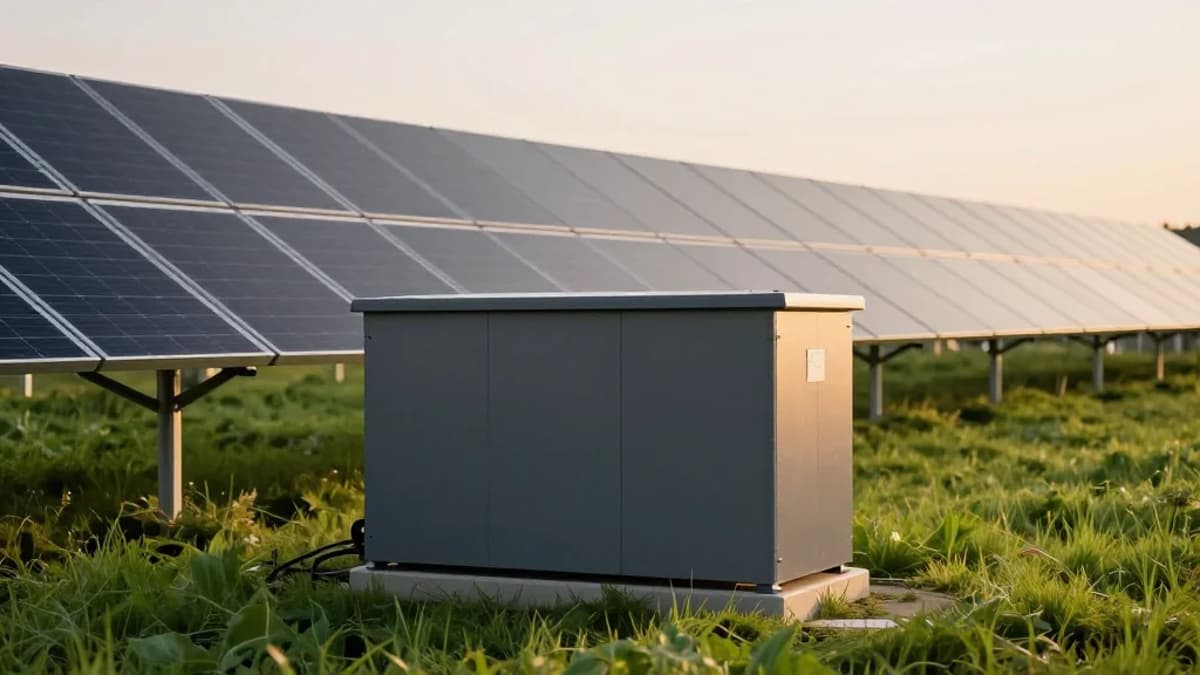
Locally Developed Solar-Battery Project with Four Hours of Storage Joins NSW Planning Pipeline
•February 17, 2026
0
Why It Matters
The development adds substantial renewable capacity and grid‑scale storage to NSW, supporting state decarbonisation targets and enhancing grid reliability.
Key Takeaways
- •360 MW solar farm plus 1,440 MWh battery planned.
- •Site near 330 kV line reduces new transmission needs.
- •Power enough for 127,000 homes; storage for 500,000 homes.
- •Community engagement sessions scheduled in Tarago, Bungendore.
- •Project spans ~750 hectares, footprint adjustable.
Pulse Analysis
New South Wales has set ambitious clean‑energy goals, aiming for 70 percent renewable generation by 2030. To meet that target, developers are increasingly pairing large‑scale solar farms with battery energy storage systems, a configuration that smooths intermittent output and provides grid‑scale flexibility. The trend reflects both policy incentives and the falling cost of lithium‑ion technology, which now makes four‑hour storage economically viable for utility projects. As state regulators streamline planning processes, projects that can connect directly to existing high‑voltage infrastructure are gaining a competitive edge.
The Magpie Hill development, led by Melbourne‑based Mint Renewables, exemplifies this integrated approach. Planned on roughly 750 hectares southwest of Tarago, the 360‑megawatt solar array will be coupled with a 1,440‑megawatt‑hour battery capable of delivering four hours of full‑power output. Its proximity to a 330 kV transmission line minimizes the need for new grid upgrades, reducing capital expenditure and permitting faster connection. If approved, the solar component could supply electricity for approximately 127,000 households, while the storage capacity would be sufficient to support over half a million homes during peak demand periods.
Beyond the technical merits, Mint Renewables is investing in early community outreach, holding drop‑in sessions in Tarago and Bungendore to address local concerns and gather feedback. Such engagement can smooth the permitting timeline and build social licence, a critical factor for large land‑use projects. For investors, the Magpie Hill scheme signals confidence in the commercial viability of combined solar‑storage assets in Australia’s eastern grid. Successful execution could encourage further private capital into similar projects, accelerating the state’s transition to a low‑carbon electricity system.
Locally developed solar-battery project with four hours of storage joins NSW planning pipeline
0
Comments
Want to join the conversation?
Loading comments...