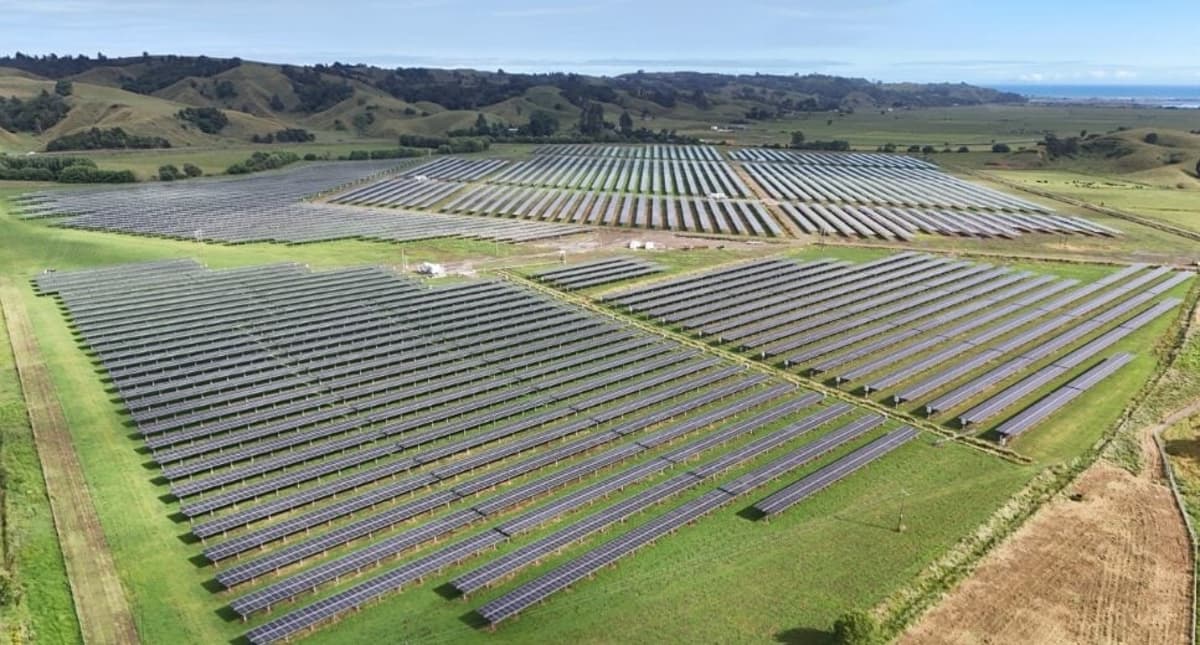
Lodestone Energy to Begin Construction on 31.5MWdc Solar PV Plant in New Zealand
Companies Mentioned
Why It Matters
The plant adds significant local generation capacity, reducing reliance on distant grid power and lowering electricity costs in a region with historically high rates. Its community‑owned structure and agrivoltaic approach showcase a scalable model for rural renewable development.
Key Takeaways
- •31.5 MWdc plant to generate ~50 GWh annually
- •Construction starts spring 2026, operations by late summer 2027
- •49,000 Trina Solar 640 W modules shipped to Napier
- •Joint venture splits ownership 50:50, keeping profits local
- •Agrivoltaic design maintains grazing alongside solar arrays
Pulse Analysis
New Zealand’s solar market is entering a phase of rapid expansion, driven by projects that blend renewable generation with local economic benefits. Lodestone Energy, already a pioneer with the 42 MW Te Herenga o Te Rā farm, is extending its footprint into Central Hawke’s Bay. By committing roughly US$30 million to a 31.5 MWdc plant, the company is tapping the region’s high solar irradiance while addressing the chronic price premium that New Zealand consumers face. The partnership with Centralines, a regional distribution utility, ensures the new capacity will feed directly into the local grid, bolstering supply security and shaving transmission losses.
The Ruataniwha Plains project distinguishes itself through its agrivoltaic layout, a hallmark of Lodestone’s designs. Elevated single‑axis trackers support 640‑watt Trina Solar modules while preserving pasture for sheep grazing, a critical consideration for the agricultural community. This dual‑use approach not only maximizes land productivity but also eases stakeholder concerns about land‑use conflicts. The 50:50 joint‑venture structure means that revenue generated stays within the community, financing future infrastructure upgrades and reinforcing regional energy resilience.
Beyond the immediate benefits, the development signals a broader shift toward decentralized, community‑owned renewable assets in New Zealand. As the nation strives to meet its 2030 net‑zero targets, projects like this provide a template for scaling solar capacity without compromising existing land uses. The anticipated 50 GWh annual output will offset a measurable share of fossil‑fuel generation, contributing to lower national emissions. Moreover, the successful integration of agrivoltaics could accelerate adoption across other farming regions, creating a ripple effect that blends clean energy with traditional agriculture.
Lodestone Energy to begin construction on 31.5MWdc solar PV plant in New Zealand
Comments
Want to join the conversation?
Loading comments...