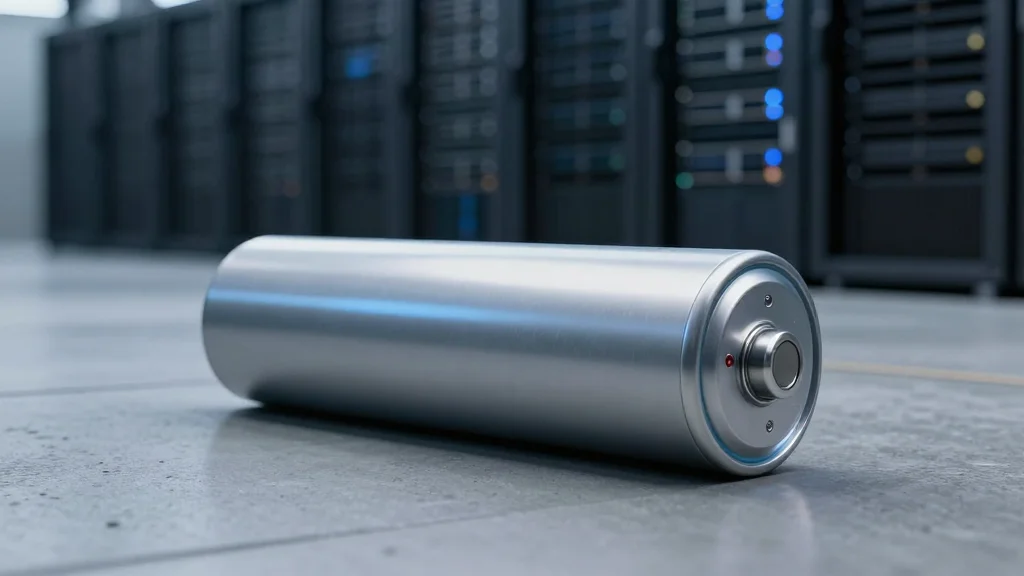
Long-Duration Batteries Are a Winner in the AI Boom
Companies Mentioned
Why It Matters
Data‑center developers can bypass grid delays by deploying multi‑day batteries, unlocking faster AI infrastructure rollout and creating a new revenue stream for long‑duration storage providers.
Key Takeaways
- •Form Energy to supply multiday iron‑air batteries to AI data centers
- •Eos zinc‑based batteries see data centers as fastest‑growing market
- •Wood Mackenzie reports 15 GWh long‑duration storage installed in 2025, up 50%
- •Long‑duration systems represent only 6% of total storage installations
- •Regulators allow industrial users to self‑provide energy, accelerating data‑center builds
Pulse Analysis
The surge in artificial‑intelligence workloads is reshaping the energy‑storage landscape, with long‑duration batteries emerging as a strategic fit for data‑center developers. Unlike traditional lithium‑ion units that excel at short‑burst power, iron‑air, zinc, and flow chemistries can hold energy for days, enabling facilities to tap renewable sources and avoid costly grid interconnection delays. This capability aligns with AI firms’ need for speed, as rapid deployment of compute capacity directly translates into competitive advantage in a fast‑moving market.
Recent contracts illustrate the momentum. Form Energy’s iron‑air systems will power Crusoe’s AI‑focused data centers and a forthcoming Google hub in Minnesota, poised to become the world’s largest battery by energy capacity. Meanwhile, Eos Energy Enterprises reports that zinc‑based storage now constitutes its fastest‑growing line, with data centers comprising roughly a quarter of its project pipeline. Other innovators, from carbon‑dioxide batteries to vanadium flow units, are also courting the sector, underscoring a diversification of technology options. Despite a 50% year‑over‑year increase to 15 GWh in 2025, long‑duration assets remain a modest 6% of total storage deployments, reflecting lingering market‑structure barriers.
Looking ahead, the convergence of regulatory reforms and renewable‑grid ambitions could accelerate adoption. Policies that let large industrial users demonstrate on‑site generation and storage are reducing reliance on utility‑scale power, while the persistent backlog and price spikes for natural‑gas generators make battery solutions increasingly attractive despite marginal cost premiums. As AI continues to drive data‑center expansion, long‑duration batteries are set to capture a larger share of the storage market, offering both a pathway to greener operations and a new revenue model for battery manufacturers.
Long-duration batteries are a winner in the AI boom
Comments
Want to join the conversation?
Loading comments...